The DMZ from Hue: What Each Stop Actually Shows You
The DMZ tour from Hue is a long day with a dozen possible stops, and the standard circuit picks them for the driver's convenience. Here is what each one shows, so you can pick for yours.
Editorial Written and fact-checked for American travelers
The Demilitarised Zone was the strip of land either side of the Ben Hai river, on the seventeenth parallel, that divided Vietnam from 1954 to 1975. Tours from Hue cover it in a long day, and most of them run the same circuit. The stops are far apart and not equal, and the standard order is built around driving distance rather than meaning. If you know what each one shows, you can shape the day, or decide that a private car and three stops beats a minibus and seven.
The Ben Hai river and the Hien Luong bridge
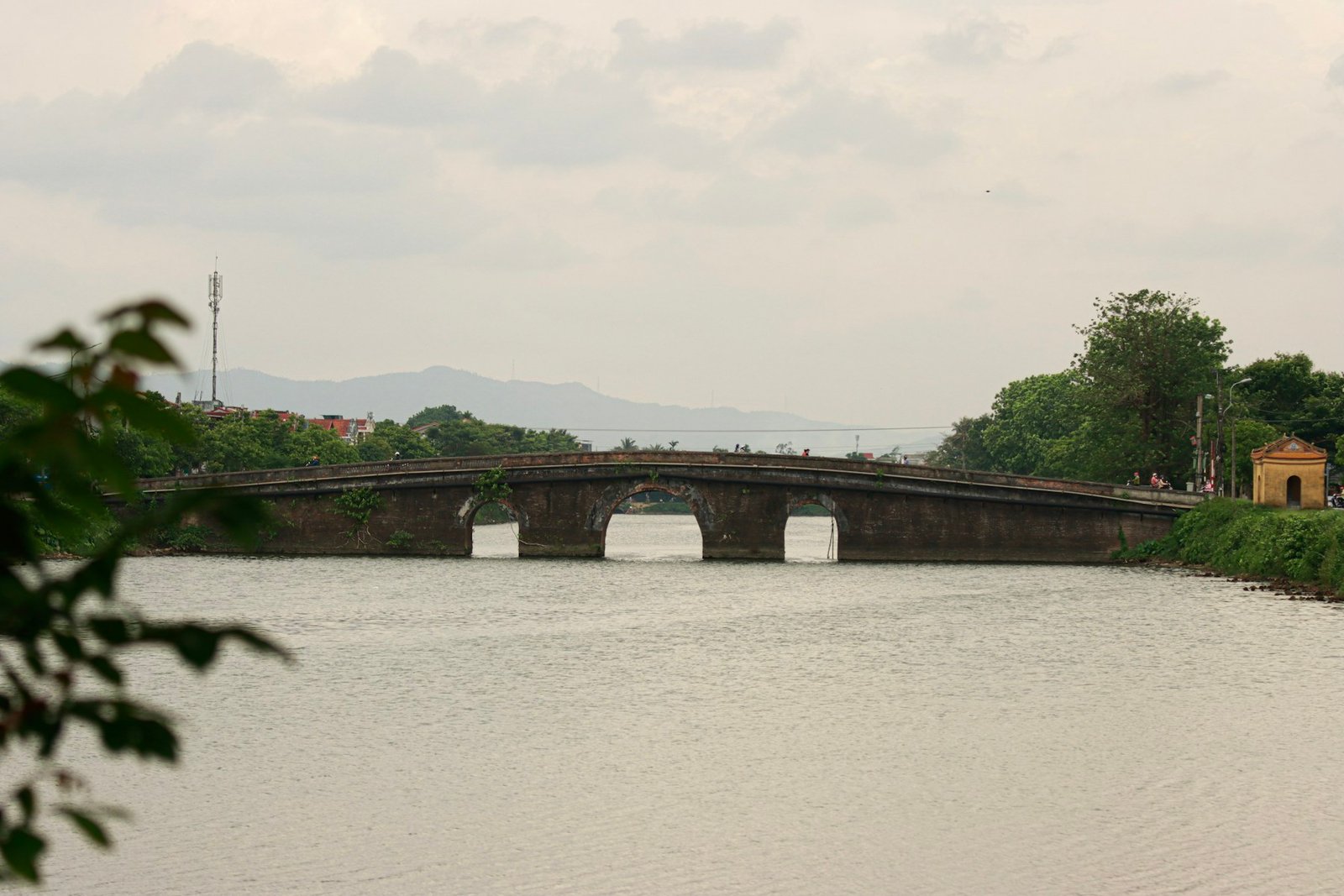
The Ben Hai river at the Hien Luong bridge is the line itself: the seventeenth parallel, the border between North and South Vietnam from the Geneva settlement of 1954 until reunification. The bridge is a restored steel span painted in two colours, one for each side, with a flag tower on the northern bank and a monument of a mother and child facing north. A museum on the bank tells the story from the Vietnamese side.
What it shows you is the arbitrariness: a modest river in flat country, and the fact that for twenty years families lived on opposite banks unable to cross. Allow half an hour. It is the stop with the most symbolic weight and the least to walk around, and it is usually the first because it is on the highway north.
Doc Mieu and the coastal strip
Doc Mieu was an American firebase on the southern bank, part of the electronic barrier that was meant to seal the border. Little remains and most tours mention it from the road. It shows you the geography of the war's northern front: the sea on one side, the hills on the other, and a river in between.
The Vinh Moc tunnels
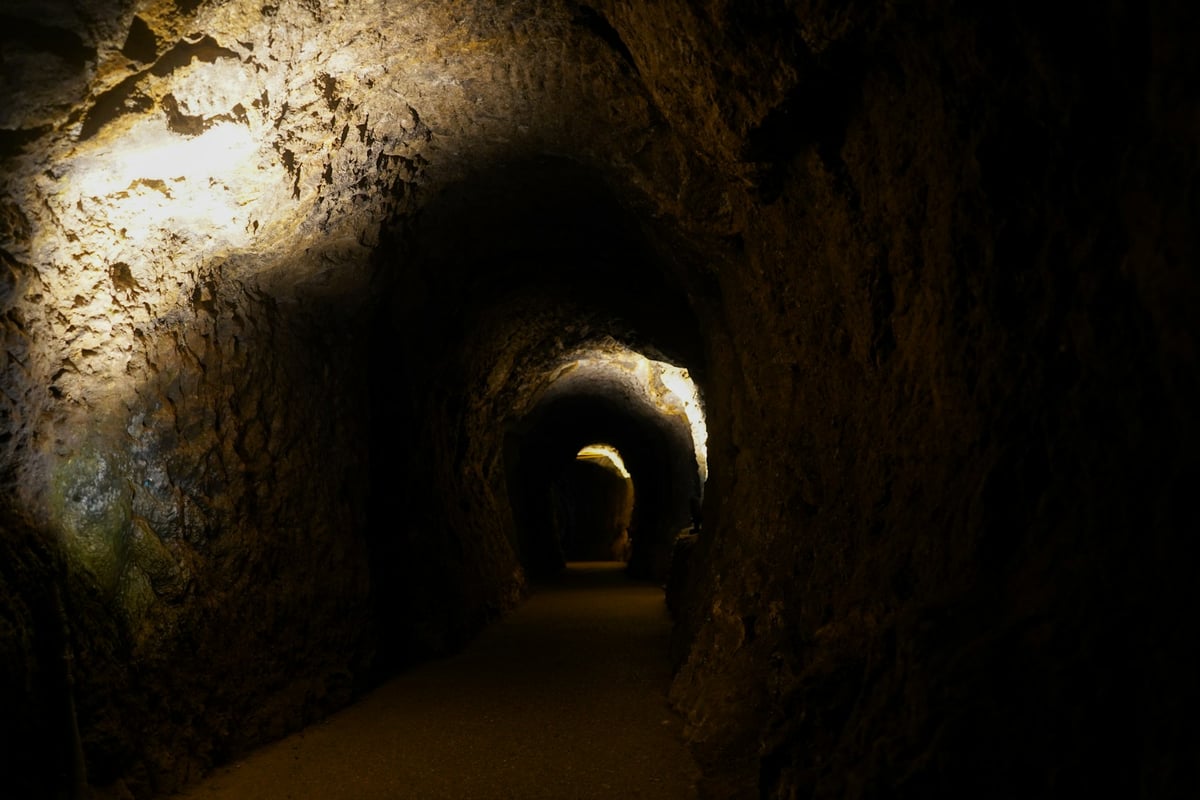
Vinh Moc, on the coast north of the river, is a tunnel complex where a fishing village moved underground to survive years of bombardment, with living chambers, a meeting hall, a well and exits onto the beach. It differs from the better-known tunnels near Ho Chi Minh City in that it was dug for civilians to live in rather than for fighters to move through, and the passages are reported to be close to their original size rather than widened for visitors.
Vinh Moc is the stop the day is built around and the one that justifies it. You go underground on a guided route with lighting; it is confined, humid and dark, and anyone uneasy in enclosed spaces should know that before the entrance. Allow an hour and a half with the small museum. If you have a private car and only want one stop beyond the bridge, this is it.
Truong Son national cemetery
Truong Son is the largest of Vietnam's war cemeteries, inland from Highway 1, holding the graves of soldiers who died along the Ho Chi Minh trail, laid out by home province under pine trees. It is a working national shrine rather than a tourist site, and Vietnamese visitors come to burn incense and leave offerings. Many of the graves carry no name.
It shows you the war's cost on the Vietnamese side at a scale no museum manages, and it is the stop Americans most often say changed how they saw the day. It is not on every circuit because it is off the direct route to Khe Sanh. Ask for it.
Conduct
Shoulders and knees covered, hats off at the central memorial, and photographs of the grounds rather than of people praying. The same applies at the smaller cemeteries the road passes.
Khe Sanh combat base
Khe Sanh is the former US Marine base in the hills near the Laos border, besieged for months in early 1968 in one of the war's most reported battles, and later abandoned. What remains is a reconstructed bunker or two, some aircraft and vehicles on a plateau, and a museum whose displays tell the siege from the Vietnamese perspective. The red earth and the surrounding hills are the real exhibit.
It shows you where the American war was fought on the ground, and for a veteran's family it is often the reason for the day. For anyone else it is a long drive west for a quiet field. It is the stop that makes the tour ten hours rather than seven, and the one to drop if you want a shorter day.
The road to it
Route 9 west from the highway passes the Rockpile, a steep outcrop that served as an American observation post, and the Dakrong bridge, a reconstruction over a river that was part of the trail network. Both are roadside stops of a few minutes, and the minibus tours include them because they are on the way.
What most tours leave out
Quang Tri town, on Highway 1 south of the river, was flattened in the eighty-one-day battle of 1972 and the shell of a church and the citadel walls still stand. It is closer to Hue than anything else on the list and almost never on the circuit, because the circuit is sold as the DMZ and Quang Tri is technically south of it.
For a sense of what the ground war did to a town, it says more than Khe Sanh.
Unexploded ordnance
The province is still being cleared, and the sites you visit are safe to walk; the risk is in fields and construction sites, not at monuments. The State Department's assessment is that landmine risk is low in urban and populated areas, including tourist destinations. Stay on paths and touch nothing metal in the ground, and that is the whole of the precaution.
Shaping your day
Minibus tours give you the full circuit at the lowest price and the longest day, with the stops fixed. A private car costs more per person for one or two and about the same for four, and it lets you choose: bridge, Vinh Moc and Truong Son in a seven-hour day, or everything including Khe Sanh in a long one. Book a DMZ tour from Hue, or arrange a car and name the stops yourself.
The guide matters more than the vehicle. A good one has family stories; a bad one reads the plaques.
Keep planning
Not sure how it all fits together?
Pick your trip length and we'll route a real day-by-day plan.