Three well-known guidebooks give Hue three different answers, from skipping it to two full days. The right number depends on what you came to Vietnam for, and here is the rule.
Editorial Written and fact-checked for American travelers
Hue is the city every Vietnam itinerary trips over. It was the imperial capital under the Nguyen dynasty, it has the citadel and the royal tombs, and it sits on the way between Hanoi and Hoi An. Yet one major guidebook's two-week plan skips it entirely, another gives it a single night, a third gives it two full days. None of them says why. Here is the answer, keyed to what you actually want from the trip.
The short answer
Hue deserves two nights, giving one full day, for a first-time visitor who cares about history; three nights if the DMZ matters to you; and one night as a stop on the way through if your trip is about beaches, food and Hoi An. Zero is defensible only on a seven-day trip that is choosing between the centre and the north or south, and even then the Hai Van train ride argues for passing through.
Why the books disagree
Because they are answering different travellers. The plan that skips Hue is written for a coast-and-cities trip. The plan that gives it two days is written for the citadel and the tombs. Neither is wrong; they just never told you whose trip they were planning.
What one full day covers
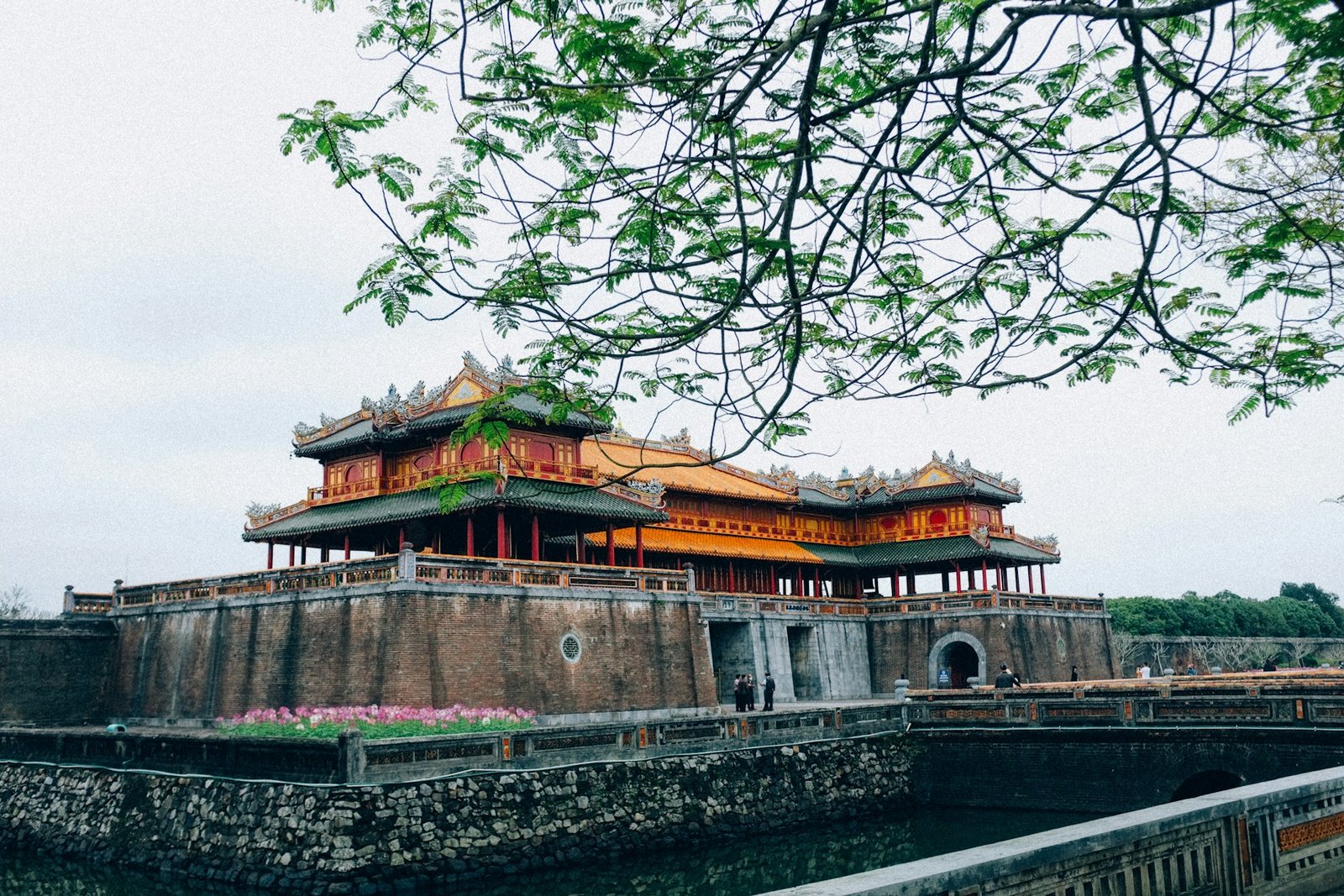
One full day in Hue covers the Imperial City in the morning, when it is cooler and quieter, and two of the royal tombs in the afternoon, usually Tu Duc and Khai Dinh, with Thien Mu pagoda on the river on the way. That is the Hue most visitors want, and it fits between arriving the previous evening and leaving the next morning. It is brisk but it is not rushed.
The tombs are spread through the countryside south and west of the city, each emperor having built his own, and they are deliberately unalike: Minh Mang formal and symmetrical, Tu Duc rambling and overgrown, Khai Dinh a dark concrete hybrid of Vietnamese and European styles. Two of the three is the right number. All three is a long afternoon in which the third starts to look like the second.
What the single night loses
Arriving at midday and leaving the next morning gives you an afternoon, which means the citadel or the tombs but not both done properly. Many itineraries do exactly this on the way between Hanoi and Hoi An. It works, and it leaves people saying Hue was fine, which is the sound of a place seen at half strength.
What the second full day adds
A second full day in Hue is for the DMZ or for the food, and rarely both. The Demilitarised Zone and the Vinh Moc tunnels are a long day north of the city, often ten to twelve hours door to door, and they are the reason some visitors give Hue an extra night.
Without that day you can still see the third tomb, the covered market, the garden houses in the suburbs and an evening on the river, at an easier pace.
Hue's food is the other argument for staying. It is the centre's own cuisine: bun bo Hue, the tiny steamed rice cakes served in sets, the baby-clam rice, and a vegetarian tradition from the city's pagodas. A day with no sights lets you eat it at the right hours, which the sightseeing day does not.
Who should take the second day
Americans with a family connection to the war, for whom the DMZ day is the point of the central coast. Anyone who has already done Hoi An's tailors and beaches on a previous trip. Anyone whose idea of a good day is a market and a long lunch rather than a monument.
Where the days come from
Hue's nights come out of Hoi An's in almost every itinerary, because the two are a few hours apart and the central coast gets a fixed allocation. On a two-week trip the common split is two nights in Hue and three in Hoi An. On ten days it is one and three, or two and two.
On a week, the centre gets three nights total and the honest choice is Hoi An plus a Hue day trip from Da Nang, or Hue plus the train and a Hoi An night.
The train between Hue and Da Nang over the Hai Van pass is the one transfer in Vietnam worth doing for its own sake, and it is why passing through Hue on the way to Hoi An costs almost nothing in time. Flying over it costs the view.
The weather caveat
Hue's rain comes in the autumn and early winter and it is heavy, with flooding in the bad years. The citadel in a downpour is an endurance event. If your dates fall then, one night is enough and the second day belongs to Hoi An, which gets the same weather but has more to do indoors.
A rule you can apply
History first: two nights, and a third if the DMZ is on your list. Food and beaches first: one night on the way through, with the train. Seven days or fewer: Hue is a day trip from Da Nang or a pass-through, not a base. Where to stay in Hue matters less than in Hoi An; the south bank near the river is the sensible default for a night or two.
What this question is really part of
Notice what decided Hue's days: not Hue, but the length of your trip and the nights already committed to Hoi An, Hanoi and the south. Every base on the central coast is paid for out of the same pool, and the books that disagree about Hue are really disagreeing about the pool.
Deciding the whole allocation at once, nights per base by trip length and by whether you came for history, beach or food, is worked out in Vietnam, End to End.