Cai Rang, on the Hau river just outside Can Tho, is the largest floating market in the Mekong Delta and the reason most people stay the night there. It is a wholesale market — boats selling produce to other boats — and it runs early. Almost everything about seeing it well comes down to what time you are on the water.
What it actually is
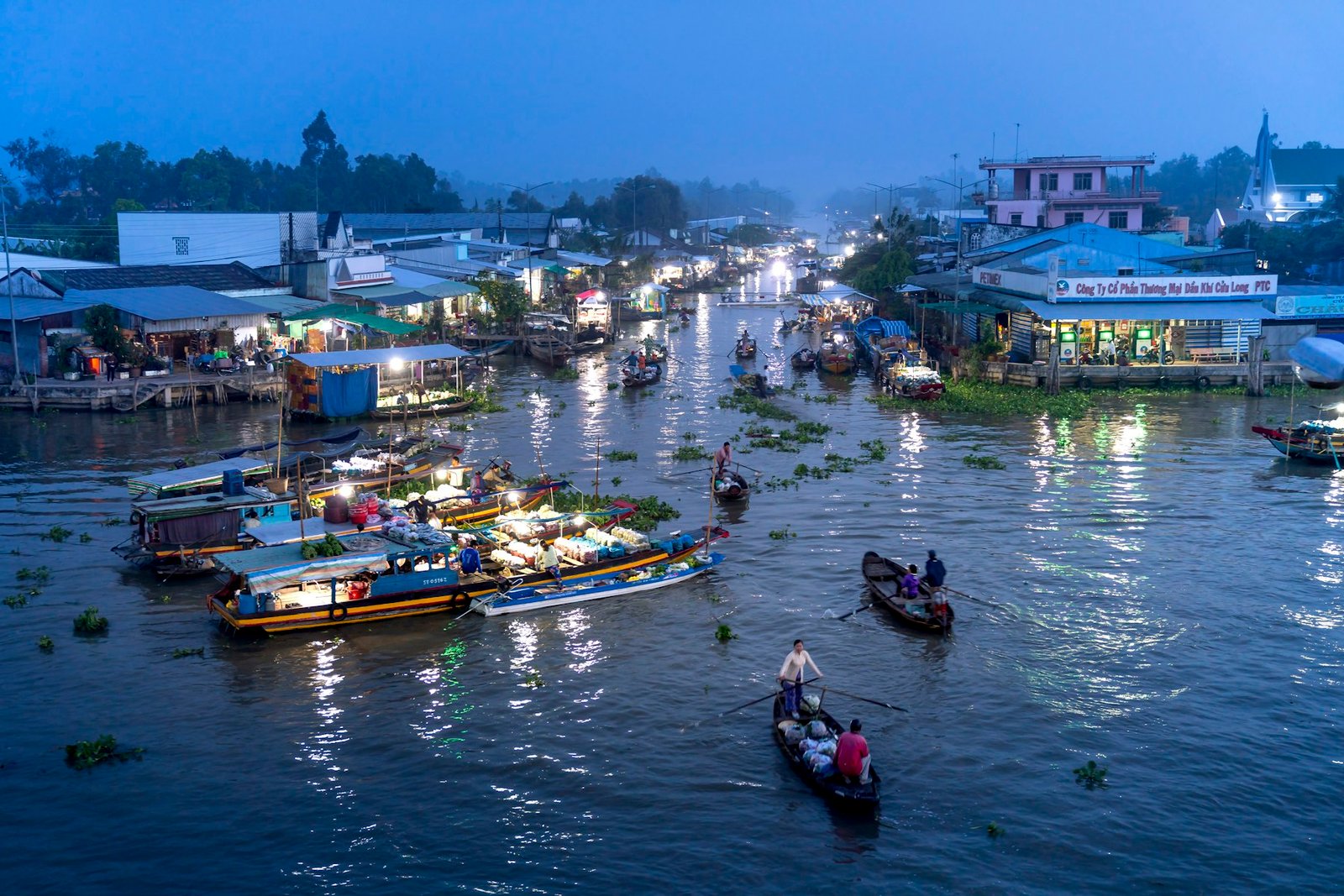
Larger boats moor mid-river with their produce hung from a tall pole at the bow, so buyers can see from a distance what each one is selling: pineapples, watermelons, pumpkins, cabbages. Smaller boats work between them, buying, loading and ferrying. Among them are the ones selling coffee and noodle soup to the traders.
It is a working market rather than a performance. Nobody is there for the visitors, which is what makes it worth the early alarm — and also means it keeps the hours of a wholesale market rather than a tourist attraction.
The market and its city: Can Tho & the Mekong Delta · Cai Rang floating market. (Enable JavaScript for the interactive map.)
The hour
Trading starts before dawn and thins through the morning. By mid-morning the larger boats are leaving and what remains is a handful of vessels and other tourist boats.
So: on the water by five or soon after, at Cai Rang for first light, and back for breakfast. A boat leaving Can Tho at eight arrives at the end of it. This is the single reason the day circuits sold out of Ho Chi Minh City do not get you there — the city is several hours away and they leave in the morning, by which time the market is finishing.
Booking a boat
Boats are arranged the evening before, through your accommodation or directly at the Ninh Kieu quay in Can Tho. A private boat for two or three people is inexpensive and is the better option, because you set the departure time and the route rather than taking the operator's.
Agree three things: the departure time, how long you are on the water, and whether the trip continues to Phong Dien, the smaller and less visited market further upstream, or to the fruit orchards and the rice noodle workshops along the canals.
What to ask for
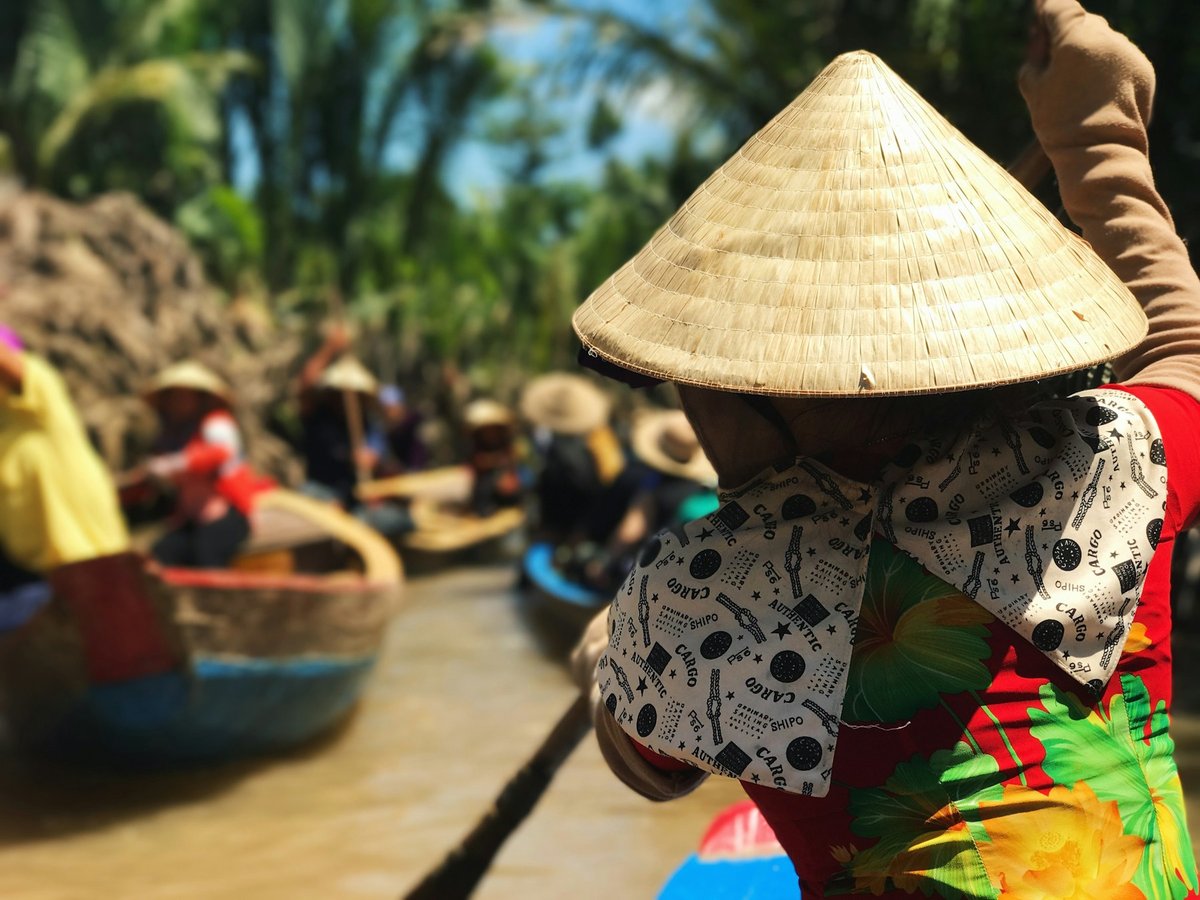
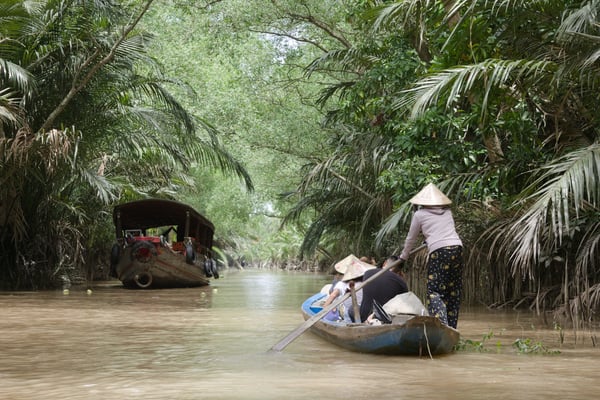
Ask the boatman to cut the engine among the moored boats and drift rather than circling. Ask to stop at one of the coffee boats, which come alongside and pass across a glass. And ask for the narrower canals on the way back, which are the part people remember as much as the market.
What to bring on the boat
A layer, because the river before dawn is cooler than the delta at any other hour. Small notes in dong for the coffee boats and anything you buy from a vendor. Something waterproof for a camera, since the boats sit low and the wash from passing vessels comes over the side.
And a seat cushion if your boat is a plain wooden one, which most of the small private ones are.
Where to stay
Can Tho is a city with the full range of accommodation, from riverside hotels on Ninh Kieu to guesthouses in town. Homestays on the surrounding canals are the other option and are quieter, though they add travel time to the pre-dawn start.
For the market specifically, being close to the quay is worth more than being somewhere pretty, because you are leaving in the dark.
Getting to Can Tho
Buses run frequently from Ho Chi Minh City's western bus station and take three to four hours. A private car is the other road option. There is also an airport with domestic flights, including from Hanoi and Phu Quoc, which is useful if you are fitting the delta between two other regions.
The rest of Can Tho
Worth the afternoon before. The riverfront at Ninh Kieu, the night market, Binh Thuy ancient house, and the Khmer and Chinese temples in the centre. The city is pleasant and almost entirely unvisited by foreign tourists outside the market run.
Is the market changing
Worth knowing: floating markets across the delta have been reported as shrinking for years as road transport replaces river freight. Cai Rang is the largest and the most resilient, and it is still a working market, but it is smaller than it was and the direction of travel is one way.
That is a reason to see it rather than a reason not to, and it is also a reason not to expect the scale in the older photographs.
And the other markets
Phong Dien, about forty minutes further on, is smaller, more local and visited by far fewer boats of tourists. Cai Be, in Tien Giang province closer to Ho Chi Minh City, is the one many day trips use and is much diminished.
Whether to come back up to Ho Chi Minh City afterwards or carry on west towards the Cambodian border is a question Vietnam, End to End works through.
FAQ
What is the Cai Rang floating market?
Larger boats moor mid-river with their produce hung from a tall pole at the bow, so buyers can see from a distance what each one is selling: pineapples, watermelons, pumpkins, cabbages. Smaller boats work between them, buying, loading and ferrying. Among them are the ones selling coffee and noodle soup to the traders.
What time should you go to Cai Rang?
Trading starts before dawn and thins through the morning. By mid-morning the larger boats are leaving and what remains is a handful of vessels and other tourist boats.
How do you book a boat at Cai Rang?
Boats are arranged the evening before, through your accommodation or directly at the Ninh Kieu quay in Can Tho. A private boat for two or three people is inexpensive and is the better option, because you set the departure time and the route rather than taking the operator's.