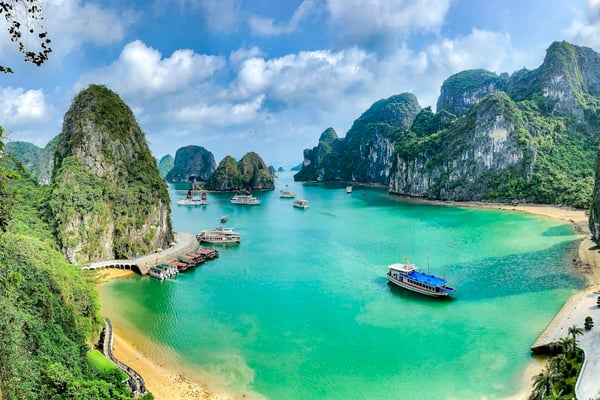
Vietnam works well with children. The food is mild by default and endlessly snackable, Vietnamese attitudes to children travelling are warm to the point of enthusiastic, and the costs are low enough that a family can afford space and comfort that would be out of reach elsewhere. There are three real constraints, and the plan is built around them.
Constraint one: the traffic
Road traffic is the hazard the State Department emphasises most for Vietnam, and city streets are the part of the trip that demands most attention with small children. Crossing a busy road in Hanoi or Ho Chi Minh City with a child is a different exercise from doing it alone.
What this means practically: hold hands and cross as a unit at a steady pace; use Grab rather than walking long distances in the cities; and choose accommodation on a quieter street rather than the busiest one.
Car seats are not standard in Vietnamese taxis or ride-hailing cars. Families travelling with small children either bring a portable seat or accept the arrangement as it is, and that is a decision worth making before you arrive rather than at the airport.
Fewer moves, longer stays: Hanoi → Hoi An → Phu Quoc. (Enable JavaScript for the interactive map.)
Constraint two: the distances
Vietnam is long, and the trip shape that works for adults — three regions in ten days — is punishing with children. Fewer places and longer stays is the single most useful adjustment.
A family week is best as one region. A family fortnight stretches to two comfortably, or three if one of them is a beach stay you barely move within. Use the internal flights rather than overnight buses or long drives.
Constraint three: the heat
Most of Vietnam is hot and humid for most of the year, and children tolerate it less well than adults. Build the day around it: out early, back for the middle of the day, out again in the late afternoon. Accommodation with a pool stops being a luxury and becomes the thing that makes the afternoon work.
What children actually enjoy here
Water, mostly. The bay cruises, the kayaking, the beaches at An Bang, Da Nang and Phu Quoc, and the delta boats. Ba Na Hills, with the cable car and the games area, is the most deliberately child-oriented day out in the country. The water puppet theatre in Hanoi is short and genuinely engaging.
Also: lantern-making and cooking classes in Hoi An, cycling through the rice paddies at Tra Que, the Marble Mountains caves, and the sheer novelty of the street life. (This article contains affiliate links — if you book through them we earn a small commission at no extra cost to you.)
What to go lightly on
The war sites. The War Remnants Museum in Ho Chi Minh City presents the conflict unsparingly, and parents of younger children often choose Reunification Palace instead. Cu Chi involves confined tunnels and a firing range whose noise carries across the site. These are decisions to make deliberately rather than on arrival.
Ages and what changes
With a baby or toddler, the heat and the pavements are the constraints: Vietnamese city pavements are frequently occupied by parked motorbikes and stalls, and a pushchair is often more trouble than a carrier. With primary-age children, the water activities and the sheer sensory volume of the place do most of the work. Teenagers do well here, particularly with the food, the markets and the motorbike-passenger side of it.
Ages also change the war sites, the length of the days and how much heritage anyone will tolerate before lunch.
A shape that works for two weeks
Four nights in Hanoi including one on a bay cruise; a flight to Da Nang and six nights in Hoi An, using the beach from there rather than moving again; a flight south and four nights in Ho Chi Minh City, or in Phu Quoc if the trip should end on sand. That is fourteen nights, three regions, and two internal flights.
The point of that shape is that only two of the fourteen nights involve changing where your bags are, and the longest stay has a pool.
Practical points
Nappies, formula and familiar medicines are available in the cities and harder to find in small towns; buy in Hanoi, Da Nang or Ho Chi Minh City. Pharmacies are everywhere and well stocked.
Apartments and family rooms are cheap by American standards and far more useful than two hotel rooms. Many hotels will add a bed for very little.
Food is easy: rice, noodles, grilled meat, fresh spring rolls and fruit cover most children, and chilli is almost always served on the side rather than cooked in.
Getting around with children
Grab is the default and the fares are low enough that taking cars everywhere in the cities is affordable. For longer legs use the internal flights, which are short. The overnight train is a genuine option with older children and an adventure in its own right; the sleeper bus is not, with any age.
Health before you go
Talk to a travel clinic about the routine and recommended vaccinations well in advance, since some need more than one dose. Carry oral rehydration salts, which are the single most useful thing in the bag with children in a hot country.
FAQ
What is the main hazard for children in Vietnam?
Road traffic is the hazard the State Department emphasises most for Vietnam, and city streets are the part of the trip that demands most attention with small children. Crossing a busy road in Hanoi or Ho Chi Minh City with a child is a different exercise from doing it alone.
How should you shape distances with children?
Vietnam is long, and the trip shape that works for adults — three regions in ten days — is punishing with children. Fewer places and longer stays is the single most useful adjustment.
How do you handle the heat with children?
Most of Vietnam is hot and humid for most of the year, and children tolerate it less well than adults. Build the day around it: out early, back for the middle of the day, out again in the late afternoon. Accommodation with a pool stops being a luxury and becomes the thing that makes the afternoon work.
Keep planning
Not sure how it all fits together?
Pick your trip length and we'll route a real day-by-day plan.