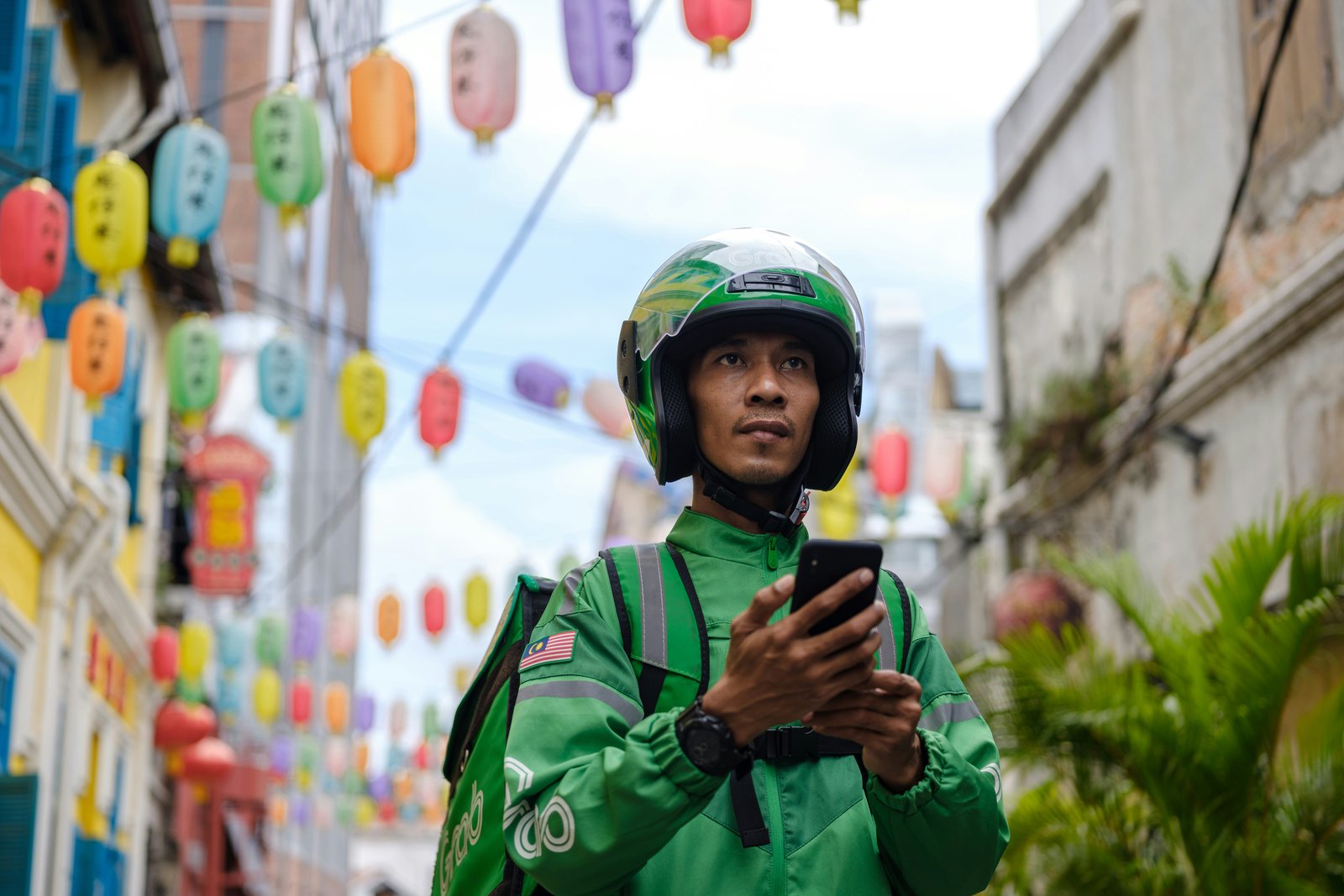
Grab is Southeast Asia's ride-hailing app and the usual way visitors get around Vietnamese cities. Installing it before you arrive takes five minutes and deals with transport, fare uncertainty and the language barrier in one move.
Setting it up
Download it before you fly and create the account while you still have reliable connectivity. It works with a foreign phone number and accepts international cards, though it is worth adding the card in advance rather than at the kerb.
You will need data to call a ride, so it depends on having a SIM or eSIM sorted. Airport wifi is enough to call your first one.
The products
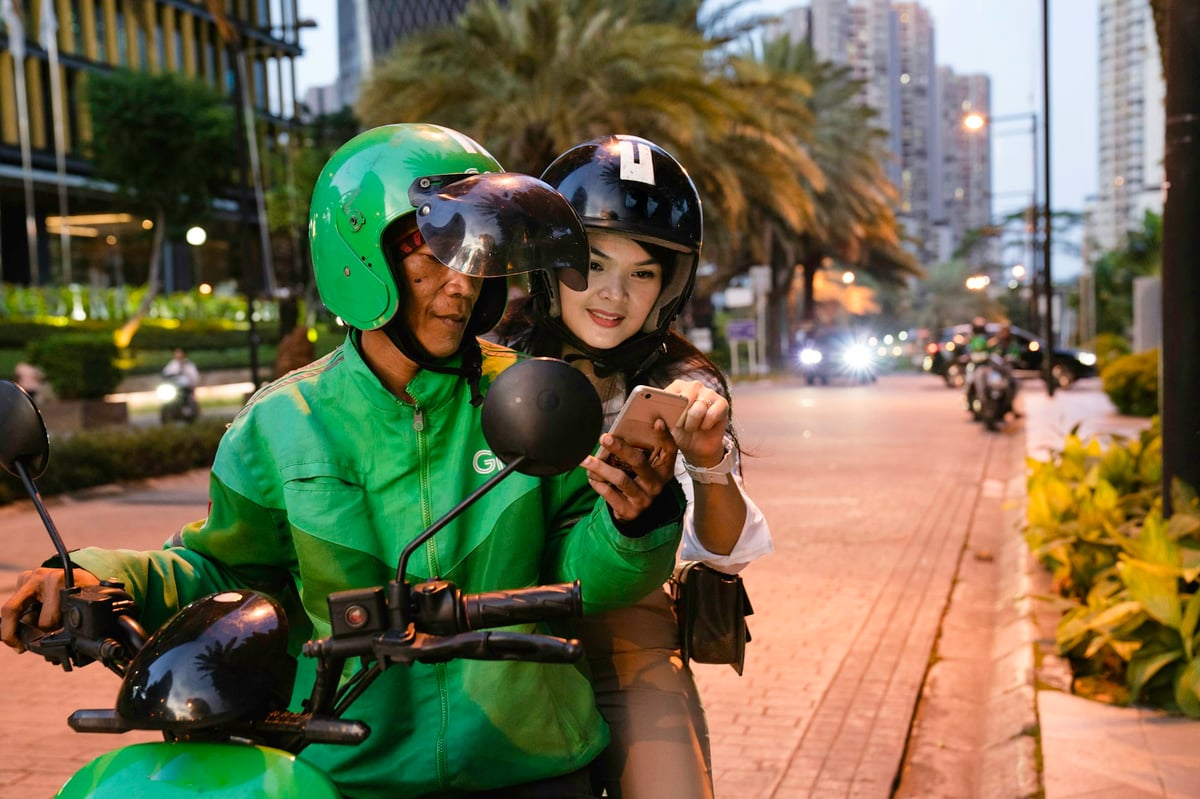
GrabCar is a private car, air-conditioned, usually a compact sedan. GrabBike is riding pillion behind a driver who hands you a helmet — markedly faster through congestion and a fraction of the price. GrabFood delivers, and GrabExpress sends parcels.
For one person crossing Hanoi or Ho Chi Minh City at rush hour, a GrabBike will usually beat a car, because two wheels get through congestion that stops four.
Why it beats a street taxi
Not safety so much as certainty. The fare is fixed before you accept, which removes the meter conversation entirely, and the route, driver and vehicle are recorded in the app. For a visitor without the language, that eliminates the most common friction in Vietnamese city travel.
Metered taxis from the established companies are legitimate and widely used by Vietnamese people. The reason to prefer the app is that you know the number before you get in.
Paying
Cash or card, selected before you book. Cash is still very common; have small notes, because drivers often cannot change a large one. Card payment avoids that, though it is worth keeping cash as a fallback in case a payment does not go through.
Tipping is not expected. The app offers the option and drivers appreciate it on long or awkward trips.
Communicating with the driver
Most drivers speak little English, and the app's in-built chat has automatic translation, which handles nearly everything. For pickup, the pin matters more than the address — drag it to exactly where you are standing, because a pin on the wrong side of a divided boulevard means a long wait.
Drivers will often call rather than message. If you cannot understand, send a message in the chat instead and let the translation do the work.
What it costs
Low enough that the usual American instinct to walk rather than pay for a short ride does not apply here. A short GrabBike hop across a city centre costs a dollar or two; the equivalent in a car is a few dollars. Over a two-week trip the total spend on urban transport is typically trivial against the rest of the budget.
Prices rise with demand, so the evening peak and heavy rain cost more. The app shows the fare before you accept, which means you can simply decline and wait ten minutes if a surge looks steep.
Where it works less well
Grab is strong in Hanoi, Ho Chi Minh City, Da Nang, Hue, Nha Trang and the other larger cities. In small towns and rural areas coverage thins and waits lengthen, and in some places it does not operate at all — in those, your accommodation arranging a car is the normal route.
At airports, pickup points are designated and sometimes a short walk from arrivals rather than directly outside, which catches people out. Follow the signs rather than accepting the first offer at the kerb.
Rain and peak hours
A heavy downpour or the evening peak sends wait times and prices up sharply, which is the system working as designed rather than a fault. Having a second app installed — Be or Xanh SM, the latter running electric cars and bikes — gives you an alternative when Grab is surging.
Riding pillion, practically
If you have never been on the back of a motorbike in traffic, the first GrabBike is startling and then quickly stops being. Put the helmet on properly and fasten it. Keep your feet on the pegs, including at lights. Hold the grab rail behind you or the driver's jacket if you need to, and lean with the bike rather than against it.
Carry a small bag on your front rather than your back, and do not take a GrabBike with a large suitcase — that is what GrabCar is for. In rain, the driver will usually produce a poncho that covers you both.
Airport runs
Grab works from all the main airports, with designated pickup zones. For a very early departure, consider booking a car through your hotel the night before instead — at four in the morning the app can be thin, and a prearranged car waiting outside is worth the small premium.
One thing it does not solve
Renting a motorbike to ride yourself is a different matter entirely: a US licence and an International Driving Permit are both invalid in Vietnam, and riding without a Vietnamese licence is illegal. GrabBike puts you on two wheels with a local at the handlebars, which is the legal version of the same experience.
FAQ
How do you set up Grab before travelling to Vietnam?
Download it before you fly and create the account while you still have reliable connectivity. It works with a foreign phone number and accepts international cards, though it is worth adding the card in advance rather than at the kerb.
Is Grab better than a street taxi in Vietnam?
Not safety so much as certainty. The fare is fixed before you accept, which removes the meter conversation entirely, and the route, driver and vehicle are recorded in the app. For a visitor without the language, that eliminates the most common friction in Vietnamese city travel.
How do you pay for Grab in Vietnam?
Cash or card, selected before you book. Cash is still very common; have small notes, because drivers often cannot change a large one. Card payment avoids that, though it is worth keeping cash as a fallback in case a payment does not go through.
Keep planning
Not sure how it all fits together?
Pick your trip length and we'll route a real day-by-day plan.