Ha Long Bay is on most first Vietnam itineraries, and the first real decision it presents is whether to see it in a day or sleep on it. The two produce quite different trips, and the difference is less about money than about how much of the bay you actually reach.
What a day trip involves
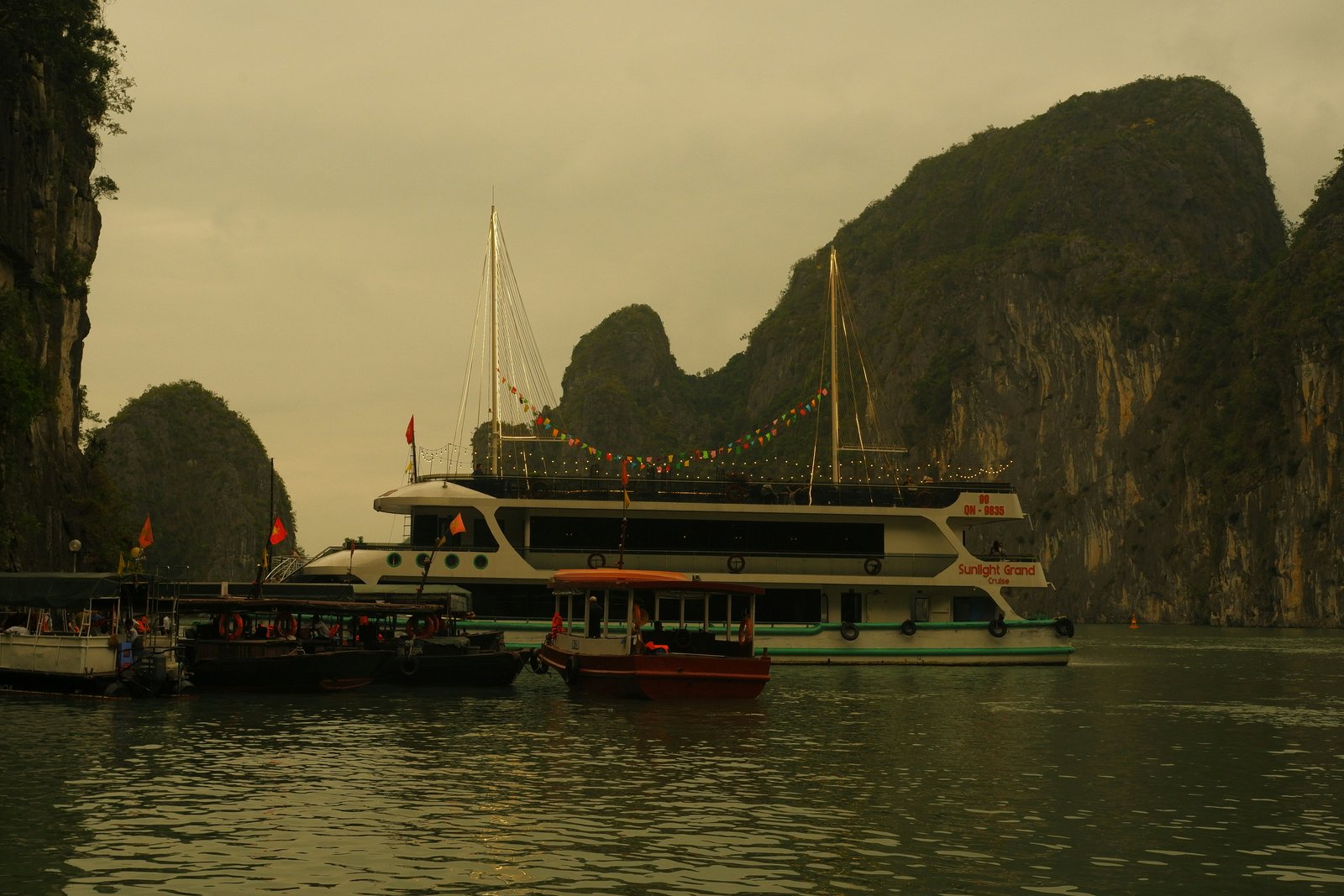
A day trip from Hanoi is a long road transfer in each direction for a few hours on the water. Pickups are early, many tours build in a shopping stop on the way, and the boat time is generally spent in the busiest and most accessible part of the bay alongside a lot of other day boats. (This article contains affiliate links — if you book through them we earn a small commission at no extra cost to you.)
You will see the karsts, which are genuinely extraordinary, and you will probably visit a cave. What you will not get is distance from the crowd, the light at either end of the day, or time to swim and kayak unhurried.
Who it still suits
Travellers with a short itinerary who would rather spend their spare night in Hanoi, anyone on a tight budget, and people who get seasick and would prefer to sleep on land. It is not a bad day. It is a compressed one.
The transfer is the argument: Hanoi · Ha Long & Lan Ha Bay. (Enable JavaScript for the interactive map.)
What an overnight changes
A one-night cruise gives you the two windows the day boats miss: late afternoon, after they have left, and early morning, before they return. The bay is at its quietest then, and in good conditions the light is what the photographs are made of. You also get kayaking, swimming off the boat, and a cave or a beach without a queue.
Two nights tends to buy range rather than more of the same, because the longer itineraries are the ones routed into the quieter waters — Bai Tu Long to the northeast, or Lan Ha off Cat Ba. Check the route rather than assuming the extra night delivers it. Where it does, the bay stops feeling managed.
The seasickness question
The bay is sheltered and the water is usually flat, so this is a smaller concern than open-sea sailing. Rough conditions do occur, mostly in the summer storm season, and in bad weather trips are cancelled rather than run.
Which bay, not just which length
Ha Long proper is the busiest. Bai Tu Long sits northeast and sees fewer permits and fewer boats. Lan Ha, reached from Cat Ba Island, has the same limestone scenery with noticeably fewer boats, and it is the one frequently recommended by people who have visited more than one of the three.
Operators sell all three under the general heading of Ha Long, so if the quieter water matters to you, ask which bay the itinerary actually covers rather than assuming.
Weather, and the part you cannot book around
Cruises run year round, but conditions vary a great deal. Summer brings the risk of storm cancellation; winter often brings mist that makes the karsts atmospheric in photographs and nearly invisible in person. October and November tend to give the best odds of clear air and clear water.
Cancellations are decided by the port authority rather than the operator, so neither you nor the boat has a say once the call is made. What you get afterwards — refund, reschedule or credit — depends on the operator's terms, which is worth confirming before you book. Do not put a cruise on the last night before an international flight.
What a night on the water is actually like
The rhythm is fixed and most boats run it similarly. You board around midday after the transfer, eat lunch as the boat moves out, and spend the afternoon on an activity or two — a cave, a kayak, a swim from the back of the boat. Sunset is on the top deck. Dinner is served, there is usually squid fishing off the stern for anyone still awake, and the boat anchors overnight in a sheltered spot.
Mornings start early, often with tai chi on the deck at sunrise, breakfast, one more activity, and then back to port by late morning. Cabins are small but generally comfortable, and the better ones have windows or balconies that make the anchorage worth waking up for.
What is usually included
Meals, the activities named in the itinerary, and the road transfer from Hanoi are normally in the price. Drinks are almost never included and are marked up substantially on board. Kayaking is sometimes an extra, and the entrance fees for caves are sometimes separate — worth checking line by line rather than assuming.
What this choice actually decides
Notice what sits underneath. A one-night cruise occupies more than one night: the transfer out takes a large part of one day and the return takes much of the next morning, so in practice it claims about two days of a northern leg rather than one.
On a four or five-day stretch in the north, that is the difference between fitting Ninh Binh or Sapa in and not. So the real question is less day trip versus overnight than what else the northern leg is carrying and how much room is left once the cruise has taken its share — the kind of whole-leg arithmetic Vietnam, End to End is organised around.
FAQ
What does a Ha Long Bay day trip involve?
A day trip from Hanoi is a long road transfer in each direction for a few hours on the water. Pickups are early, many tours build in a shopping stop on the way, and the boat time is generally spent in the busiest and most accessible part of the bay alongside a lot of other day boats. (This article contains affiliate links — if you…
What does an overnight cruise give you that a day trip does not?
A one-night cruise gives you the two windows the day boats miss: late afternoon, after they have left, and early morning, before they return. The bay is at its quietest then, and in good conditions the light is what the photographs are made of. You also get kayaking, swimming off the boat, and a cave or a beach without a queue.
Which Ha Long bay should you choose?
Ha Long proper is the busiest. Bai Tu Long sits northeast and sees fewer permits and fewer boats. Lan Ha, reached from Cat Ba Island, has the same limestone scenery with noticeably fewer boats, and it is the one frequently recommended by people who have visited more than one of the three.