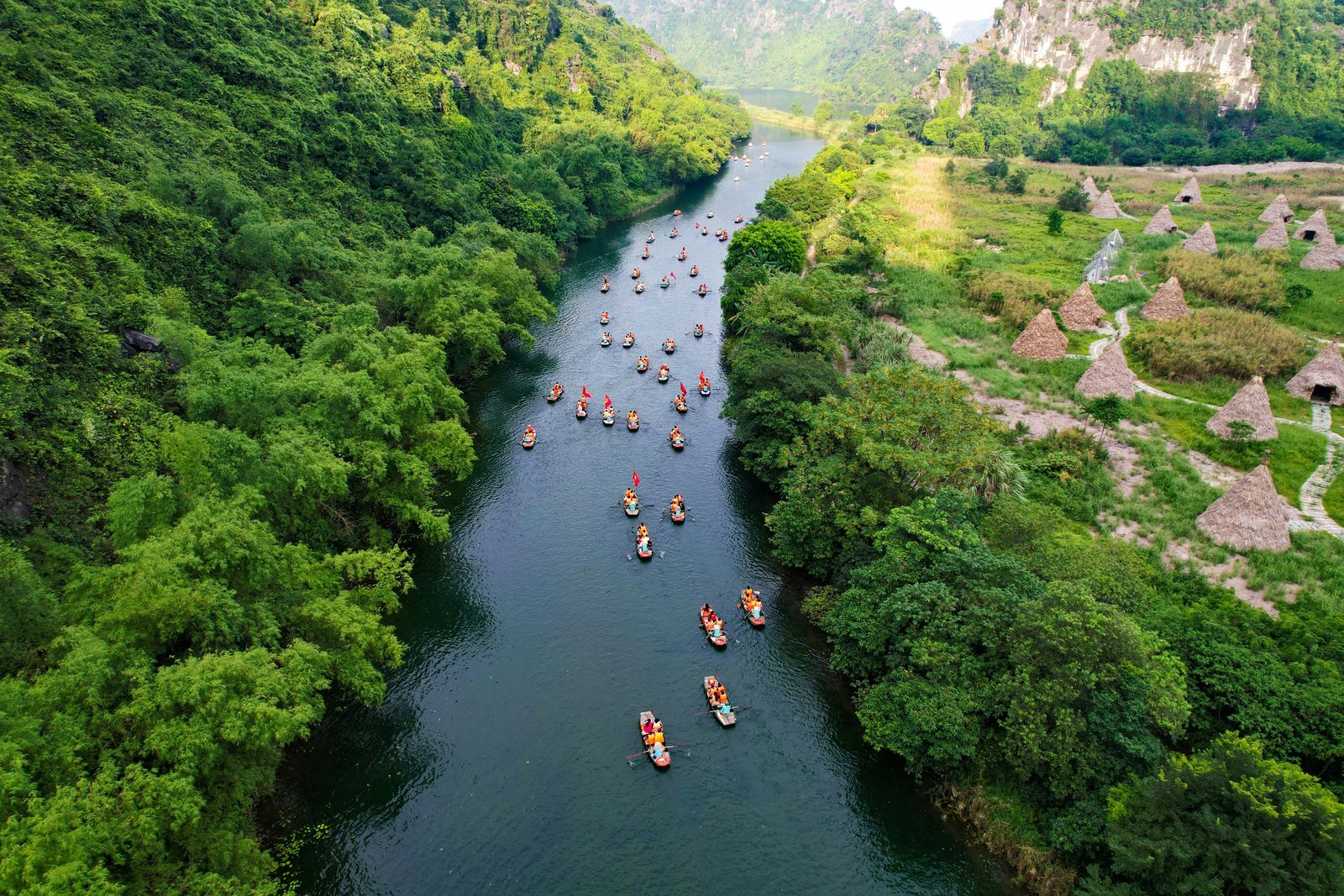
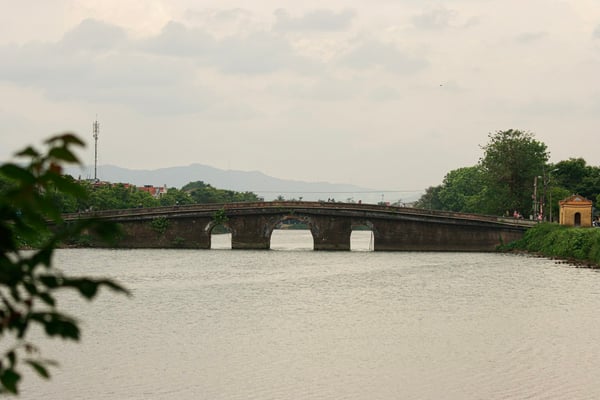
Ninh Binh is about two hours south of Hanoi and offers the same limestone karst landscape as Ha Long Bay, except on rivers and flooded fields instead of open water. For a traveller with one spare day in the north, it returns a lot for the travel it costs.
Trang An or Tam Coc
Both are rowed boat trips through karst and water caves, and visitors regularly do one and wonder about the other. They are genuinely different.
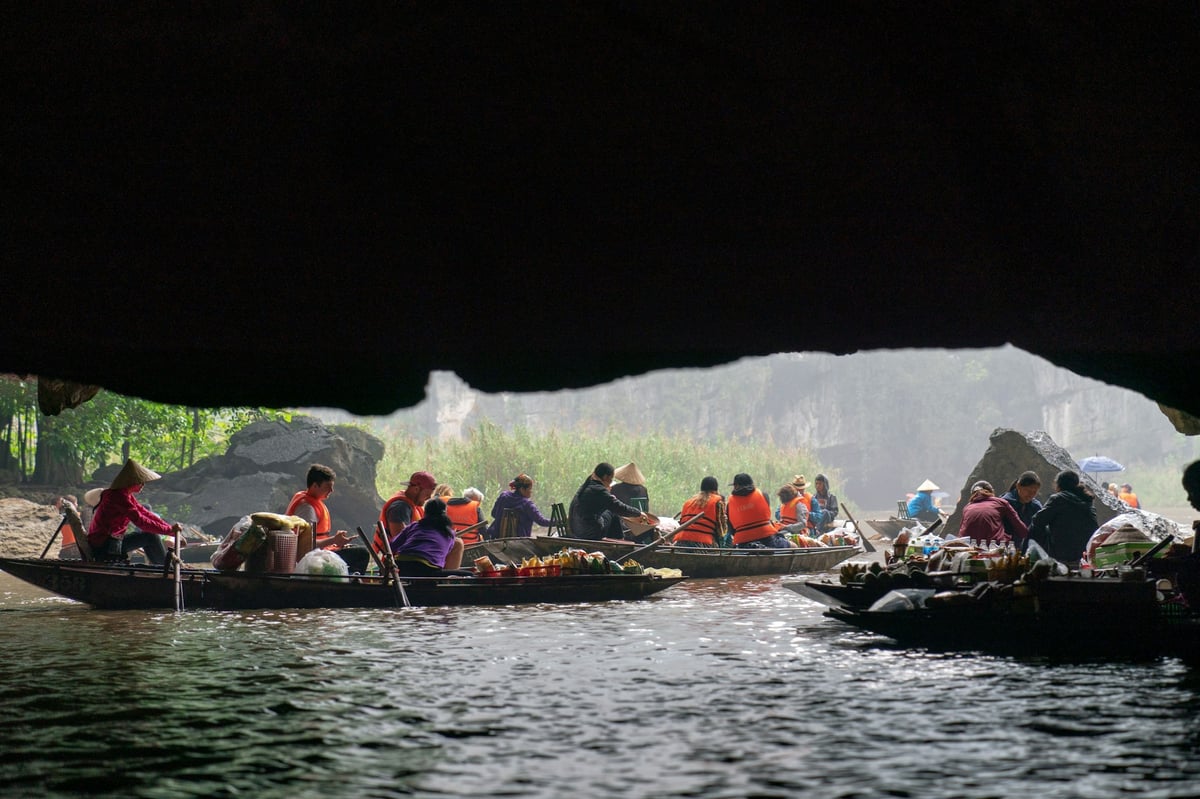
Trang An is the UNESCO-listed site, with three route options of two to three hours through a series of caves and past temples used as film locations. It is the longer, quieter and more scenic of the two, and the boats are rowed in a steady procession rather than jostling.
Tam Coc is shorter, about an hour and a half, and runs along the Ngo Dong river between the fields. In the golden rice weeks around late May and June it is arguably the better of the two. It is also more commercial, and selling from boats is common along the route.
If you only do one
Trang An, unless you are visiting during the rice harvest window, in which case Tam Coc earns it.
Hanoi to the karst: Hanoi · Ninh Binh · Trang An, Ninh Binh. (Enable JavaScript for the interactive map.)
Hang Mua
A climb of roughly five hundred stone steps up a limestone outcrop to a dragon statue on the ridge, with the view down over Tam Coc that appears on most Ninh Binh photographs. The steps are steep and uneven and it is hot work; allow an hour and go early or late rather than at midday.
It pairs naturally with Tam Coc, which sits directly below it.
Bai Dinh
An enormous modern Buddhist complex a short drive from Trang An, built in the last twenty years and claiming superlatives for its scale. It is impressive in the way a very large new thing is impressive, and it is a complete contrast to the landscape around it.
Worth an hour if you have one, and the first thing to cut if the day is tight. Electric buggies shuttle visitors around the site, which is larger than it looks.
Two things most itineraries skip
Hoa Lu, the tenth-century capital of Vietnam before the court moved to what is now Hanoi, sits between Trang An and Bai Dinh. Little of the original citadel survives, but the two temples on the site are quiet and genuinely old, and the setting among the karsts explains why a capital was put there at all.
Thung Nham bird garden, further out, fills with egrets and herons returning to roost in the late afternoon. It is a slow, unspectacular hour and a good counterweight to a day of boats and steps.
Getting there
Trains and limousine vans both run from Hanoi in around two hours, and group tours leave the Old Quarter daily. A private car with a driver costs more and is often worth it, because the sites are spread over several miles of flat country and a group schedule spends a lot of the day waiting for everyone. (This article contains affiliate links — if you book through them we earn a small commission at no extra cost to you.)
Done independently, the usual pattern is a van to Ninh Binh town or Tam Coc, then a rented bicycle or a hired driver for the day. The country is flat and the cycling is genuinely pleasant.
A realistic day
Trang An in the morning when it is cooler and quieter, lunch in Tam Coc, Hang Mua in the late afternoon for the light. That is a full day and leaves Bai Dinh for another time. Tours that promise all four plus a cave and a pagoda are moving you constantly.
The boats, and the rowing
One detail worth knowing before you go: at both Trang An and Tam Coc the boats are rowed by local people, many of them women, and at Tam Coc a good number row with their feet — a technique that looks improbable and is genuinely efficient over a long day.
The rowers are paid a small share of the ticket and a tip at the end is customary rather than optional in practice. Agree nothing in advance, but have small notes ready. At Tam Coc you may also be offered embroidery or drinks partway along; declining politely is fine and the rowing continues either way.
What to bring
Sun protection matters more than anything else here — the boats are open, the trips run two to three hours, and there is little shade. A hat, sunscreen and water. The boats sit low and your feet can get wet, so sandals are better than walking shoes if you are only doing the boat.
Day trip or overnight
A day works. A night works better, because it buys you early mornings at Trang An before the coaches and the chance to see the terraces at either end of the day. Accommodation in the countryside around Tam Coc is inexpensive and the setting is the point.
If Ha Long is also on your list, the two are worth comparing rather than booking on autopilot, since both offer karst landscape seen from a boat. How they fit alongside each other in a northern leg is one of the things Vietnam, End to End works through.
FAQ
Should you choose Trang An or Tam Coc?
Both are rowed boat trips through karst and water caves, and visitors regularly do one and wonder about the other. They are genuinely different.
What is the climb at Hang Mua like?
A climb of roughly five hundred stone steps up a limestone outcrop to a dragon statue on the ridge, with the view down over Tam Coc that appears on most Ninh Binh photographs. The steps are steep and uneven and it is hot work; allow an hour and go early or late rather than at midday.
What is Bai Dinh pagoda?
An enormous modern Buddhist complex a short drive from Trang An, built in the last twenty years and claiming superlatives for its scale. It is impressive in the way a very large new thing is impressive, and it is a complete contrast to the landscape around it.