The Imperial City at Hue is the walled palace complex of the Nguyen emperors, built from the early nineteenth century inside the larger Citadel. It is a UNESCO World Heritage site, and much of it is ruin, open ground and ongoing restoration rather than intact building.
Three walls, not one
The structure is easier to follow once you know it is concentric. The outermost is the Citadel, a large fortified enclosure with a moat, containing a working district of the city as well as the palace. Inside it is the Imperial City, the ceremonial and administrative enclosure. Inside that was the Forbidden Purple City, the emperor's private residence.
What you buy a ticket for is the Imperial City. The Forbidden Purple City is largely gone.
What happened to it
The complex was badly damaged during the Battle of Hue in 1968, which was among the longest and most destructive urban battles of the war. A large part of the Forbidden Purple City was destroyed. Restoration has been continuous since the site's UNESCO listing, and you will see scaffolding and rebuilt sections alongside original fabric and empty foundations.
The walk through
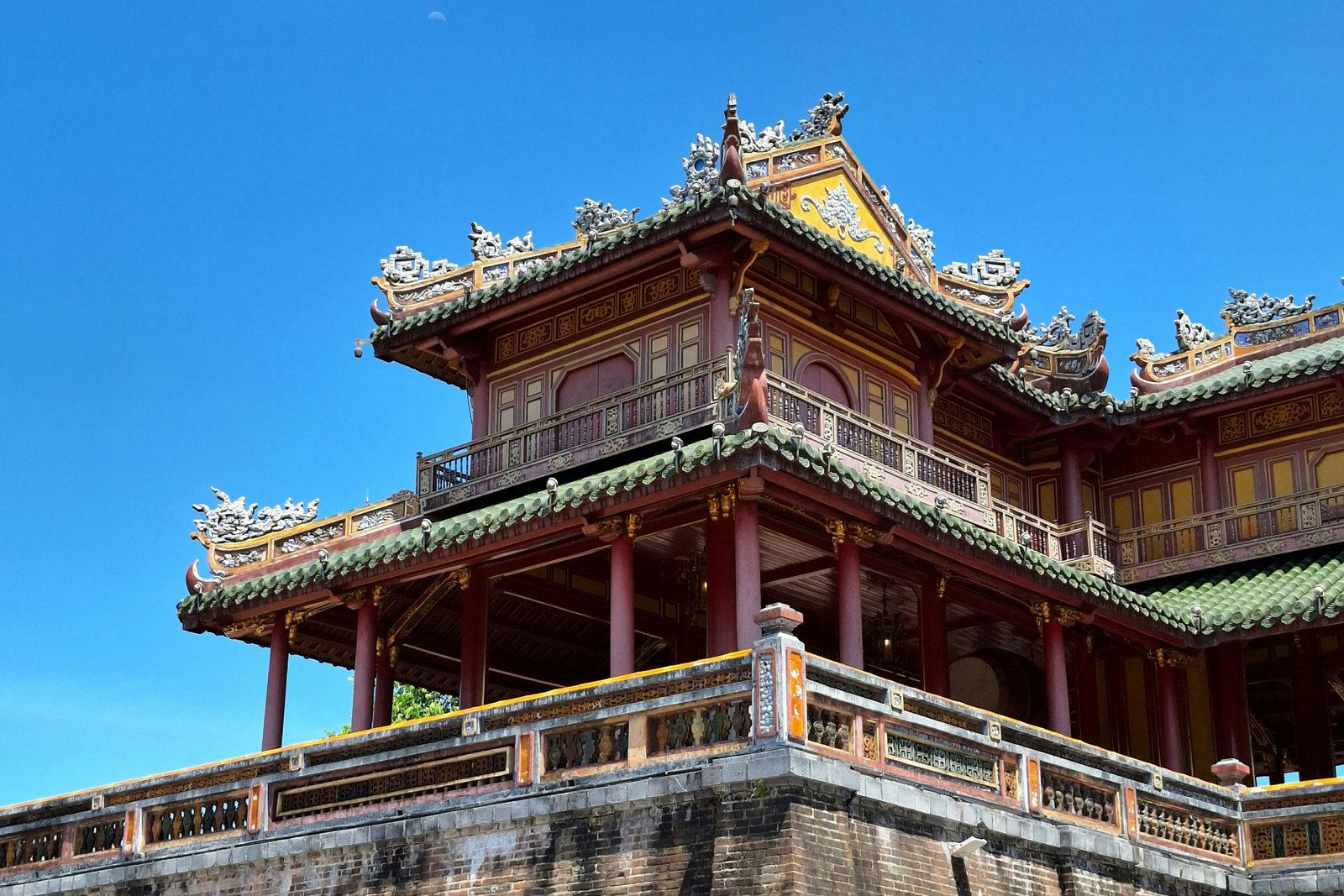
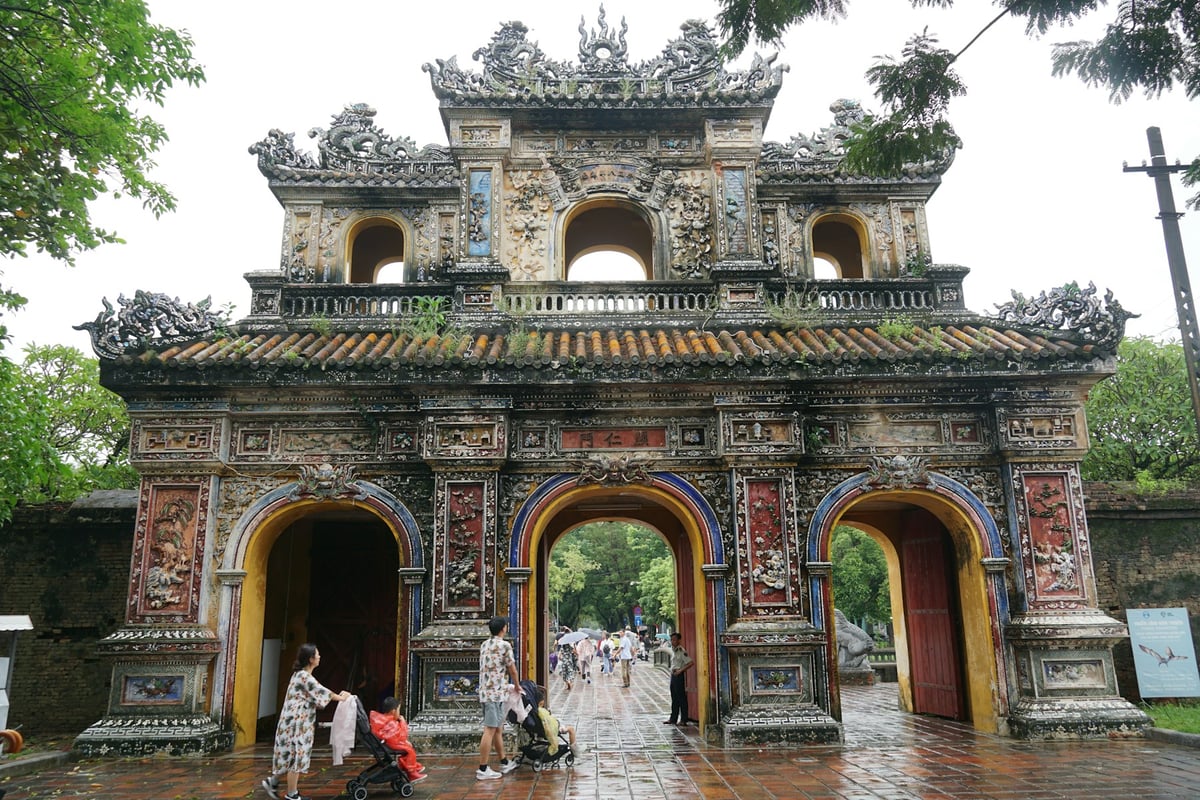
Enter through the Ngo Mon gate, the main southern gate with the pavilion on top from which the last emperor abdicated in 1945. Beyond it a bridge and courtyard lead to the Thai Hoa Palace, the throne hall, which is among the best-preserved major buildings in the complex and the one that shows what the rest looked like.
Behind that the ground opens out. The halls of the mandarins face each other across a courtyard; further back are the Forbidden Purple City's foundations, the Royal Theatre, the reading pavilion, and the temple complexes on the western side.
The Mieu temples
The To Mieu temple compound on the west side holds the dynastic altars and the Nine Dynastic Urns, large bronze vessels cast in the 1830s, each dedicated to an emperor and decorated with scenes and objects from around the country. This corner is among the most intact and is often the quietest part of the site.
The Citadel outside the ticket
The enclosure around the Imperial City is a living district, not a monument: houses, shops, schools and streets inside the fortified walls and moat. Walking or cycling a stretch of those public streets before or after the palace gives the scale of the thing, which is hard to read from inside the ceremonial enclosure.
The flag tower on the southern wall faces the river and is visible from the far bank; it is part of this outer ring rather than of the ticketed site.
Practical notes
Allow two to three hours. The site is large, largely unshaded, and the walking is on stone and gravel; in the hot months go early. There is a combined ticket covering the Imperial City together with several of the royal tombs, which is worth asking about at the gate if you plan to see them.
Dress is not formally restricted across the site, but the temple buildings are active places of commemoration and covered shoulders are appropriate inside them.