The Marble Mountains are a cluster of five limestone and marble outcrops rising out of flat coastal ground between Da Nang and Hoi An. Inside them are caves, Buddhist shrines, tunnels and viewpoints, and the whole thing sits directly on the road you will be travelling anyway.
What is there
The five hills are named for the classical elements. Only one, Thuy Son — the water mountain — is developed for visitors, and it is the one all the photographs come from.
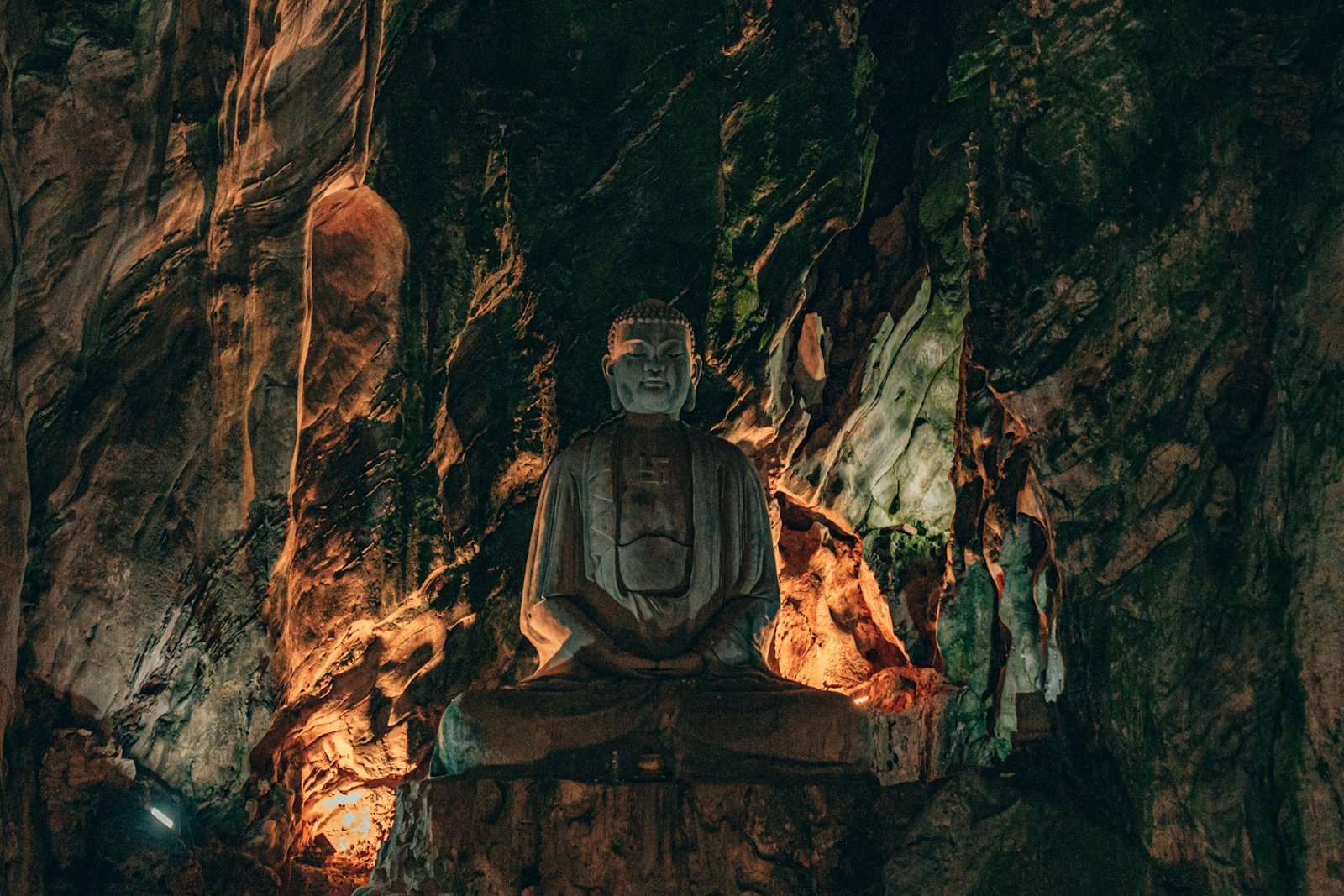
Thuy Son holds a network of caves and grottoes with Buddhist and Hindu shrines inside them, pagodas on the surface, stone staircases cut into the rock, and viewpoints looking over the coast and back towards Da Nang. The best-known chamber is Huyen Khong cave, a tall grotto with daylight falling through openings in the roof onto an altar.
The lift
There is a lift up one side of Thuy Son, sold separately from the entry ticket, which saves a long staircase. It only goes up to the first level; there is still climbing inside. Taking the lift up and the steps down is a reasonable compromise.
Between Da Nang and Hoi An: Da Nang · Marble Mountains · Hoi An. (Enable JavaScript for the interactive map.)
How long it takes
An hour is enough for the main caves and one viewpoint. Two hours covers the site properly. It fits naturally as a stop on a Da Nang to Hoi An transfer, which is how a lot of visitors do it, and it works equally well as a half-morning out of either place.
There is a second, much less visited cave complex at Am Phu — the "hell cave" — with sculpted depictions of the Buddhist underworld, entered separately near the main entrance.
Timing it
Go early or late. The site is largely stone, it is exposed, and the middle of the day in the hot months is genuinely uncomfortable. The caves themselves are cool, which makes the contrast worse when you come back out.
Coach groups work the site through the middle of the day. Early morning is when the caves are at their emptiest.
Practical notes
Wear shoes with grip. The stone steps are worn smooth in places and are slippery when wet, and there is more scrambling inside the caves than the entrance suggests. Bring water.
The shrines are in use. Covered shoulders and knees are appropriate, and the usual temple courtesies apply inside the caves as much as in the pagodas above them.
The stone carving village
The settlement at the foot of the mountains, Non Nuoc, is a marble carving village, and the road in is lined with workshops producing everything from small figures to pieces several metres high. The carving is genuine and worth looking at.
The marble used is now largely brought in from elsewhere, since quarrying the mountains themselves was stopped to protect them. If you are buying, be clear about shipping before you commit to anything you cannot carry.
What to see inside Thuy Son
From the top of the staircase or the lift, the route runs past Tam Thai Pagoda, the main temple on the summit plateau, then through a series of openings into the caves below. Linh Ung Pagoda and its tower sit on the eastern side, with the viewpoint over the coast behind it.
Huyen Khong is the chamber to find: a high grotto with shrines around the walls, statues set into the rock, and shafts of daylight coming through holes in the roof. The shafts of light are at their strongest once the sun is higher, which is the one argument for not going at opening — the choice is between fewer people and better light.
The war
The caves were used by Viet Cong fighters during the war, within sight of an American airbase on the coast below, and there are markers at several points in the complex noting what happened there. It is a quiet layer under what is otherwise a pleasant climb, and it is easy to walk past the plaques without reading them.
Getting there
About twenty minutes from central Da Nang and twenty-five from Hoi An, directly on the main road between them. A Grab in either direction is straightforward, and most drivers doing the transfer will stop here if you ask when you book.
Parking, ticket booths and the lift entrance are all at the base on the main road side. Entry is inexpensive, with the lift and the Am Phu cave ticketed separately.
The second viewpoint
Most visitors climb to one viewpoint and leave. There are two, on opposite sides of the summit, and the second one — reached by a short unmarked scramble up bare rock — looks inland over the other four mountains rather than out to sea. It is a short detour and is usually quiet.
Combining it
The natural pairing is with the transfer between Da Nang and Hoi An, or with a Son Tra and Linh Ung morning out of Da Nang. It does not combine well with Ba Na Hills, which is a full day in the opposite direction.
FAQ
What is there to see at the Marble Mountains?
The five hills are named for the classical elements. Only one, Thuy Son — the water mountain — is developed for visitors, and it is the one all the photographs come from.
How long do you need at the Marble Mountains?
An hour is enough for the main caves and one viewpoint. Two hours covers the site properly. It fits naturally as a stop on a Da Nang to Hoi An transfer, which is how a lot of visitors do it, and it works equally well as a half-morning out of either place.
What time of day should you visit the Marble Mountains?
Go early or late. The site is largely stone, it is exposed, and the middle of the day in the hot months is genuinely uncomfortable. The caves themselves are cool, which makes the contrast worse when you come back out.
Keep planning
Not sure how it all fits together?
Pick your trip length and we'll route a real day-by-day plan.