Phu Quoc's accommodation is spread around an island roughly fifty kilometres long, in six distinct areas far enough apart that the one you pick decides the shape of the week. This is about the areas rather than individual properties, because the area is the decision that is hard to undo.
Long Beach
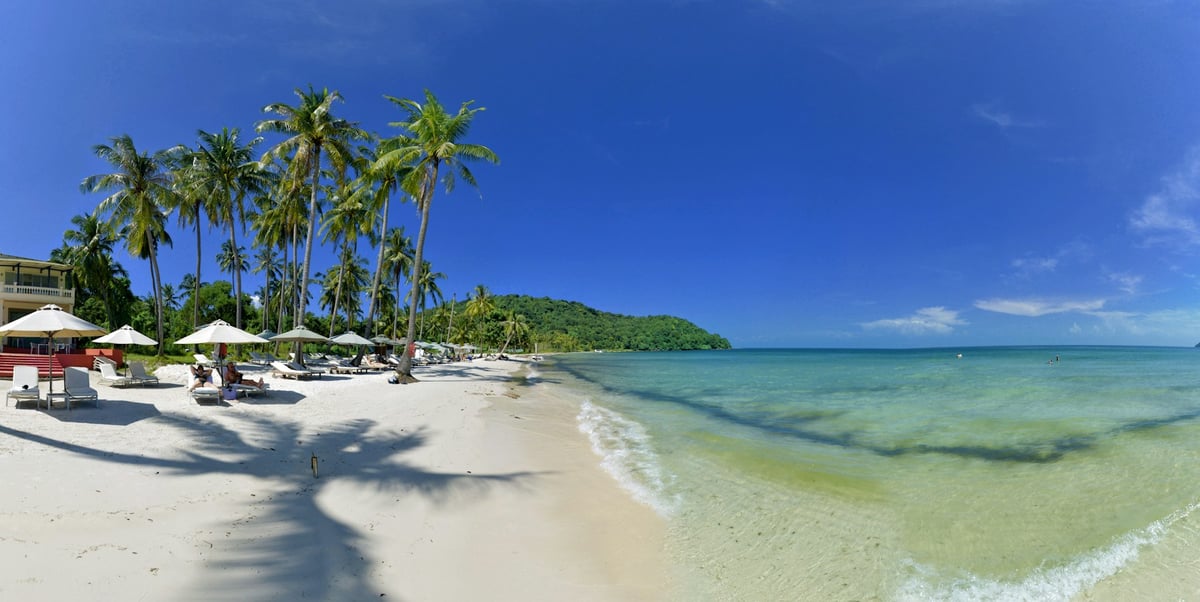
The main strip, running south from Duong Dong town down the west coast. Everything from hostels to large international resorts, restaurants and bars along the road behind, and the island's best sunsets straight off the beach.
It is the practical choice for a first visit: you can walk to food and a drink, you are near the town and the night market, and the range of prices is the widest on the island. The northern end near town is busiest; further south it thins out.
Duong Dong town
The island's main town, at the northern end of Long Beach. Cheaper accommodation, the night market, the fishing harbour and actual Vietnamese daily life. It is not a beach location, but it is a short ride from one and it is where the island's character is.
Ong Lang
North of Duong Dong, a stretch of coast with mid-size resorts and bungalow properties spaced out along it. Quieter than Long Beach, with coves rather than a continuous strip, and more trees. (This article contains affiliate links — if you book through them we earn a small commission at no extra cost to you.)
It suits couples and anyone who wants the resort to be the evening. The trade is that there is very little within walking distance, so dinner means the property's restaurant or a taxi.
The far north
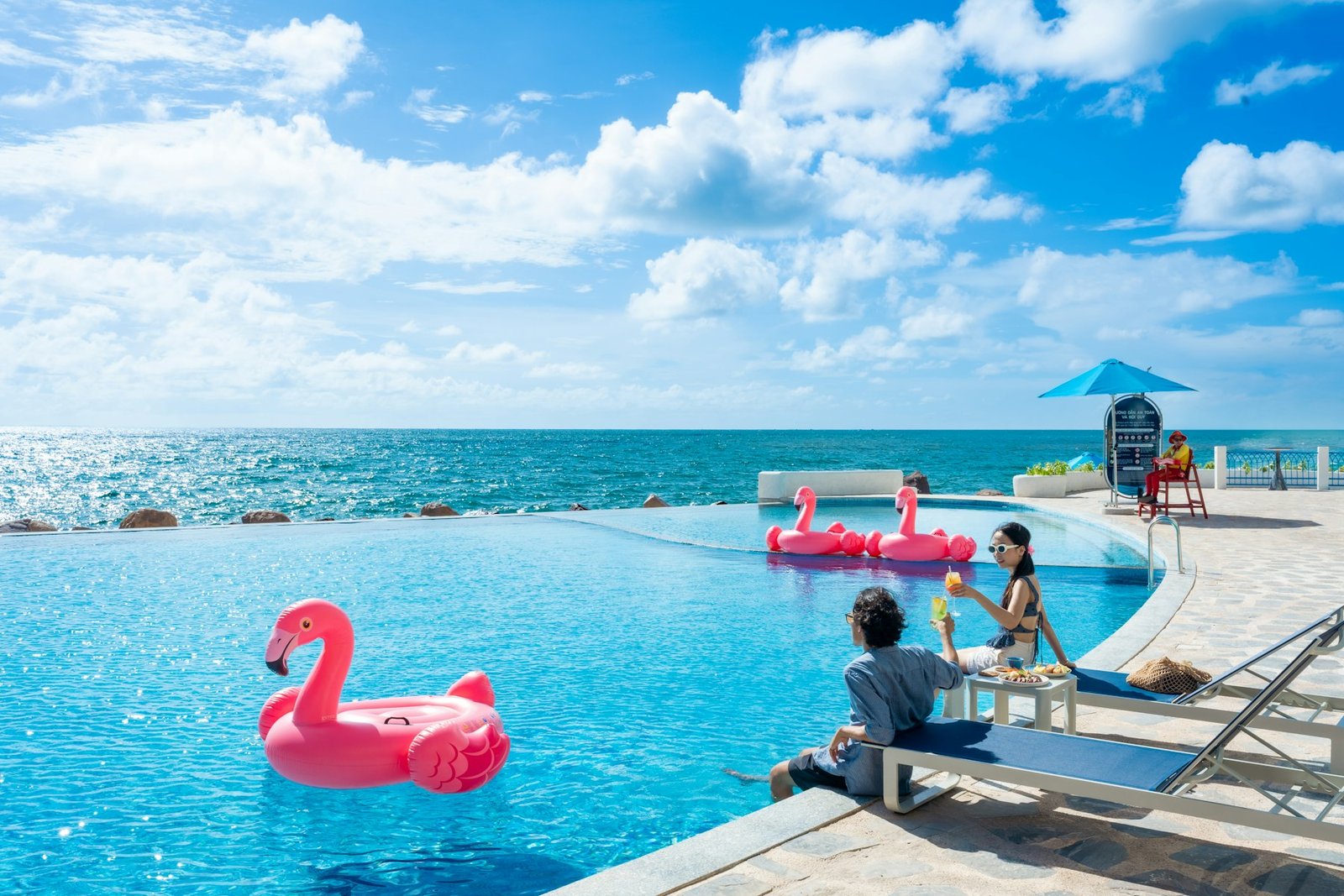
The northern tip has a large integrated resort development with its own beaches, a safari park and a casino, and separately some genuinely remote properties on undeveloped coast. These are two very different things in the same part of the island.
Either way you are a long way from Duong Dong — most of an hour — and the week is spent where you are staying. That suits some holidays exactly and strands others.
An Thoi and the south
The southern end of the island, around the An Thoi harbour and the entertainment complex. This is the most heavily developed part: a large themed resort town, the cable car to Hon Thom, a theme park, and the departure point for the island-hopping boats.
It suits families and anyone who wants things to do beyond the beach. It is also the part that least resembles the island people imagine when they book Phu Quoc, which is worth knowing in advance rather than discovering.
Sao Beach and the south-east
The island's most photographed beach is on the south-east coast, and there is comparatively little accommodation on it. Most people visit Sao for the day from elsewhere, which is why it is busy at midday and empty by late afternoon.
What the price buys
At the top end, Phu Quoc's resorts are genuinely international in standard and priced accordingly. In the middle, the island's rapid building means a lot of properties are new, which shows in the rooms and sometimes in the surroundings — a finished hotel next to an unfinished one is a common sight.
At the budget end, Duong Dong and the northern end of Long Beach have guesthouses and hostels at mainland prices. The gap between the ends here is wider than almost anywhere else in Vietnam.
How to choose
First visit, no car, want options: Long Beach. Couple, want quiet, happy to eat at the hotel: Ong Lang. Family with children who need entertaining: the south. Want the beach and nothing else and do not mind isolation: the far north. Travelling cheaply and want the island rather than the resort: Duong Dong.
The common mistake is booking on the property photographs without checking where on the island it is. A beautiful resort an hour from everything is a different holiday from the same resort ten minutes from a town.
Practical points before booking
Check the distance to Duong Dong and to the airport, in minutes by road rather than kilometres. Ask whether the property runs a shuttle and how often. Check whether the beach in front of it is swimmable in the month you are going — the west coast is calm in the dry season and considerably less so from May to October.
Check what is within walking distance, specifically. On much of this island the answer is nothing, and that is fine if you have decided it rather than discovered it.
Checking the construction
Development is continuous on parts of the island, and a beachfront property with building work next door is a real risk. Recent reviews are the only reliable guide to this, because it changes faster than any guide can track — look specifically for reviews from the last few months mentioning noise or site access.
When the island is full
Phu Quoc fills during the lunar new year period and the Vietnamese summer holidays, and prices move accordingly. Outside those, the dry season from November to April is high season for international visitors and the wet months are considerably cheaper.
FAQ
What is Long Beach on Phu Quoc like?
The main strip, running south from Duong Dong town down the west coast. Everything from hostels to large international resorts, restaurants and bars along the road behind, and the island's best sunsets straight off the beach.
How does Ong Lang compare with Long Beach?
North of Duong Dong, a stretch of coast with mid-size resorts and bungalow properties spaced out along it. Quieter than Long Beach, with coves rather than a continuous strip, and more trees. (This article contains affiliate links — if you book through them we earn a small commission at no extra cost to you.)
Is the north of Phu Quoc worth staying in?
The northern tip has a large integrated resort development with its own beaches, a safari park and a casino, and separately some genuinely remote properties on undeveloped coast. These are two very different things in the same part of the island.
Keep planning
Not sure how it all fits together?
Pick your trip length and we'll route a real day-by-day plan.