Where you sleep in Hanoi changes the trip more than it does in most cities, because the Old Quarter is both the best-located neighbourhood and the loudest. Here are the four areas worth considering and who each one actually suits.
The Old Quarter
The default, and the right default for a first visit of two or three nights. The central sights are on foot: Hoan Kiem is a few minutes away, the street food is at the door, and you are inside the thing you came to see. Accommodation runs from hostel dorms to small boutique hotels, and the value is remarkable by American standards.
The cost is noise. Scooters start before six, the streets are commercial all day, and the bar strip around Ta Hien runs loud until late. Ask for a room at the back and above the second floor, and look at where the hotel sits relative to Ta Hien before booking, since the bar corner carries further than its footprint suggests.
Who it suits
First-timers, short stays, anyone who wants to walk everywhere, and anyone who would rather be woken at six than take a taxi to dinner.
The French Quarter
South and east of the lake: wider streets, colonial architecture, the Opera House, and the city's grander hotels including the Metropole. Ten to fifteen minutes on foot from Hoan Kiem, which is close enough to walk in and far enough to sleep.
This is the right answer for a second visit, for anyone noise-sensitive, and for travellers who want a more comfortable base without losing walkability. The trade is that the immediate streets are quieter in the evening — you walk to the life rather than opening a window onto it.
Tay Ho and West Lake
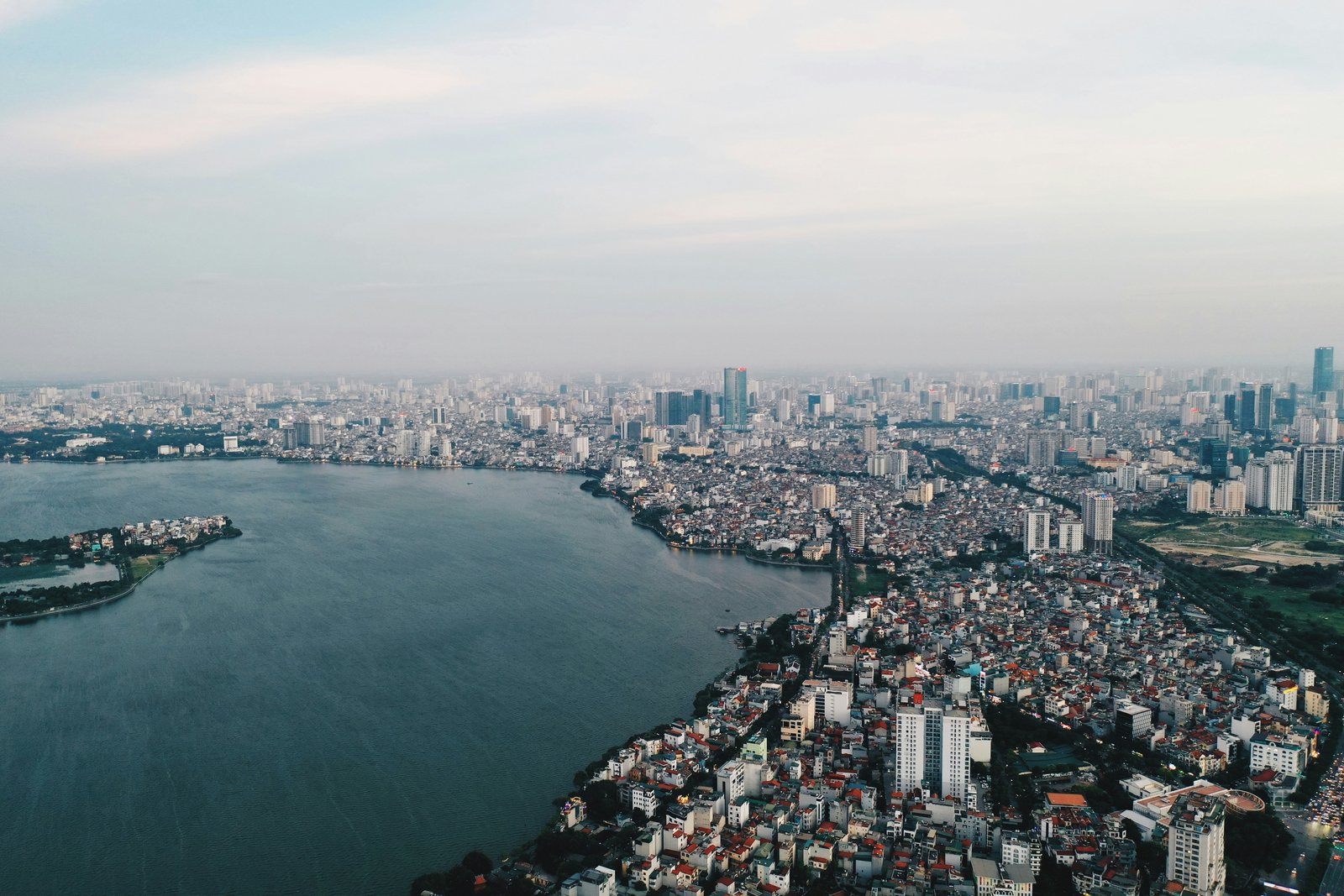
Northwest of the centre, around a large lake: leafy, low-rise, full of cafes and expatriates, and the most pleasant place in Hanoi to spend an unhurried day. The air feels better and the pace is slower.
It is also genuinely far. Each outing to the Old Quarter means a Grab ride of fifteen minutes or more, and considerably longer in peak traffic, which adds up across a short trip. Tay Ho makes sense for stays of a week or more, for families, and for anyone working while travelling. It is the wrong choice for three nights of sightseeing.
Ba Dinh
The embassy and government district, west of the Old Quarter around the Ho Chi Minh complex. Calm, green, wide pavements that are actually walkable, and noticeably fewer tourists. Hotels here are often better value for the standard than their equivalents near the lake. (This article contains affiliate links — if you book through them we earn a small commission at no extra cost to you.)
It is a reasonable compromise if the Old Quarter is full or if quiet matters more than immediacy, and it puts the mausoleum complex on your doorstep for its early opening hours.
Two areas worth ruling out
Anywhere out by the airport. Noi Bai is forty-five minutes to an hour from the centre and the surrounding area has little to offer a visitor. For most early departures a pre-dawn Grab from the city is the better trade; a genuinely pre-6am flight is the exception worth reconsidering.
And the far side of the Red River, in Long Bien district. Listings there look central on a map and are cheap, but you are across a bridge from everything and the crossings are congested at exactly the hours you will want to use them.
How many nights
Three is the number most itineraries land on and it works: one to arrive and acclimatise, two to see the city. Two nights is workable if you have been to Vietnam before. Four or more makes Tay Ho a genuine option and gives room for a Ninh Binh day trip without cutting anything.
What to check before booking
What to check before booking
Ask which floor the room is on and whether there is a lift, because many Old Quarter buildings are tall, narrow and stair-only. Ask whether the room has a window — a surprising number of cheap rooms in the Old Quarter do not, and the price often does not signal it.
Check the walking distance to Hoan Kiem on a map rather than trusting a listing that says central, and look at where the nearest bar street is. In winter, check that the room has heating as well as air conditioning; Hanoi's damp cold catches both travellers and hotels out.
The registration point
Under Vietnamese rules every visitor must have their overnight address registered with the local police. Hotels do this automatically from your passport at check-in, which is why they ask for it and sometimes keep it briefly. In an Airbnb or a private homestay the host is responsible, and it is worth confirming when you book that they handle it.
Prices, in rough terms
Hanoi is inexpensive by American standards at every tier: a dorm bed costs a few dollars, a clean private room in a small Old Quarter hotel is a modest two-figure sum, and even a well-reviewed four-star in the French Quarter sits far below the equivalent US rate. Rates rise around Tet and the April–May holiday pair. Check live rates for your own dates rather than planning around any figure in an article.
FAQ
Should you stay in Hanoi's Old Quarter?
The default, and the right default for a first visit of two or three nights. The central sights are on foot: Hoan Kiem is a few minutes away, the street food is at the door, and you are inside the thing you came to see. Accommodation runs from hostel dorms to small boutique hotels, and the value is remarkable by American standards.
What is the French Quarter like?
South and east of the lake: wider streets, colonial architecture, the Opera House, and the city's grander hotels including the Metropole. Ten to fifteen minutes on foot from Hoan Kiem, which is close enough to walk in and far enough to sleep.
What is Tay Ho and West Lake like?
Northwest of the centre, around a large lake: leafy, low-rise, full of cafes and expatriates, and the most pleasant place in Hanoi to spend an unhurried day. The air feels better and the pace is slower.
Keep planning
Not sure how it all fits together?
Pick your trip length and we'll route a real day-by-day plan.