Funeral Tents, Altars and Ghost Money: What You Are Seeing on a Vietnamese Street
A tent across the lane, music at four in the morning, paper money burning in a bin on the pavement. These are the most visible pieces of Vietnamese religious life, and here is what each one means and how to behave around it.
Editorial Written and fact-checked for American travelers
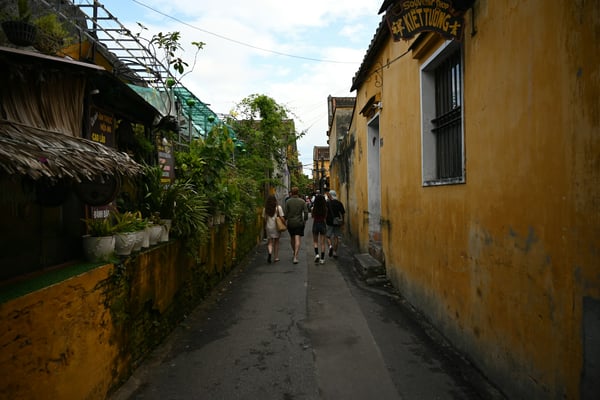
Within a day of arriving in Vietnam you will see something you cannot read: a canopy blocking a side street with a crowd in white headbands under it, a tray of fruit and burning incense on the pavement outside a phone shop, a fire of printed paper in a tin bucket, a brass band at an hour when no band should be playing. Guidebooks list temples and pagodas. The religion most visitors actually encounter is this one, practised at home and on the street, and it is easy to understand once someone explains it.
The altars
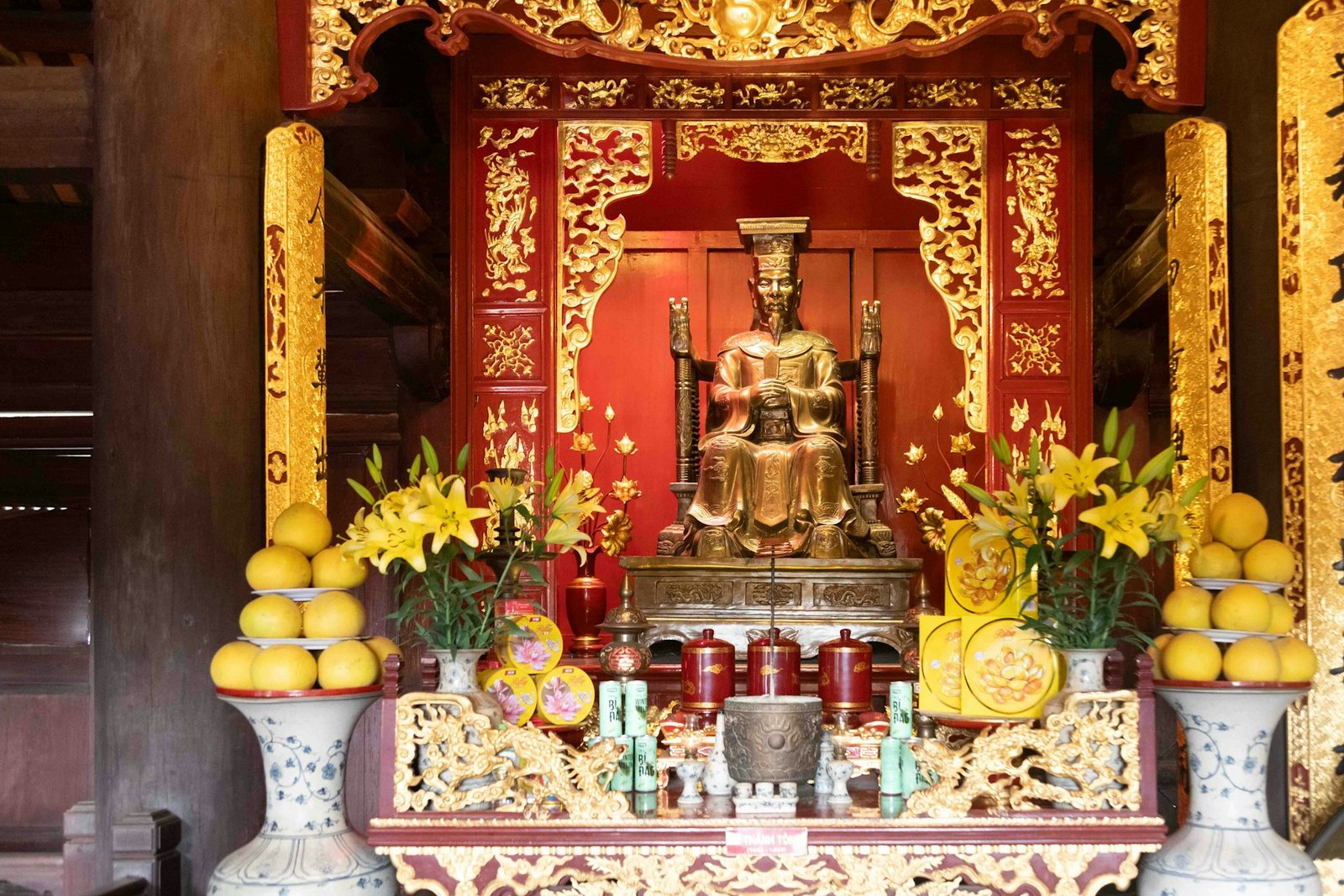
Almost every Vietnamese home and business keeps an altar, and it is the first thing to recognise. The ancestor altar inside the house holds photographs of the dead, incense, fruit, tea and sometimes cigarettes or a glass of liquor, and it is where the family marks anniversaries and the lunar new year.
The low altar at floor level by the door of a shop, with a fat laughing figure, a red lamp and offerings, is for the god of wealth and the god of the land, and it is tended every morning for business.
The belief underneath both is that the dead and the spirits need the same things the living do, food, money, cigarettes, a drink, and that a household looks after its own. It is older than Buddhism in Vietnam and it sits alongside it; a family can be Buddhist, Catholic or nothing in particular and still keep the ancestors fed.
What to do
Nothing, except not to step over an offering left on the pavement and not to point your feet at an altar if you are sitting near one. If you are a guest in a home, a glance at the ancestor altar and a small nod is noticed and appreciated. Photographs of a shop altar are fine; photographs of a family at theirs are not, unless invited.
The paper money
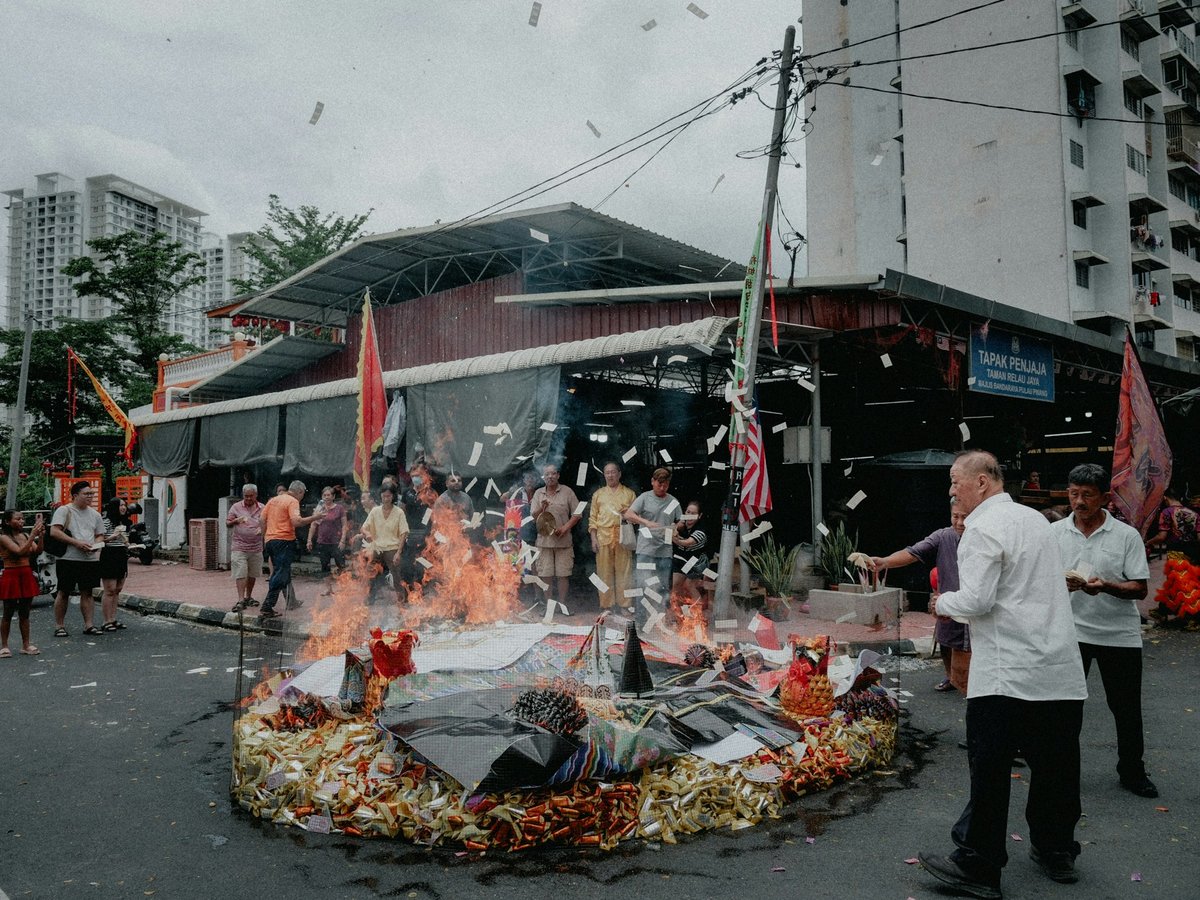
The printed paper being burned in a bucket on the pavement is money for the dead: imitation banknotes, often printed to look like US dollars, along with paper versions of clothes, houses, motorbikes and phones, sent to the ancestors by fire. It is burned on the first and fifteenth days of the lunar month, at the new year, on death anniversaries and heavily during the seventh lunar month, when the dead are believed to walk.
The practice is shared across Chinese-influenced East and Southeast Asia; Vietnam's version is its own.
Charred notes blow along the streets after a burning. People will tell you not to pick them up or keep one, because the money belongs to the dead and keeping it is bad luck. Whether or not you hold the belief, it is a courtesy to leave it where it fell.
The shops that sell it
Whole streets sell nothing else, most famously in Hanoi's Old Quarter on the street named for paper goods. The paper houses and cars are a craft in their own right and are worth a look as objects; buying one as a joke is the kind of thing that reads worse than it was meant.
The funeral tent
A canopy across a residential lane, with chairs, a portrait on a draped altar, a coffin inside the house and a family in white headbands, is a funeral, held at home over several days before the burial or cremation. The house receives visitors through the day and night, the family keeps vigil, and the neighbourhood accepts the closed street as a matter of course. Mourning clothes are white, not black; the headband marks the relationship to the dead.
The music is the part that wakes visitors. Funeral bands play at intervals through the night and, in the south especially, brass instruments and drums go with the procession, which leaves before dawn to avoid the heat and the traffic. A hearse decorated with dragons and a crowd on foot behind it at five in the morning is the funeral leaving. Lanterns, paper and firecrackers are not; those are the new year.
What to do
Walk around the tent, not through it, lower your voice, and do not photograph the coffin or the family. If you are staying nearby and the music keeps you up, that is a night, and a tourist's complaint to a grieving family is the one thing that would genuinely cause offence. If you knew the person, a white envelope with a modest amount of money, handed to the family with both hands, is the custom.
The anniversary party
The gathering you may be invited to as a guest of a family is a death anniversary, called a giỗ, and it is a party rather than a wake. Vietnamese families mark the date of a relative's death, not their birthday, with a meal in which the first dishes are placed on the altar for the ancestor before the living eat.
Relatives come from a distance, there is a lot of food, and a foreign guest is a welcome addition rather than an intrusion.
Bring fruit or something for the table, eat what you are given, and expect to be offered rice liquor by the older men. There is no mourning in the room. The dead are present as a guest of honour, and the point of the day is the family in the same house.
Tombs in the fields
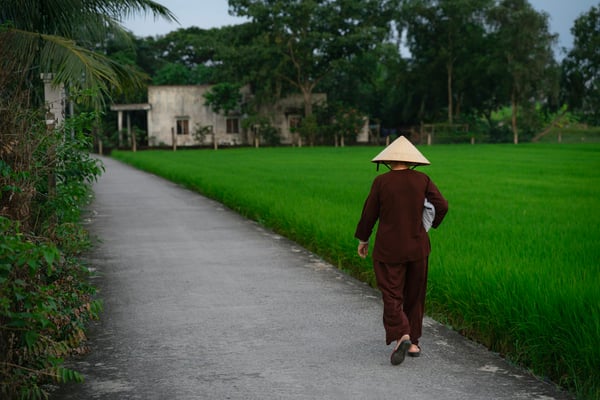
The ornate little structures standing in rice paddies and on hillsides across the countryside are family tombs, placed on the family's land and visited at the new year and on anniversaries. In the central provinces around Hue some are elaborate enough to pass for small temples. Nobody minds you looking from the road.
Reading the calendar
Most of what you see follows the lunar calendar rather than the Western one. Offerings and burnings peak on the first and the fifteenth of each lunar month; the seventh month is the month of the dead, with the biggest burnings and the most street altars; the days before Tet are a general cleaning of altars and graves and a time of heavy incense.
A lunar calendar app, or a glance at the small lunar date printed on Vietnamese calendars, tells you why the street is suddenly full of smoke.
None of this requires anything of you beyond stepping carefully and keeping the camera down at the right moments. It rewards attention, because once the pieces have names, the ordinary street turns out to be where most of Vietnam's religious life is happening.
Keep planning
Not sure how it all fits together?
Pick your trip length and we'll route a real day-by-day plan.