Vietnamese customs is straightforward for an ordinary tourist, and most people walk through the green channel without speaking to anyone. The allowances are worth knowing anyway, because two of them — cash and alcohol — are easy to exceed without noticing, and the rules are more generous and more precise than the summaries online suggest.
Alcohol: three limits, pick one
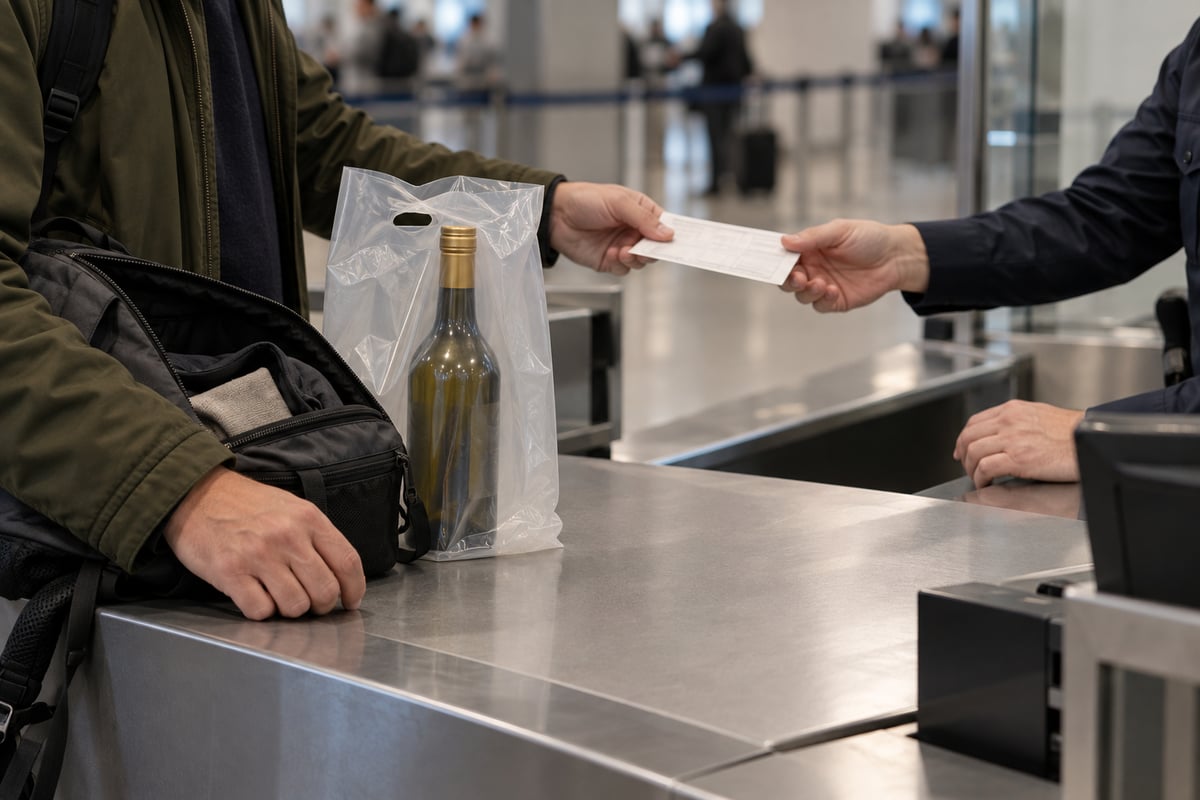
Vietnam's duty-free allowance on arrival gives each traveller, per entry, 1.5 litres of spirits at 20% ABV or above, or 2 litres under 20%, or 3 litres of beer. These are alternatives rather than a combined total — you get one of the three, not all of them.
There is a sensible overflow provision most sources omit. A single bottle that goes over the limit by no more than one litre passes duty-free in its entirety; past one litre over, only the excess is dutiable. In practice that means a standard bottle bought in an airport duty-free shop on the way in is almost never a problem.
Tobacco
The tobacco allowance is 200 cigarettes, or 250 grams of shredded tobacco, or 20 cigars per entry, and again these are alternatives. The limits do not apply to anyone under eighteen, who has no allowance at all rather than a reduced one.
Everything else: a value cap, not an item list
Beyond alcohol, tobacco and a reasonable quantity of personal belongings, other goods come in duty-free up to a total customs value of 10,000,000 dong per entry. The figure is set in dong by decree, so its dollar equivalent drifts with the exchange rate — check the current conversion rather than trusting a number you read somewhere.
For a normal holiday this is not a constraint. It becomes one if you are bringing gifts in quantity, carrying new electronics still in their boxes, or travelling with professional equipment. Anything above the allowance has to clear customs as imported goods rather than as luggage.
The rule that works in your favour
One provision is worth knowing before you reach the counter: if you are over the allowance, you choose which items count inside it and which are declared. The decree gives that choice to the traveller, not to the officer. If you are carrying one expensive item and several cheap ones, you can put the expensive one inside the allowance and declare the rest — provided that item is itself within the 10,000,000 dong ceiling, which the choice does not override.
None of this replaces the entry requirements themselves, which are a separate matter — passport validity, the pre-arrival declaration and the visa are covered in our guide to Vietnam visa requirements for Americans.
Cash you must declare
There is no limit on how much money you may bring into or out of Vietnam, but above either threshold you must declare it in writing: more than 15,000,000 dong, or more than 5,000 US dollars in foreign currency. The same figures apply on the way out.
Note what the obligation actually is. You are not asking permission and you are not being taxed — you are filling in a form. A competing figure of 7,000 dollars circulates online and traces back to a superseded notice from 2005; the current thresholds are the ones above.
What you cannot bring
The prohibited-import list is set by decree and changed on 5 September 2026, when Decree 292/2026 replaced Decree 69/2018. The categories that matter to a tourist are the predictable ones: weapons and ammunition, narcotics, and politically sensitive publications or material deemed contrary to Vietnamese cultural norms.
Two practical notes. Drones frequently attract attention and may require permission, so research before packing one rather than discovering the rule at the airport. And prescription medication should travel in its original labelled packaging with a copy of the prescription, because some ingredients in common prescriptions, including certain ADHD treatments, are controlled in Vietnam.
The allowance resets each entry
The duty-free allowances above — alcohol, tobacco, the goods value — are per person, per entry, granted against your passport. If your trip includes a hop to Cambodia or Laos and back, you arrive with a fresh allowance on the return, which matters more for someone doing a border run than for a single-entry visitor. The cash thresholds work differently: they are reporting triggers rather than allowances, and they apply on the way out as well as in.
The personal-belongings category is deliberately written as a reasonable quantity rather than a list, which gives officers discretion and gives you latitude. Clothes, a laptop, a camera and a phone in ordinary numbers are luggage. Six identical new phones in retail packaging are not, whatever their total value, because the question shifts from what they are worth to what they are for.
Taking things home
The allowances above govern what comes in. On the way out your constraint is mostly your own country's: US Customs sets what you may bring back duty-free and that figure has nothing to do with Vietnam's. The one Vietnamese restriction worth checking before you buy is on genuine antiques and certain cultural objects, which require documentation to export — a reproduction lacquer piece is fine, a genuinely old one may not be, and a reputable dealer will tell you which you are holding.
Green channel, red channel
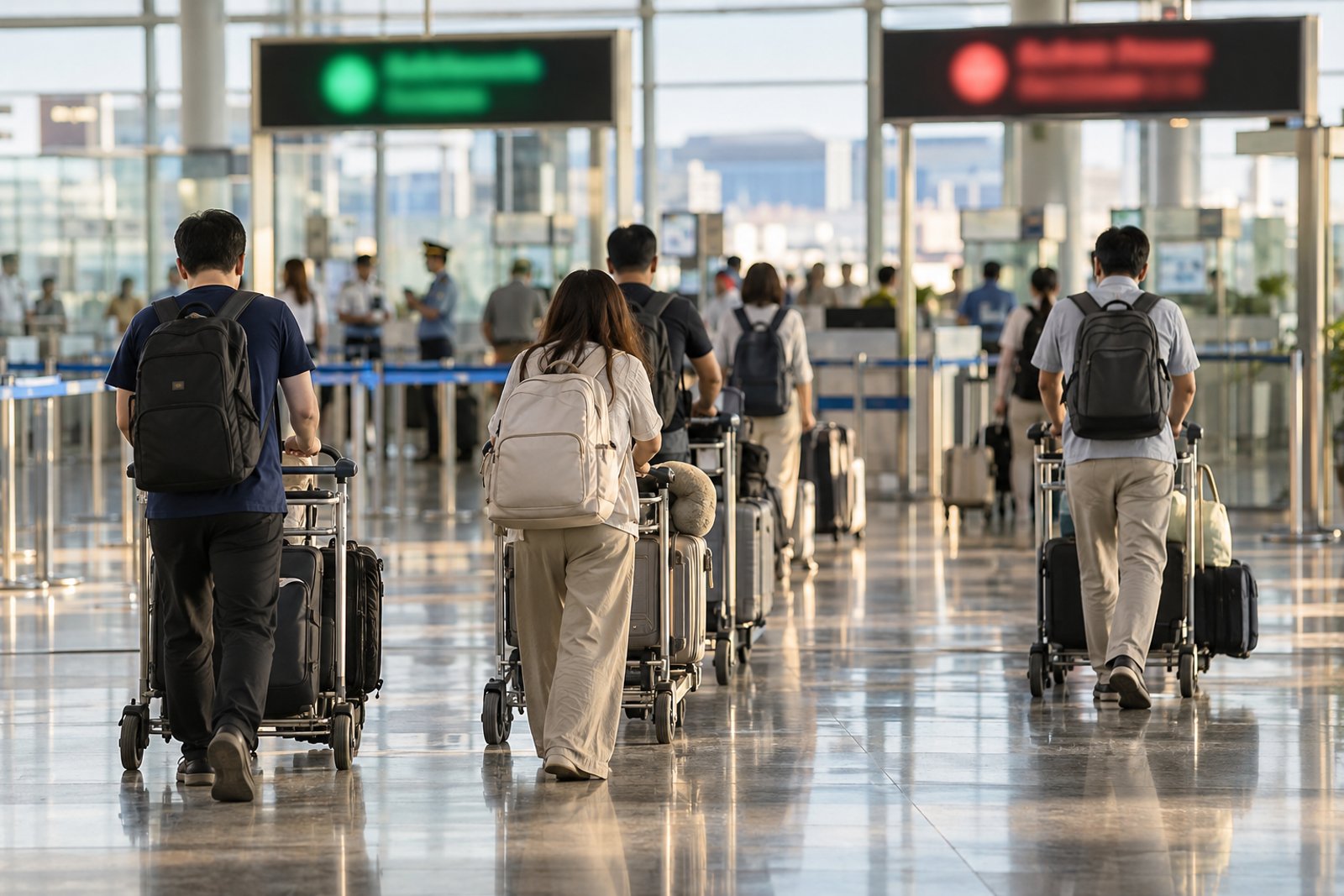
If you are inside every allowance and carrying nothing restricted, you take the green channel and keep walking. If you are over on any of them, or carrying cash above the thresholds, take the red channel and declare. The paperwork is short, and declaring is not itself a penalty — though goods over the allowance may still attract duty, as with the alcohol rule above. What declaring does cost you nothing in is trouble: being found over the line after choosing green is a different conversation entirely.
FAQ
What alcohol can you bring into Vietnam?
Vietnam's duty-free allowance on arrival gives each traveller, per entry, 1.5 litres of spirits at 20% ABV or above, or 2 litres under 20%, or 3 litres of beer. These are alternatives rather than a combined total — you get one of the three, not all of them.
What is Vietnam's duty-free value limit?
Beyond alcohol, tobacco and a reasonable quantity of personal belongings, other goods come in duty-free up to a total customs value of 10,000,000 dong per entry. The figure is set in dong by decree, so its dollar equivalent drifts with the exchange rate — check the current conversion rather than trusting a number you read somewhere.
Do you have to declare cash entering Vietnam?
There is no limit on how much money you may bring into or out of Vietnam, but above either threshold you must declare it in writing: more than 15,000,000 dong, or more than 5,000 US dollars in foreign currency. The same figures apply on the way out.
Keep planning
Not sure how it all fits together?
Pick your trip length and we'll route a real day-by-day plan.