Fourteen days on the ground is the length at which Vietnam stops feeling rushed. You can run the country north to south, spend real time in three regions, and still keep slack for the weather to misbehave. There are still trade-offs — they are just no longer brutal. Here is the shape that works and the decisions inside it.
The frame
Fly into Hanoi, out of Ho Chi Minh City, open-jaw. Two internal flights — Hanoi to Hue or Da Nang, then Da Nang to Ho Chi Minh City — with the Hue to Da Nang leg done by train. Count the travel days separately from the fourteen: the crossing eats a calendar day each way.
The direction matters less at this length than at seven days, because two weeks absorbs a mistake. If your flights point you south-to-north, run the same plan backwards.
Days 1 to 3 — Hanoi
Arrive, write off the afternoon, and give the city two full days. Hoan Kiem and the Old Quarter on foot, the Temple of Literature, the Ho Chi Minh complex in a morning, and one of the Vietnamese Women's Museum or Hoa Lo Prison. Eat bun cha at lunch and pho at breakfast, not the other way round.

Days 4 to 5 — the northern choice
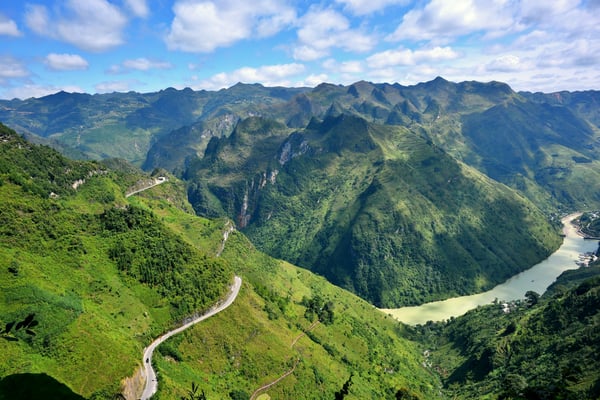
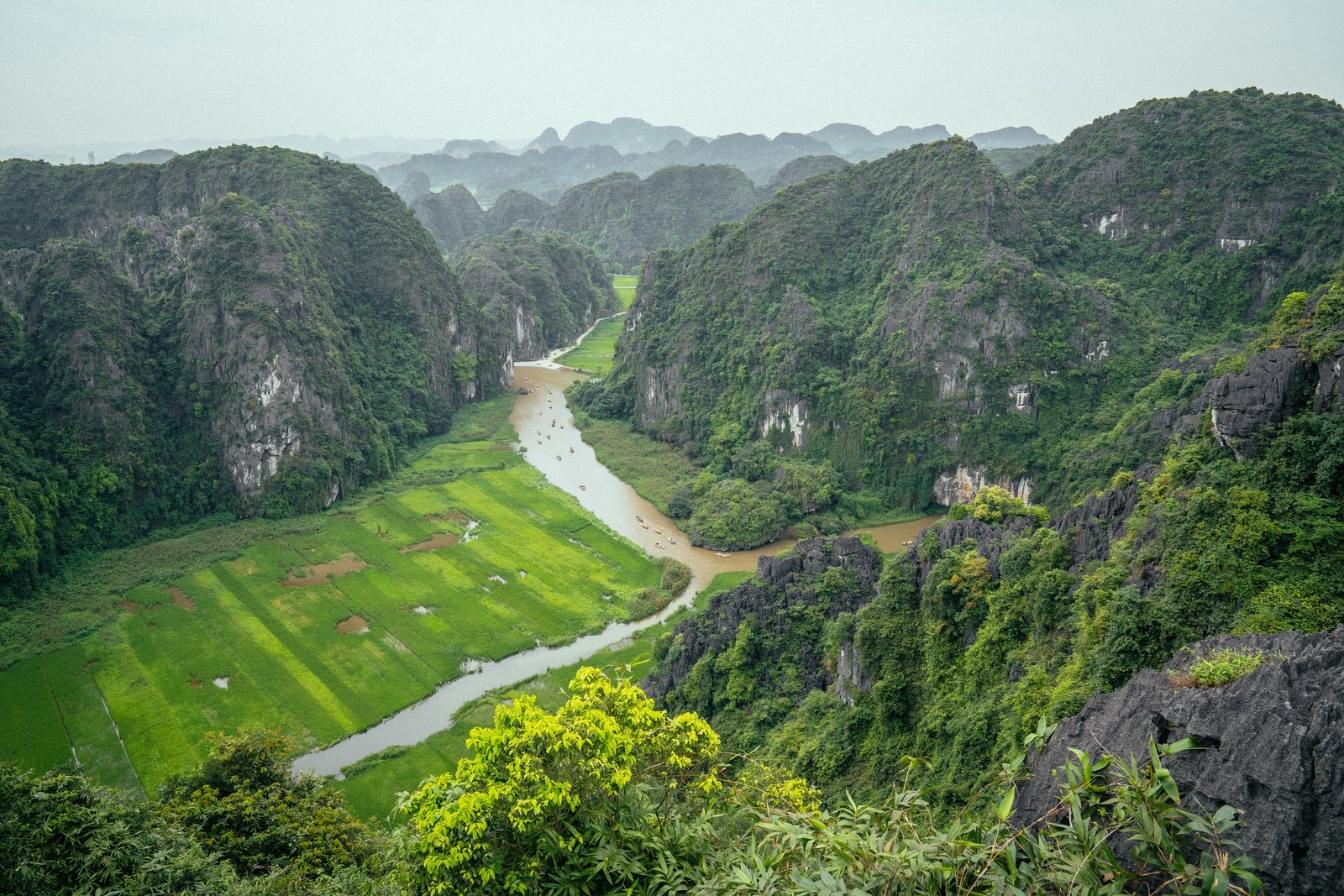
This is the first real fork. Sapa, five to six hours by road, gives you terraced mountains and a valley homestay. Ninh Binh, two hours away, gives you the same karst landscape as Ha Long but on rivers, and costs you half the travel. Doing both inside two weeks is possible and leaves the rest of the trip tight.
Ninh Binh is the better choice for most first visits: two hours each way against five or six, for a landscape that is extraordinary in its own right rather than a lesser version of anything. Sapa is the better choice if mountains and trekking are why you are coming, and it is worth the travel if they are.
Days 6 to 7 — Ha Long or Lan Ha
An overnight cruise from Hanoi, back the following afternoon. Lan Ha Bay, reached via Cat Ba, has the same karst scenery with a fraction of the boats and is worth asking for by name. Then an evening flight south. (This article contains affiliate links — if you book through them we earn a small commission at no extra cost to you.)
Days 8 to 9 — Hue
Fly Hanoi to Hue, or to Da Nang and transfer. The Imperial City takes a morning, two of the royal tombs take an afternoon, and the DMZ — Vinh Moc tunnels, Khe Sanh, the Ben Hai river — takes a full and sobering day. Hue is also where the food changes: bun bo Hue, and the steamed rice-cake plates.
Day 10 — the Hai Van Pass
Hue to Da Nang by train, about two and a half to three hours along the coast and over the pass. It is one of the best rail stretches in Southeast Asia, costs very little, and replaces a transfer you would make anyway. Sit on the right heading south.
Days 11 to 12 — Hoi An
The Ancient Town before eight and after nine, My Son Sanctuary at opening, An Bang beach in between, and a tailor if you want one — allow two fittings, which means arriving with time.
Days 13 to 14 — Ho Chi Minh City
Fly down. The War Remnants Museum first and early; it will shape the rest of the day. Reunification Palace, Cho Lon in the late afternoon, street seafood in District 4 at night. Use the last morning for Cu Chi or the markets, then fly out.
The fourteen-day spine: Hanoi → Ninh Binh → Ha Long & Lan Ha Bay → Hue → Hoi An → Ho Chi Minh City → Can Tho & the Mekong Delta. (Enable JavaScript for the interactive map.)
The two things people cut that they should not
The Mekong Delta usually gets dropped, and the version that survives — a packaged day trip from Ho Chi Minh City — is widely reported as a disappointment. If the Delta matters to you, it needs an overnight in Can Tho for the dawn floating market, which means taking two days from somewhere else. That is a real trade, and worth making consciously rather than discovering on day twelve.
The DMZ day out of Hue is the other. Alongside Cu Chi in the south, it is one of the few places the war is on the ground rather than in a museum, and it is the less crowded and more sobering of the two.