These are the three Vietnamese dishes with international recognition, and all three are easy to eat badly in Vietnam by going to the wrong kind of place. Here is what each one is, where to eat it, and what to look for.
Pho
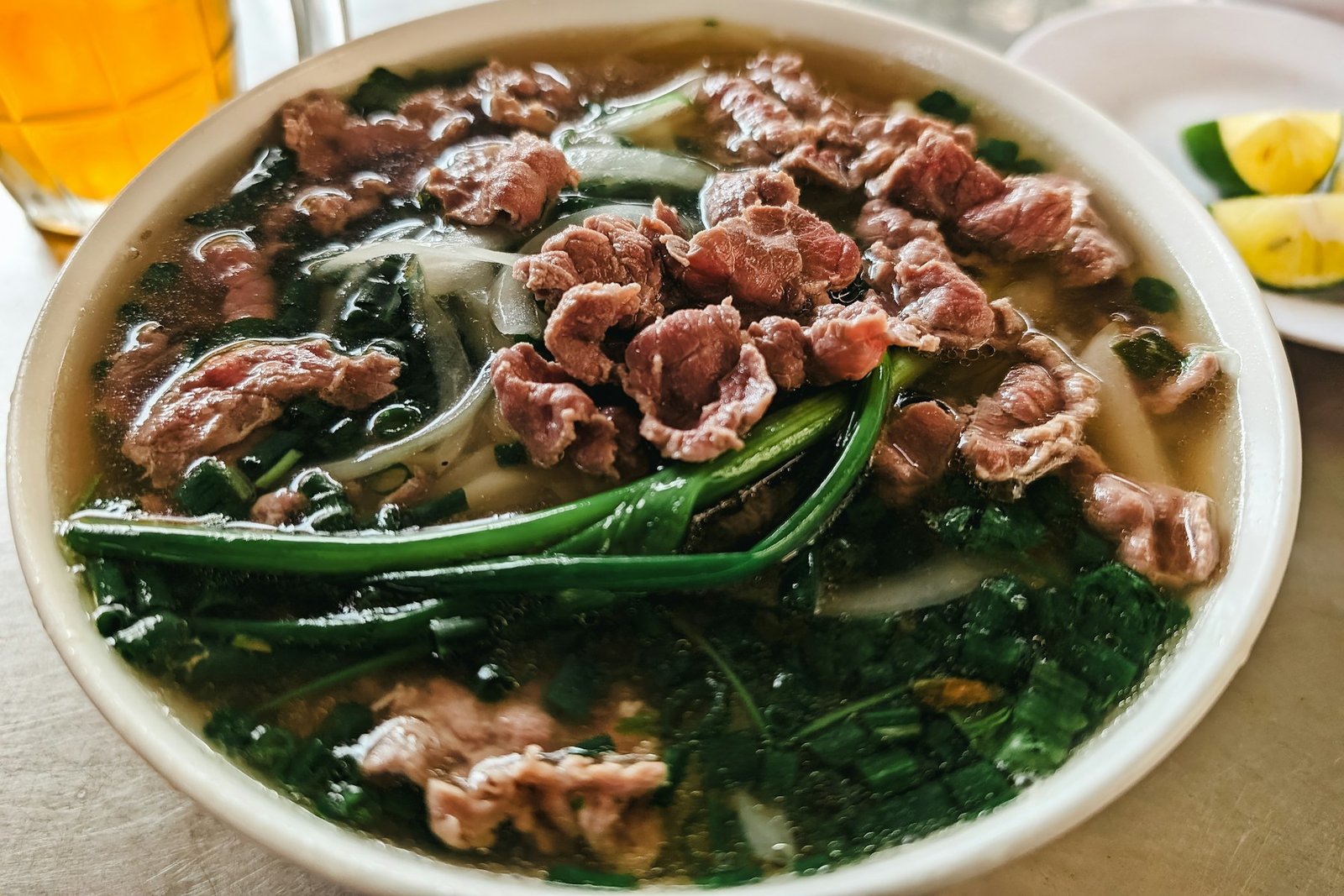
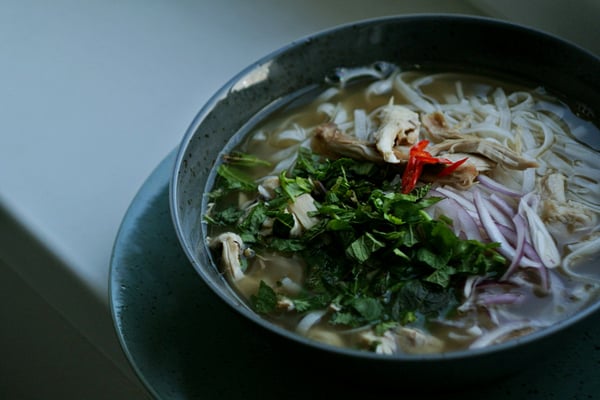
A rice noodle soup built on a long-simmered broth, served with beef or chicken. Everything is the broth: it is simmered for hours with charred onion and ginger, star anise, cassia and cloves, and a good one is clear, deeply savoury and only faintly sweet.
Northern pho is the original and the plainer version — clear broth, few accompaniments, maybe some spring onion and a wedge of lime. Southern pho is sweeter, usually comes with hoisin and sriracha on the table, and arrives with a plate of bean sprouts, Thai basil, sawtooth herb and lime.
The cuts
Pho bo tai is rare beef, sliced thin and cooked by the hot broth at the table. Chin is well-done brisket. Gau is fatty flank, nam is flank, gan is tendon, bo vien is beef ball. Tai nam is the common default and a good first order. Pho ga is the chicken version, lighter and underrated.
What a good one looks like
Clear broth, not cloudy. Noodles that are soft but still separate. A smell of spice and beef rather than of stock powder. And a shop that sells pho and essentially nothing else, is busy at breakfast, and has a large pot at the front.
Pho is a breakfast and early-lunch dish in Vietnam. A pho shop at eight in the morning and the same shop at four in the afternoon are not the same proposition, and many of the best simply close when the pot is finished.
Bun cha
A Hanoi dish, and arguably the one that rewards a visit to the north most. Grilled pork — both patties and slices of belly — arrives in a bowl of warm, sweet-sour, diluted fish sauce with slices of pickled green papaya and carrot floating in it. Alongside: a plate of cold rice vermicelli and a mountain of herbs.
You assemble it. Noodles and herbs into the bowl of broth and pork, a few at a time, and eat with chopsticks. It is not a soup and the broth is not meant to be drunk, though nobody will stop you.
What to look for
Charcoal. The pork should be grilled over coals, and in Hanoi you can usually smell a bun cha shop before you see it — the smoke from the grills on the pavement at lunchtime is the signal. Pork that has been cooked on a flat-top is a different and much duller dish.
Bun cha is lunch. Most shops open late morning and are done by early afternoon.
Banh mi
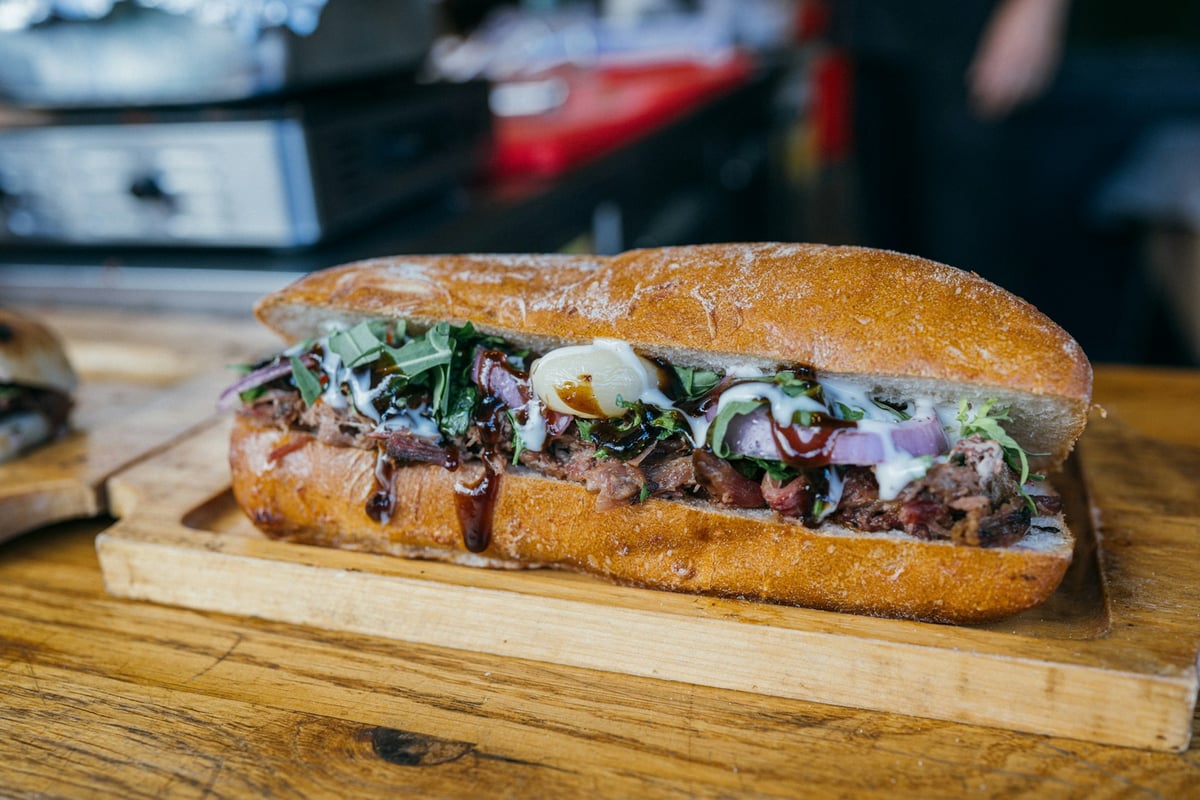
A Vietnamese baguette, light and crisp-crusted from the rice flour in the dough, split and filled. The standard build is pate, some form of pork, pickled carrot and daikon, cucumber, coriander, chilli and a sauce.
The variations are endless: banh mi thit nuong with grilled pork, banh mi xiu mai with pork meatballs in tomato sauce, banh mi op la with fried eggs, banh mi cha ca with fish cake. Hoi An has a particularly strong reputation for it.
What separates a good one
The bread, first. It should be audibly crisp and light enough to compress, warmed or toasted before filling. A dense, bready roll is the most common failure.
Then the balance: the pickles and the herbs are not optional, and a banh mi that is mostly meat and mayonnaise has missed the point. A cart with a queue and a charcoal brazier is a better bet than a shop with a photo menu.
The accompaniments, and what to do with them
With pho, in the south: tear the basil and sawtooth herb rather than dropping leaves in whole, add bean sprouts a few at a time so the broth stays hot, and squeeze the lime at the end. Hoisin and sriracha are for the side dish, not for the bowl, if you want to taste the broth you came for — though plenty of Vietnamese people put them straight in.
With bun cha, work in small batches rather than tipping everything in at once; the noodles go soft and the herbs wilt. With banh mi, there is nothing to assemble, but ask for extra chilli if you want it, because the default is mild for a foreign customer.
Prices and how to order
All three are inexpensive at the places that specialise in them, and several times the price at restaurants aimed at visitors. Prices are generally posted at street stalls; where they are not, ask first.
Ordering is usually a matter of saying the dish name and holding up fingers for how many. At a pho shop, saying "tai nam" after "pho" gets you the standard mixed-beef bowl.
Where to eat each one
Pho is everywhere, but the northern version in Hanoi is the one to seek out. Bun cha is a Hanoi dish and is best there. Banh mi is at its best in the south and in Hoi An. If your route covers the whole country, eat each one where it belongs.
FAQ
What is pho, and what makes a good one?
A rice noodle soup built on a long-simmered broth, served with beef or chicken. Everything is the broth: it is simmered for hours with charred onion and ginger, star anise, cassia and cloves, and a good one is clear, deeply savoury and only faintly sweet.
What is bun cha?
A Hanoi dish, and arguably the one that rewards a visit to the north most. Grilled pork — both patties and slices of belly — arrives in a bowl of warm, sweet-sour, diluted fish sauce with slices of pickled green papaya and carrot floating in it. Alongside: a plate of cold rice vermicelli and a mountain of herbs.
What is in a banh mi?
A Vietnamese baguette, light and crisp-crusted from the rice flour in the dough, split and filled. The standard build is pate, some form of pork, pickled carrot and daikon, cucumber, coriander, chilli and a sauce.
Keep planning
Not sure how it all fits together?
Pick your trip length and we'll route a real day-by-day plan.