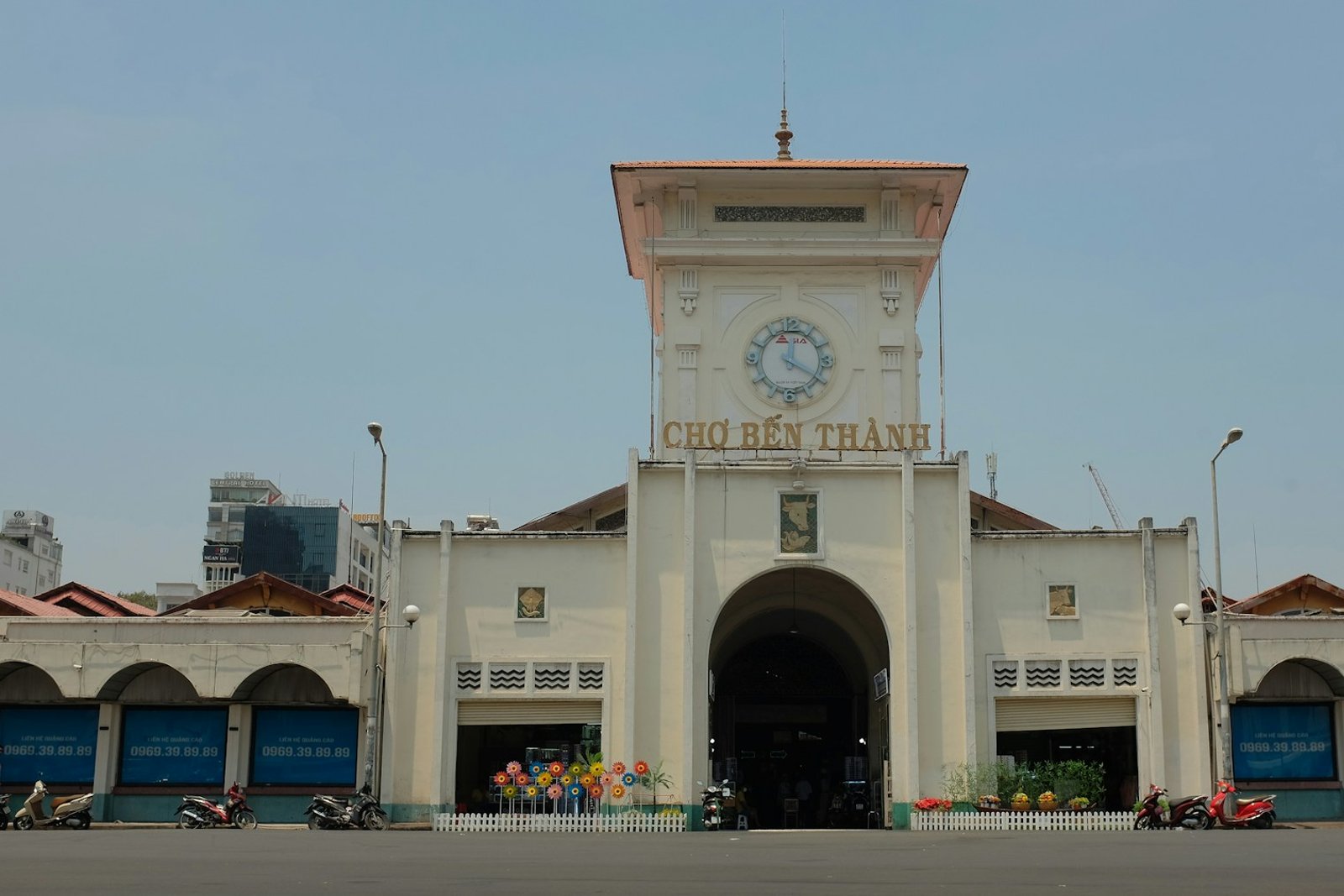
Ben Thanh is the market everyone in Ho Chi Minh City is sent to. It sits at the centre of District 1 under a clock tower that is one of the city's landmarks, and it has been there in some form since the French period. It is also, squarely, a market for visitors — and it works better once you accept that.
What is inside
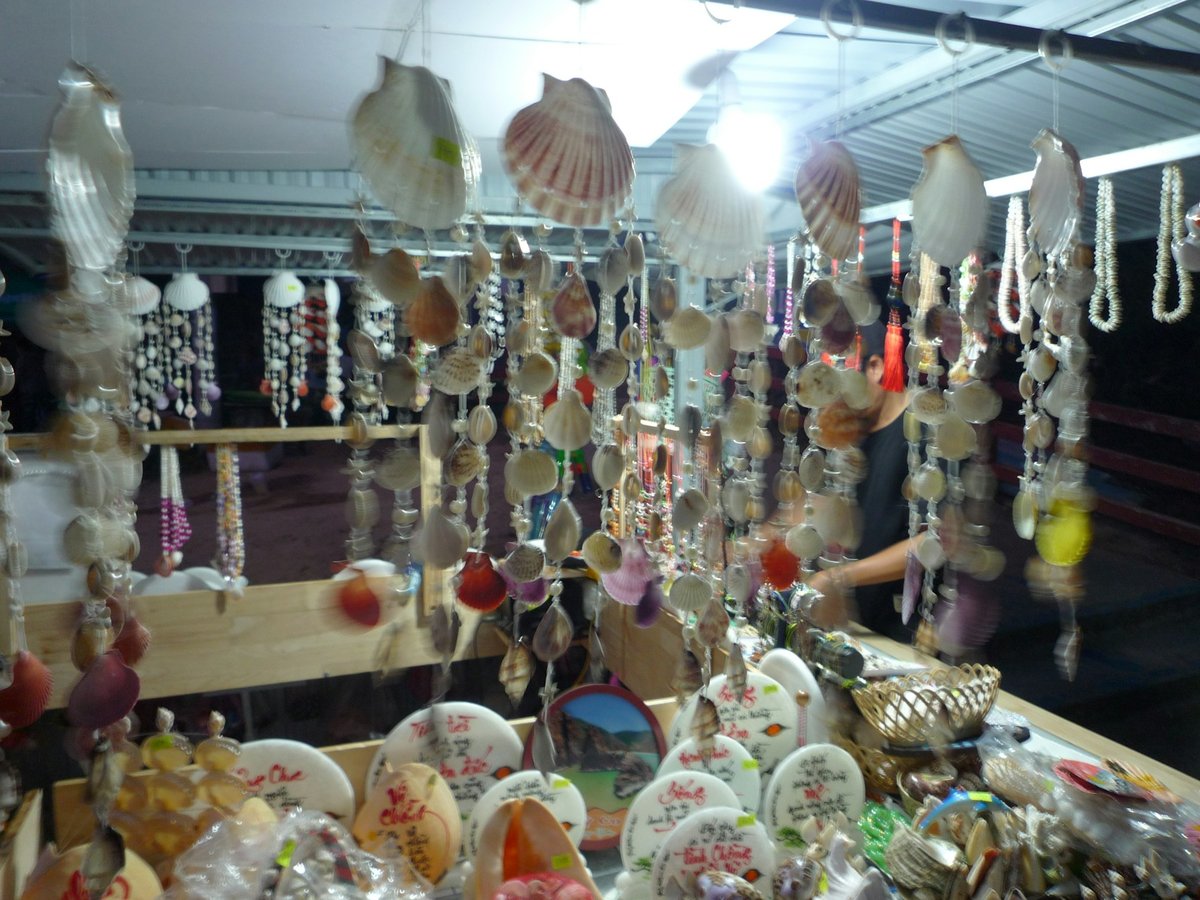
The covered hall is divided roughly by trade. Clothing and fabric occupy a large share, then souvenirs — lacquerware, conical hats, embroidered linen, coffee, chopsticks, T-shirts. There is a jewellery and watch section, a dried goods and spice section, and a food court of small stalls towards the back.
The food is the part most worth your time. The stalls sell pho, bun, banh xeo, com tam and seafood at prices above street level but below restaurant level, and sitting at a stall counter is a pleasant way to spend an hour.
The coffee and spice stalls
Vietnamese coffee, dried fruit, cashews, pepper and cinnamon are among the better things to buy here, because they are compact, they travel, and the quality is reasonable. Check whether cashews and dried fruit are vacuum-sealed if you are flying with them.
Prices and bargaining
Prices are not marked on most stalls and the opening figure quoted to a foreign visitor is a starting point rather than a price. Bargaining is expected here and is conducted without hostility.
The useful habits: settle the number before anything is wrapped, agree it in dong rather than dollars, walk away if the gap is too wide — there are usually several stalls selling the identical item — and know roughly what the thing costs elsewhere before you start. A shop with marked prices nearby is a good calibration.
The night market
When the hall closes in the evening, stalls set up in the streets around it, concentrated along the two sides of the building. The night version is more food and souvenirs, less fabric and jewellery, and the atmosphere is better.
It is also busier and tighter. Keep your bag in front of you and your phone away; bag snatching and motorbike phone grabs are the common petty crimes in Vietnamese cities, and a crowded night market is exactly the setting.
What it is not good for
It is not where the city shops. Prices are higher than the neighbourhood markets, the goods are weighted towards souvenirs, and the pressure from stallholders is constant in a way it is not elsewhere.
If you want a market that serves local households, Binh Tay in Cholon is the wholesale market for the western half of the city, and the smaller district markets across town are where food is actually bought.
Tan Dinh and the fabric market
Tan Dinh market, north of the centre near the pink church, is the city's fabric market and is a different proposition entirely — rolls of cloth rather than finished clothing, and a local clientele.
The scams to know about
Nothing elaborate. The recurring ones are a price agreed in dollars then converted unfavourably, a quoted figure that turns out to be per item rather than for the set, and change counted back short in a crowd.
The same habits reduce all three: fix the number in dong, repeat it back, and count your change before you move off. None of that is a guarantee, but it removes most of the ambiguity a dispute grows out of.
Practical notes
The main hall opens early and closes in the evening; the street market runs after that. It is hot and closely packed inside, and the aisles are narrow. Go early in the day if you want to move around it comfortably.
The market sits above a metro station on the city's first line, which makes it easy to reach from the north of District 1. Grab drops and collects on the surrounding streets.
What is worth the money
Coffee, pepper, cinnamon, cashews and dried fruit are genuinely good value and travel well. Lacquerware and embroidered linen are reasonable if you look at the quality rather than the price. Silk, watches and branded clothing are where the gap between what you are told and what you are buying is widest.
How to use it well
Treat it as an hour rather than an afternoon. Eat at the food court, buy coffee and spices, look at the lacquerware, and go. The things worth buying here are the consumables and the small goods; the clothing and the branded items are where the price gap and the quality questions are widest.
And it is worth seeing once regardless of whether you buy anything, because the building and the scale of it are part of the city's fabric. Just do not plan the day around it.
FAQ
What is sold inside Ben Thanh Market?
The covered hall is divided roughly by trade. Clothing and fabric occupy a large share, then souvenirs — lacquerware, conical hats, embroidered linen, coffee, chopsticks, T-shirts. There is a jewellery and watch section, a dried goods and spice section, and a food court of small stalls towards the back.
Do you have to bargain at Ben Thanh Market?
Prices are not marked on most stalls and the opening figure quoted to a foreign visitor is a starting point rather than a price. Bargaining is expected here and is conducted without hostility.
What is the Ben Thanh night market like?
When the hall closes in the evening, stalls set up in the streets around it, concentrated along the two sides of the building. The night version is more food and souvenirs, less fabric and jewellery, and the atmosphere is better.
Keep planning
Not sure how it all fits together?
Pick your trip length and we'll route a real day-by-day plan.