Vietnam grows an enormous amount of coffee and has built a drinking culture around it that owes very little to European or American habits. Ordering it well is one of the quickest ways to get something genuinely local for almost nothing.
The bean
Most Vietnamese coffee is robusta rather than arabica — stronger, more bitter, higher in caffeine and with a heavier body. That is not an accident of quality; the drinks are built around it. Robusta is why condensed milk works, and why a Vietnamese coffee can take that much sweetness without disappearing.
Arabica and specialty-grade coffee are grown in Vietnam too, mostly around Da Lat, and the third-wave cafes in the cities serve it. That is a parallel scene rather than the mainstream one.
The classic drinks
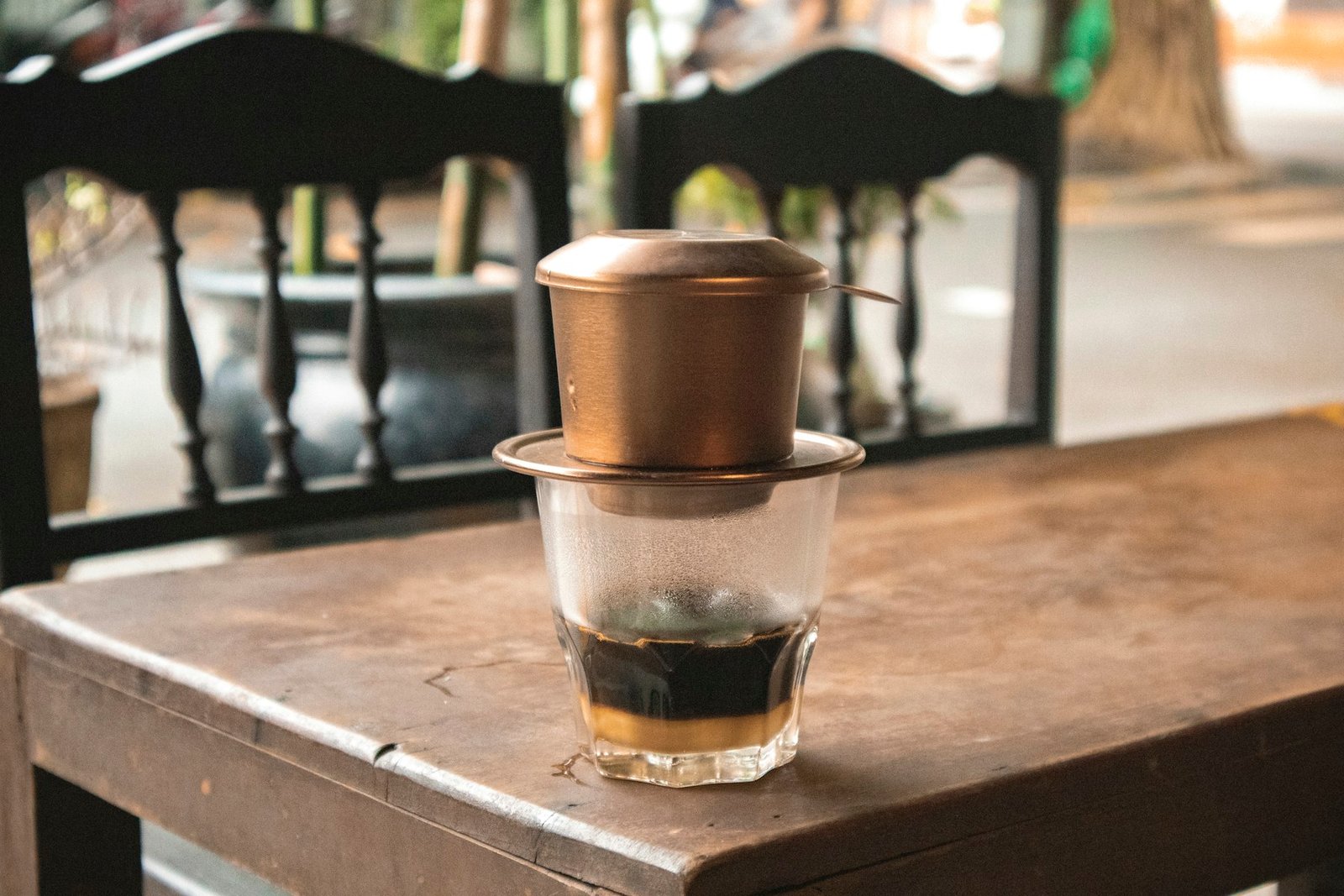
Ca phe sua da — iced coffee with condensed milk. The default, and the one to start with. Strong coffee dripped through a small metal filter onto a layer of sweetened condensed milk, stirred, poured over ice.
Ca phe den da — iced black coffee, usually with sugar unless you say otherwise. Bracing.
Ca phe sua nong and ca phe den nong are the hot versions of both, more common in the cooler north.
The phin
The small stacked metal filter that sits on top of the glass. It drips slowly, which is part of the experience — ordering coffee here means waiting while it brews rather than being handed a cup. Plenty of places now pre-brew for speed, but the phin is still the standard in the north and at traditional cafes.
The ones worth seeking out
Ca phe trung — egg coffee, a Hanoi invention. Egg yolk whipped with condensed milk into a thick sweet foam, poured over strong coffee and served hot in a bowl of warm water. It tastes like liquid tiramisu and it is better than it sounds.
Ca phe muoi — salt coffee, from Hue. A lightly salted cream on top of iced coffee. The salt cuts the sweetness and it is extremely drinkable.
Ca phe cot dua — coconut coffee, blended with coconut cream and ice into something close to a dessert. Common in Hanoi.
Bac xiu — a southern drink, much more condensed milk and much less coffee. The gentle option.
How to order it the way you want it
Four words cover most of it. "Da" means iced, "nong" means hot, "sua" means with condensed milk, "den" means black. So ca phe sua da is iced with milk, ca phe den nong is hot and black. If you do not want sugar in a black coffee, say "khong duong" — black coffee usually arrives sweetened by default.
Where to drink it
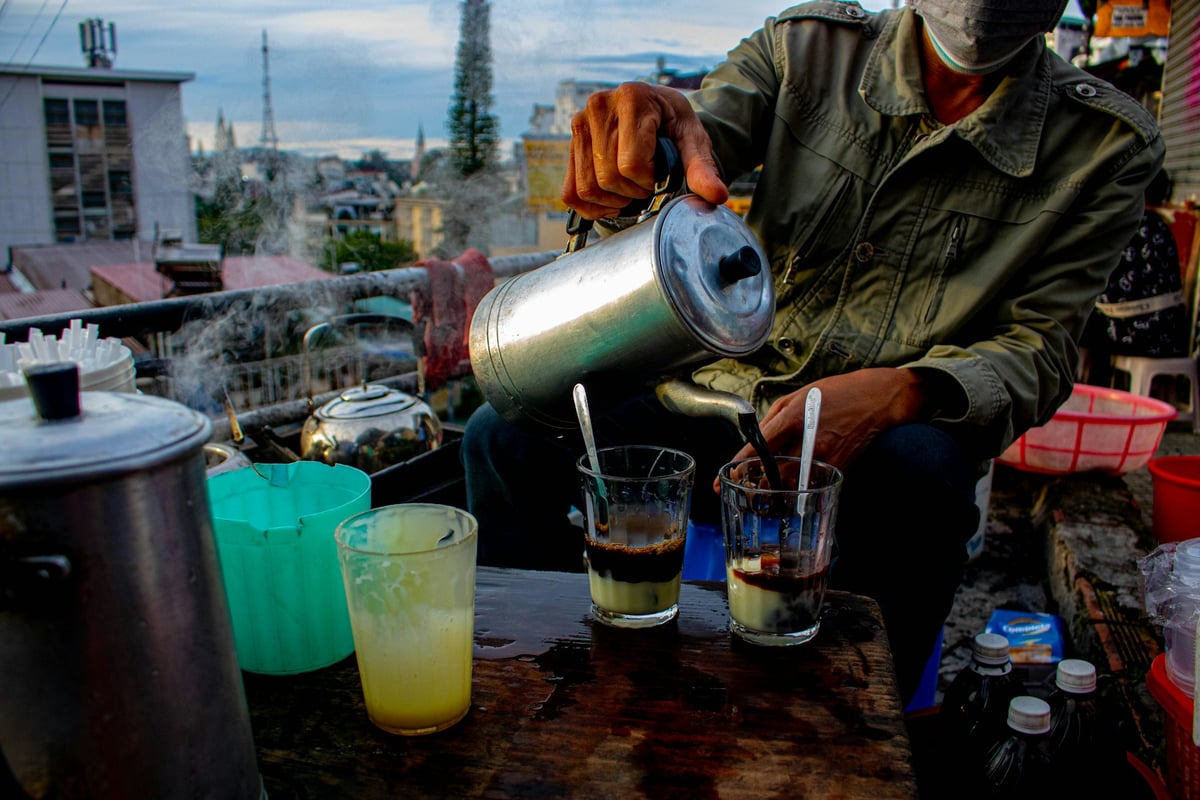
Three distinct kinds of place. The pavement cafes — low plastic stools, a glass of free iced tea alongside, the cheapest coffee in the country and the one most embedded in daily life. The Vietnamese chains, air-conditioned and ubiquitous, which are reliable and a reasonable place to work. And the independent specialty cafes, which are serving arabica and pour-overs to a more international standard.
All three are worth using for different things. The stool on the pavement is the one that is specifically Vietnamese.
The sitting
Coffee in Vietnam is not a takeaway habit. The phin takes its time, the stools face the street, and the expectation is that you stay. Pavement cafes are not run on table turnover, and sitting a long while over a single glass is ordinary rather than awkward.
The iced tea
Almost every cafe gives you a glass of weak iced tea, tra da, alongside the coffee, free. It is there to drink between sips; the coffee is strong and the tea resets your palate.
Buying beans to take home
Vietnamese coffee is cheap and travels well, and the supermarkets and specialty roasters both sell it ground or whole. A few things to know: a lot of mass-market Vietnamese coffee is roasted with butter, oil or other additives, which gives the characteristic flavour but can clog a home machine. Check whether what you are buying is pure coffee if that matters to you.
A phin filter costs almost nothing and is the right way to make it at home. Buy one with the drink.
Da Lat and where the coffee comes from
Most of Vietnam's coffee is grown in the Central Highlands around Buon Ma Thuot and Da Lat, at altitude and inland from the coast. Da Lat in particular has become a destination for farm visits and cupping, and the town's own cafe scene is among the best in the country.
If the coffee is a serious interest rather than a daily habit, that is where to go for it, and it fits into a route between the coast and Ho Chi Minh City.
A note on strength
Robusta carries roughly twice the caffeine of arabica, and Vietnamese coffee is brewed strong. Two iced coffees in an afternoon is more caffeine than most visitors are used to, and the effect is noticeable. Pace it, especially if you are drinking it in the heat.
FAQ
Why is Vietnamese coffee so strong?
Most Vietnamese coffee is robusta rather than arabica — stronger, more bitter, higher in caffeine and with a heavier body. That is not an accident of quality; the drinks are built around it. Robusta is why condensed milk works, and why a Vietnamese coffee can take that much sweetness without disappearing.
What are the classic Vietnamese coffee drinks?
Ca phe sua da — iced coffee with condensed milk. The default, and the one to start with. Strong coffee dripped through a small metal filter onto a layer of sweetened condensed milk, stirred, poured over ice.
What is egg coffee?
Ca phe trung — egg coffee, a Hanoi invention. Egg yolk whipped with condensed milk into a thick sweet foam, poured over strong coffee and served hot in a bowl of warm water. It tastes like liquid tiramisu and it is better than it sounds.
Keep planning
Not sure how it all fits together?
Pick your trip length and we'll route a real day-by-day plan.