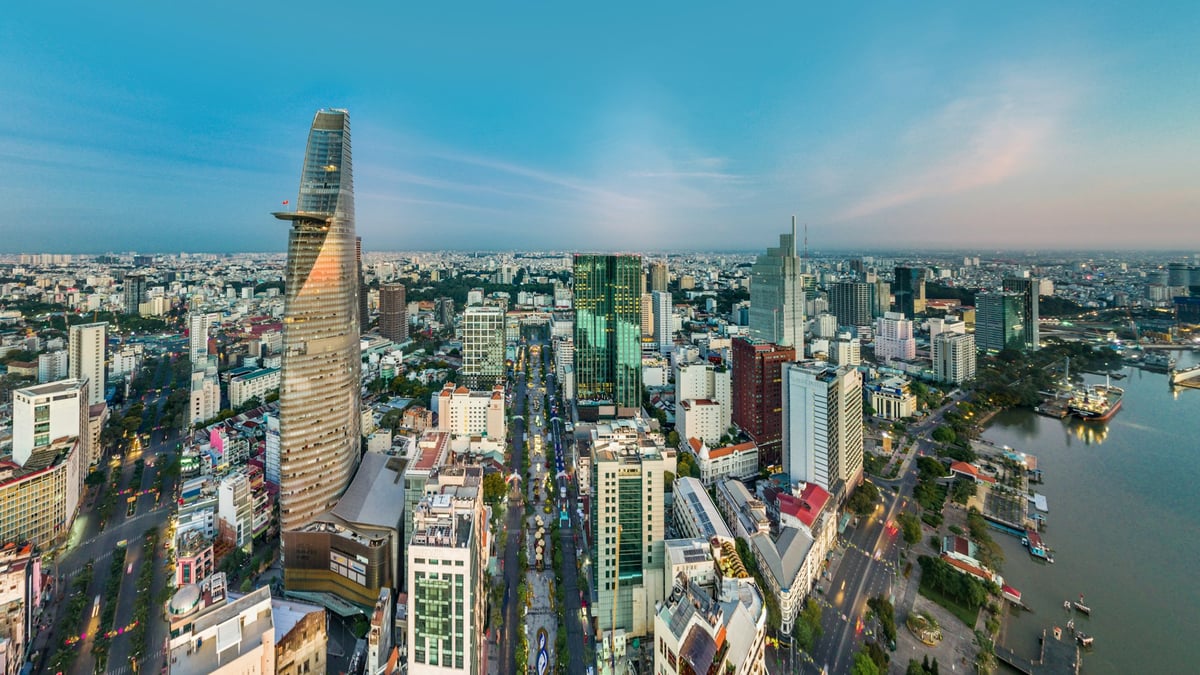
Ho Chi Minh City is flatter and more spread out than Hanoi, and hotter. Those two facts determine most of how you move around it: distances that look walkable are longer than they appear and considerably less pleasant at midday.
Grab, first and mostly
Ride-hailing is the default. GrabCar for air conditioning and luggage, GrabBike for speed and price. In a city this congested, a motorbike taxi will often beat a car across the centre at peak, and it costs a fraction as much.
The fare is fixed before you accept, which removes the meter conversation entirely. Be and Xanh SM are the main alternatives and worth having installed for when Grab surges in the evening or in rain.
Taxis
Metered taxis from the established companies are legitimate and widely used. The reason to prefer an app is price certainty rather than safety. If you do flag one, make sure the meter is running.
The metro
Line 1 runs from Ben Thanh in the centre out to the northeast, and it is clean, air-conditioned and cheap. It is useful if your journey happens to lie along it — Ben Thanh, the Opera House, the zoo, Thao Dien, and on towards Suoi Tien.
For most visitor itineraries it does not replace a Grab, because the sights cluster in District 1 within a few blocks of each other and the line runs outward rather than between them. Ride it to Thao Dien if you are going there; otherwise treat it as a bonus rather than a plan.
Walking
The colonial centre is genuinely walkable — the Post Office, Cathedral, Opera House, Reunification Palace and the War Remnants Museum sit within a compact area. Beyond that the blocks get long and the shade runs out.
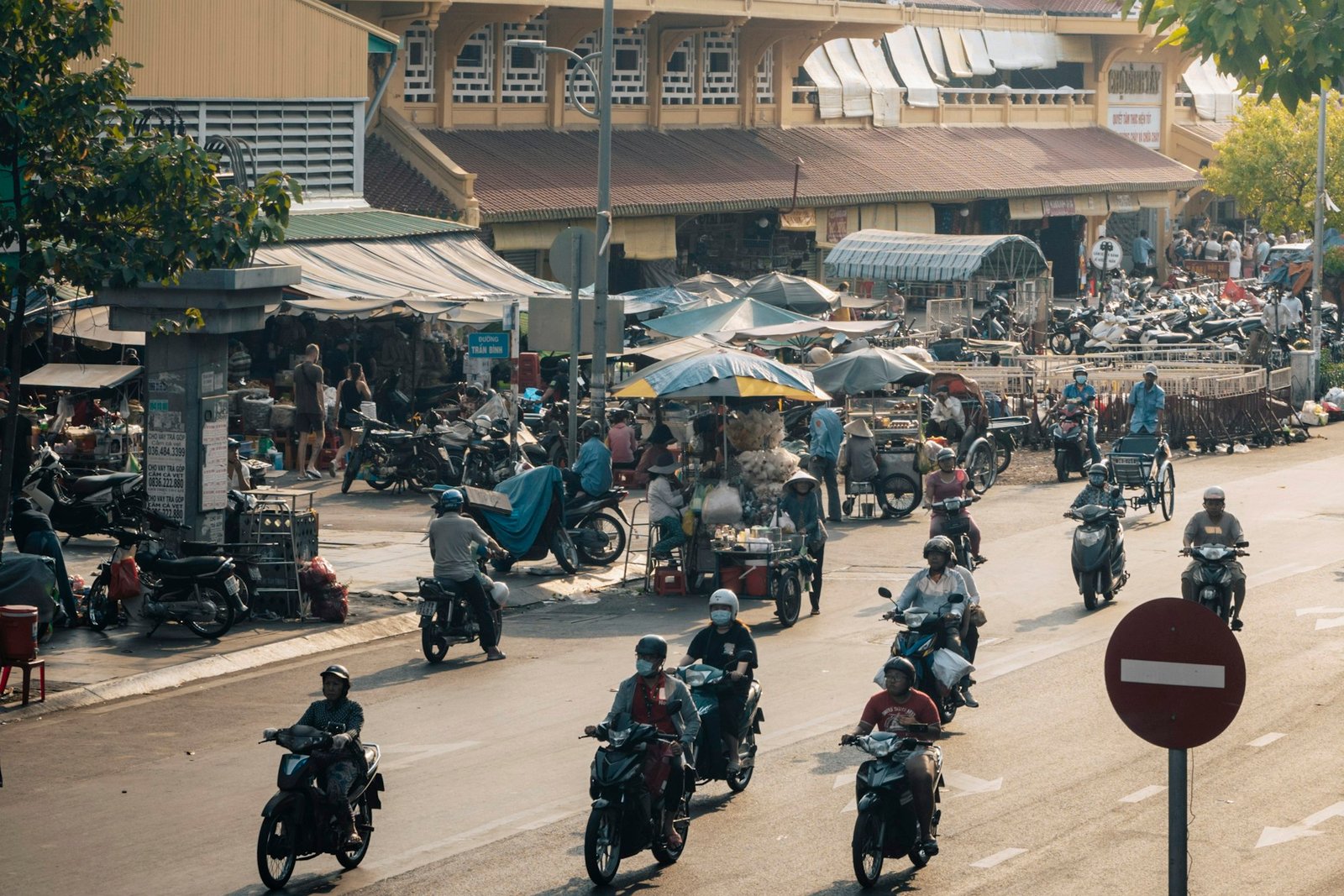
Pavements are often parked with motorbikes, as in Hanoi, so you will sometimes walk in the road. Crossing is the same technique: a slow, steady, predictable pace, keep going, keep watching, and wait out anything with four wheels.
The heat, as a transport factor
A mile on foot at two in the afternoon in June is a different proposition from the same mile in a temperate climate. Fares are low enough that taking a Grab for a short distance is sensible rather than indulgent, and most people adjust to doing exactly that within a day.
Cyclos
The three-wheeled pedal rickshaws still operate in the centre and are a tourist ride rather than transport, priced accordingly. They are also the classic setting for a price misunderstanding — a figure agreed as the fare turning out to be per person, per hour, or in dollars. Settle the number, the currency and the duration before you sit down.
Buses
Extensive and extremely cheap, with the 109 between the airport and the centre the route visitors most often use. Beyond that, the network takes some deciphering without Vietnamese, and for short city hops a Grab is usually quicker door to door.
Renting a motorbike
Not advisable here, and not legal. A US licence and an International Driving Permit are both invalid in Vietnam, so riding without a Vietnamese licence is illegal and your travel insurance may decline a claim after an accident. Ho Chi Minh City's traffic is also faster and more car-heavy than Hanoi's, with less margin for a first-timer.
A GrabBike puts you in the same traffic as a passenger, with a local riding, for a couple of dollars.
The river
Water buses run along the Saigon River between District 1 and Thu Duc, and a hop-on boat is a pleasant and slightly slow way to see the city from the water. It is sightseeing rather than transport, which is the right way to approach it.
Traffic, and when it bites
Congestion follows a predictable pattern: roughly seven to nine in the morning and five to seven in the evening, when a short journey can take considerably longer. The river bridges and the roads around the airport are among the worst affected.
Add half an hour to any app estimate during those windows if you have something fixed at the other end. A GrabBike slips through congestion that stops cars, which is the argument for it beyond price.
Rain
Wet-season downpours flood some streets within minutes, empty the pavements and send app wait times and prices up sharply. The local solution is a one-dollar poncho and carrying on; the visitor solution is usually a cafe and an hour, which is also pleasant.
Getting to and from the airport
Tan Son Nhat sits about four miles from District 1 and takes thirty to fifty minutes depending on traffic. Grab pickup is on the upper departures level rather than directly outside arrivals — follow the signs up rather than taking the first offer at the kerb.
For an international departure, allow three hours at the airport, and more around holidays. This is Vietnam's busiest airport and the queues reflect it.
FAQ
What is the best way to get around Ho Chi Minh City?
Ride-hailing is the default. GrabCar for air conditioning and luggage, GrabBike for speed and price. In a city this congested, a motorbike taxi will often beat a car across the centre at peak, and it costs a fraction as much.
Is the Ho Chi Minh City metro useful for visitors?
Line 1 runs from Ben Thanh in the centre out to the northeast, and it is clean, air-conditioned and cheap. It is useful if your journey happens to lie along it — Ben Thanh, the Opera House, the zoo, Thao Dien, and on towards Suoi Tien.
Can you walk around central Ho Chi Minh City?
The colonial centre is genuinely walkable — the Post Office, Cathedral, Opera House, Reunification Palace and the War Remnants Museum sit within a compact area. Beyond that the blocks get long and the shade runs out.
Keep planning
Not sure how it all fits together?
Pick your trip length and we'll route a real day-by-day plan.