Ho Chi Minh City's sights are concentrated and mostly twentieth-century. Two of them are more affecting than anything else in Vietnam for an American visitor, and the rest of this list is what to do with the days around them.
War Remnants Museum
The site most frequently singled out by visitors afterwards. It documents the war from the Vietnamese side, with photography, military hardware in the courtyard, and rooms on Agent Orange and on photographers killed covering the conflict. Allow around two hours; the Requiem photography exhibition is the part many people mention.
It presents a national account and makes no attempt at American balance, which is worth knowing going in rather than discovering halfway round. Go early, go first, and do not schedule anything demanding afterwards.
Reunification Palace
The former South Vietnamese presidential palace, left largely as it was in April 1975 — the cabinet room, the president's quarters, and the command bunker in the basement with its maps and radio equipment. The gates that a tank crashed through are the image that ended the war on television.
It is the counterpart to the museum: the same event from inside the government that lost. The two together in one morning are a lot, and worth it.
Cho Lon, the Chinese quarter
District 5, and a part of the city many short visits skip. Thien Hau Temple, hung with spiral incense coils, is the one to see. Around it are the herbal medicine streets, the lantern makers, and Binh Tay Market, which is a working wholesale market rather than a souvenir one.
It is a slow, unstaged afternoon and a complete change of register from District 1.
The colonial centre
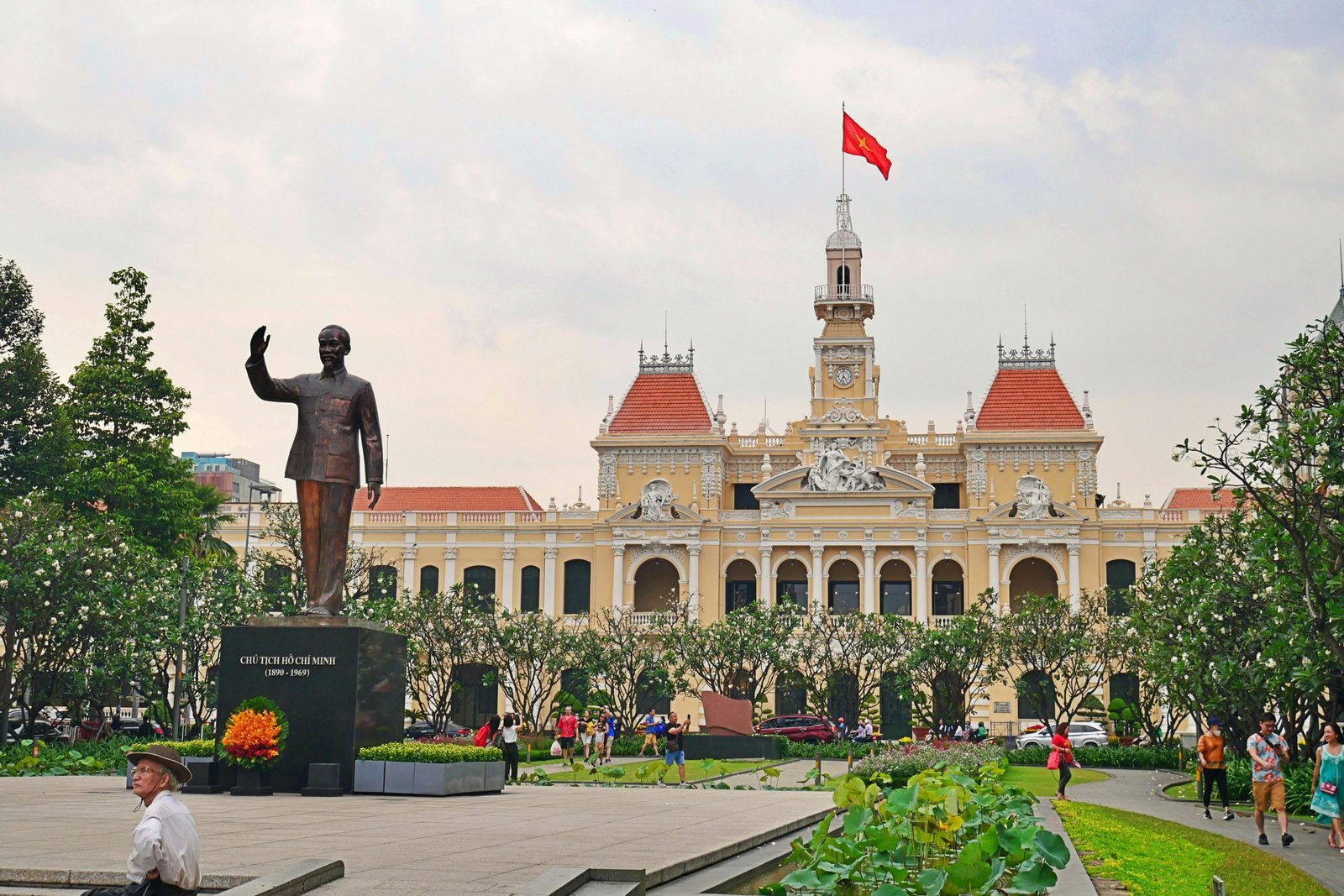
The Central Post Office, with its vaulted iron roof, still operates as a post office. Notre-Dame Cathedral stands opposite, built with materials shipped from France, and has been under long-running restoration — check whether it is open before making a trip of it. The Opera House and the Hotel de Ville complete the set, all within a short walk.
Ben Thanh Market sits at the end of it. As a shopping destination it is tourist-priced and hard work; as an orientation point and a place to eat, it earns an hour.
A rooftop at dusk
The city is unreadable from street level and makes sense from above. The bars on the upper floors of the riverside towers are expensive by Vietnamese standards and cheap by American ones, and the view at sunset over a city of eight million scooters is the thing people photograph.
Ben Thanh after dark
The market building closes in the evening and stalls set up in the surrounding streets. It is squarely aimed at visitors, and it is also where a lot of Saigon eats late. Treat the stalls as the attraction rather than the merchandise.
Cu Chi Tunnels
A half or full day northwest of the city: the tunnel network used during the war, with sections widened for visitors. Ben Duoc is the quieter of the two sites. The tunnel sections are genuinely confined, and claustrophobia is not something to test here.
Opinions divide. Some find it the most vivid war site in the country; others find the firing range and the souvenir presentation jarring. Both reactions are common.
The Mekong Delta
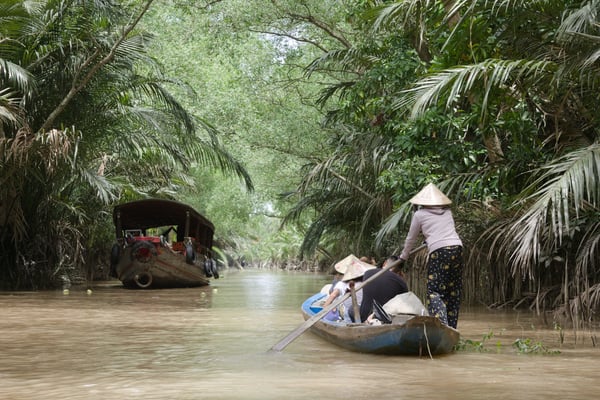
The standard day trip from the city is heavily packaged — a boat, a coconut-candy workshop, a sampan through a canal — and frequently described as the weakest day of a Vietnam trip. The version worth doing is an overnight to Can Tho for the Cai Rang floating market at dawn.
Eating as the main event
The most memorable afternoon many visitors have here is not on a list of sights. District 4, a short Grab across the canal, is where the city eats seafood on plastic stools; the alleys off Vo Van Tan and the area around Ben Thanh at night do the same for everything else.
A guided street-food walk on a first evening is one of the few organised activities that reliably pays for itself, mostly because somebody is telling you what you are eating and where the next one is.
Coffee
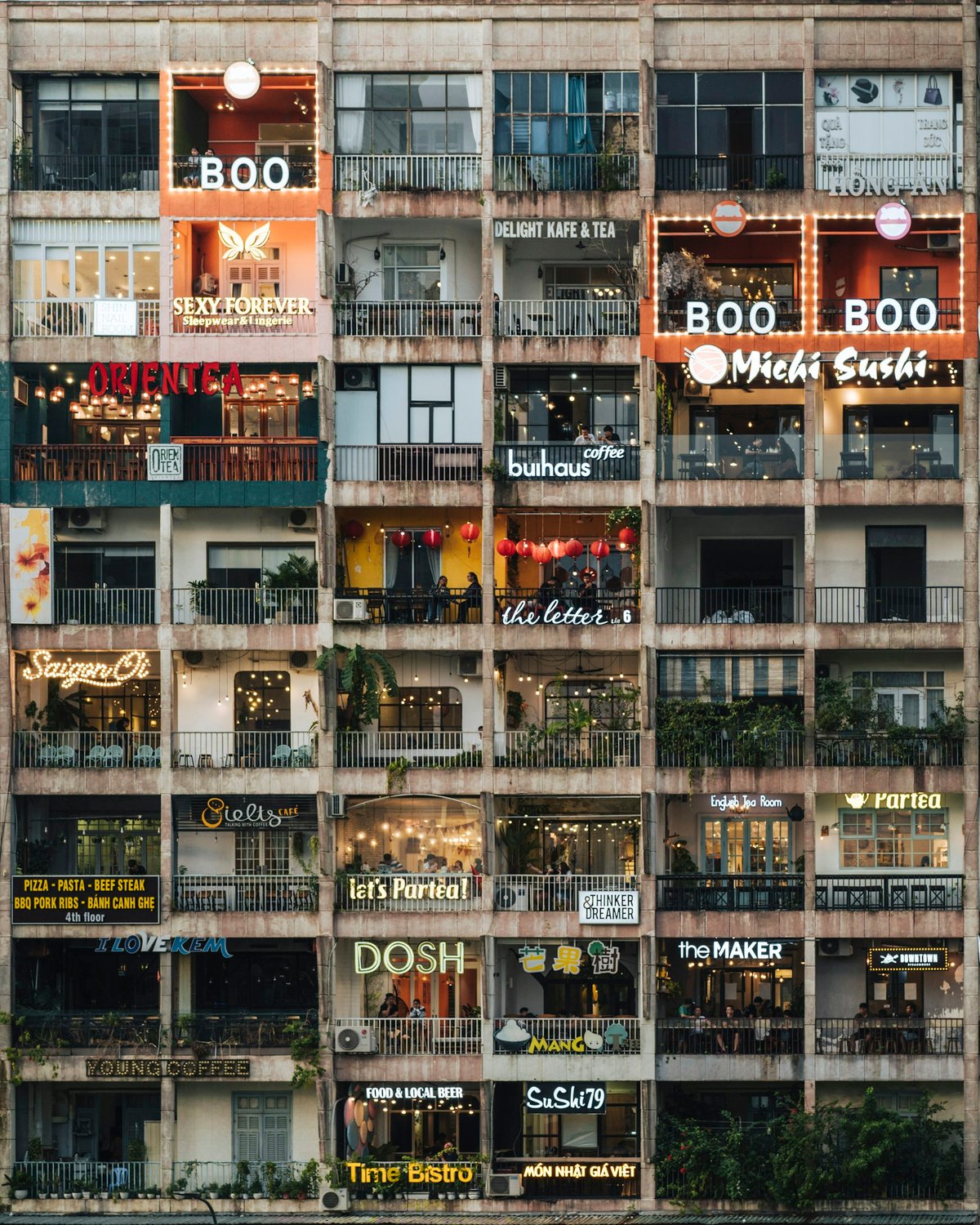
Vietnam is the world's second-largest coffee producer and Ho Chi Minh City takes it seriously. Ca phe sua da, iced with condensed milk, is the standard; the apartment-block cafes on Nguyen Hue, stacked in a converted residential tower, are the ones worth seeking out for the setting as much as the drink.
Two quieter ones
The Fine Arts Museum occupies a colonial mansion and holds a strong collection of lacquer and silk painting, with almost nobody in it. The Jade Emperor Pagoda, small and dark and thick with incense, is the most atmospheric temple in the city centre and takes twenty minutes.
Both are a short Grab from District 1 and both reward an hour that would otherwise go on another market.
FAQ
Is the War Remnants Museum worth visiting?
The site most frequently singled out by visitors afterwards. It documents the war from the Vietnamese side, with photography, military hardware in the courtyard, and rooms on Agent Orange and on photographers killed covering the conflict. Allow around two hours; the Requiem photography exhibition is the part many people mention.
What is there to see in Cho Lon?
District 5, and a part of the city many short visits skip. Thien Hau Temple, hung with spiral incense coils, is the one to see. Around it are the herbal medicine streets, the lantern makers, and Binh Tay Market, which is a working wholesale market rather than a souvenir one.
What is in the colonial centre of Ho Chi Minh City?
The Central Post Office, with its vaulted iron roof, still operates as a post office. Notre-Dame Cathedral stands opposite, built with materials shipped from France, and has been under long-running restoration — check whether it is open before making a trip of it. The Opera House and the Hotel de Ville complete the set, all within a short walk.
Keep planning
Not sure how it all fits together?
Pick your trip length and we'll route a real day-by-day plan.