Water puppetry began in the flooded rice paddies of the northern delta, where villagers performed with puppets on poles beneath the water during festivals. It is now a fixture of every Hanoi itinerary, performed several times a day in a purpose-built theatre. Both of those things are true at once, and knowing it helps.
What the show actually is
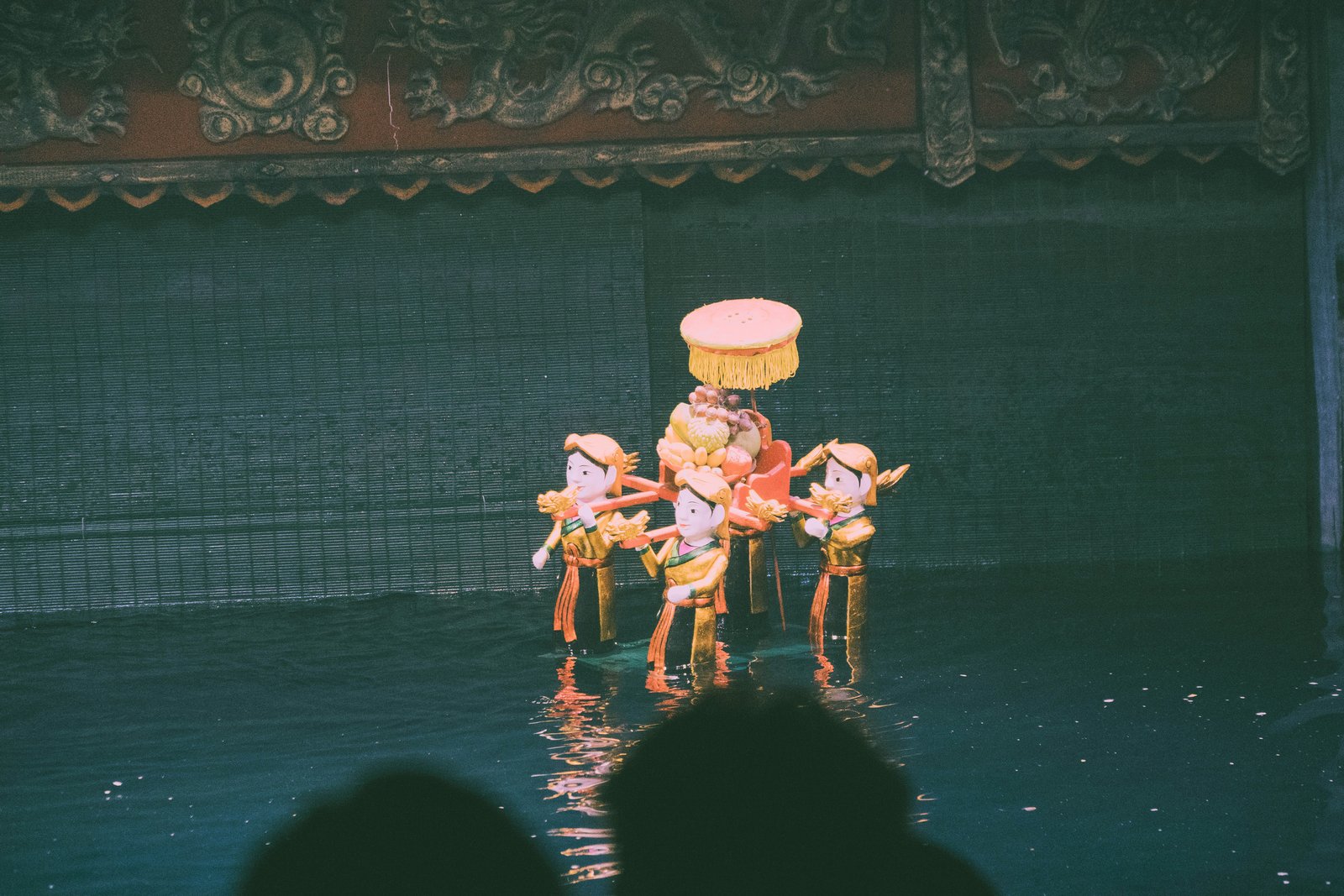
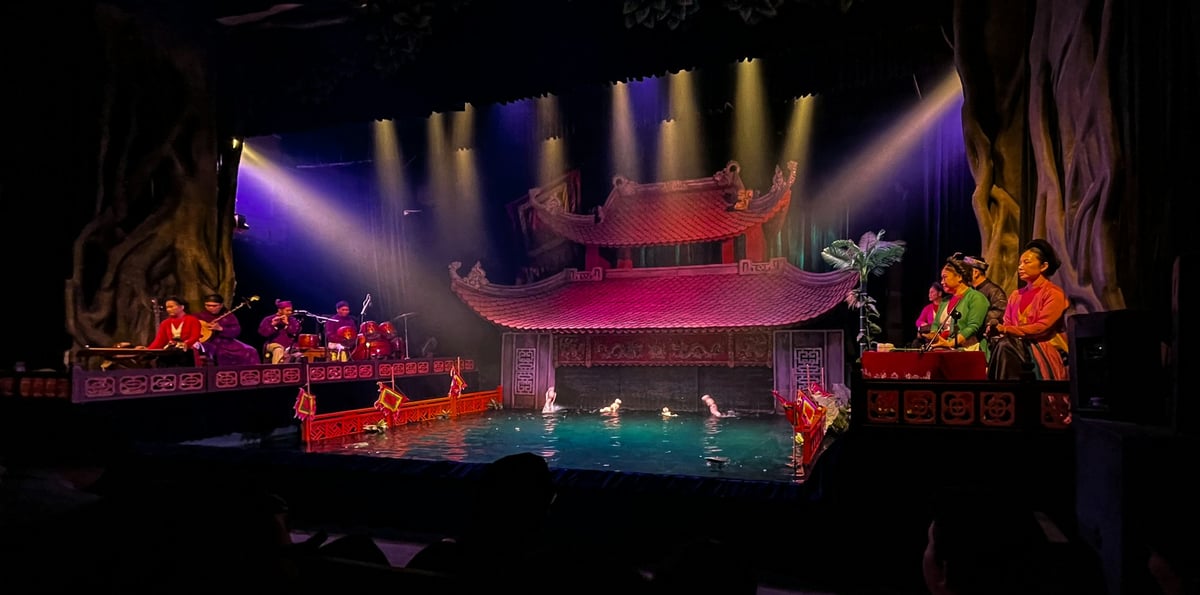
Puppeteers stand in a pool behind a bamboo screen, working lacquered wooden figures on long submerged poles so the puppets appear to move on the water by themselves. A small traditional orchestra sits to one side, playing and singing the narration.
The programme is a sequence of short vignettes rather than a single story — rice planting, fishing, a buffalo fight, a legend about a lake and a sword, and a finale with dragons and fireworks. Performances run around fifty minutes.
The language question
The narration is in Vietnamese and there are no subtitles. This matters less than it sounds, because the pieces are visual and the programme explains each one. You are watching a craft rather than following a plot.
Where to see it
The Thang Long Water Puppet Theatre, on the northeast corner of Hoan Kiem Lake, is the one most visitors attend and the most convenient. It runs multiple performances daily and sells out in high season, so book a day or two ahead rather than turning up.
The Lotus Water Puppet Theatre nearby is the usual alternative, generally smaller and easier to get into at short notice. The Vietnam National Puppetry Theatre also stages water puppetry alongside other forms.
Seats
Seating is tiered, so the back rows generally see over the front without trouble, and the front rows are the ones at risk of a splash. The middle of the theatre is the safe choice for anyone carrying a camera. Photography rules vary by venue — check at the door rather than assuming.
Combining it with the evening
The theatre sits a few minutes from the lake in the middle of the Old Quarter's eating district, which makes the obvious evening an early bun cha or banh cuon, the show, and then a walk around Hoan Kiem once it is lit. At weekends the surrounding streets close to traffic, which turns that walk into something considerably better than a stroll.
Is it worth it
Honest answer: yes, once, for an hour. It is unambiguously aimed at visitors, the theatre is busy and the turnaround between shows is brisk. It is also a living art form with its roots in this particular region, performed by people who have trained a long time in a technique that is genuinely difficult.
What it is not is an intimate cultural encounter. If that is what you are after, the Vietnamese Women's Museum or a street-food walk will serve you better.
What you are actually watching
The technique is the interesting part. Each puppet is carried on a long pole running underwater to the puppeteer, with strings inside the pole operating limbs, heads and mouths. The puppeteers work standing in the water behind the screen, without a view of the audience's side of the pool, coordinating by sound — and traditionally stood in the village pond for hours doing it.
The figures themselves are carved from fig wood and lacquered, which is what lets them survive constant immersion. Teu, the plump laughing figure who introduces the show, is the stock character you will see first and the one who appears in most of the photographs.
The music
The ensemble to the side of the pool is doing as much work as the puppets. It typically includes a dan bau, the single-stringed Vietnamese instrument that bends pitch with a flexible rod, and the vocalists perform cheo, a northern folk-opera style. If any part of the evening rewards close attention, it is this.
Practicalities
Tickets are inexpensive and tiered by seat position. Book through the theatre directly or through your hotel; Old Quarter agencies also sell them with a small markup. Arrive a quarter of an hour early — seating is by ticket but latecomers can find themselves placed wherever is left.
The theatre is a few minutes' walk from the lake and sits in the middle of the Old Quarter's restaurant district, which makes it easy to build an evening around: an early dinner, the show, and a walk around the lake afterwards when it is lit.
Where it came from
The form developed among rice farmers in the Red River delta, performed on flooded paddies and village ponds during festivals when the fields were underwater and there was time. The water was not a stage effect but the available surface, and the screen hid puppeteers who were standing in it.
That origin explains the repertoire. The vignettes are about planting, harvesting, fishing, buffalo and village legend, because they were made by and for the people doing those things. The dragons and the fireworks at the end are the festival part.
With children
It is one of the better options in Hanoi for younger children — short, visual, loud in the right places, and with dragons at the end. The front rows and the splashing are part of the appeal at that age.
FAQ
What is a Vietnamese water puppet show?
Puppeteers stand in a pool behind a bamboo screen, working lacquered wooden figures on long submerged poles so the puppets appear to move on the water by themselves. A small traditional orchestra sits to one side, playing and singing the narration.
Where do you see water puppets in Hanoi?
The Thang Long Water Puppet Theatre, on the northeast corner of Hoan Kiem Lake, is the one most visitors attend and the most convenient. It runs multiple performances daily and sells out in high season, so book a day or two ahead rather than turning up.
Is the Hanoi water puppet show worth it?
Honest answer: yes, once, for an hour. It is unambiguously aimed at visitors, the theatre is busy and the turnaround between shows is brisk. It is also a living art form with its roots in this particular region, performed by people who have trained a long time in a technique that is genuinely difficult.
Keep planning
Not sure how it all fits together?
Pick your trip length and we'll route a real day-by-day plan.