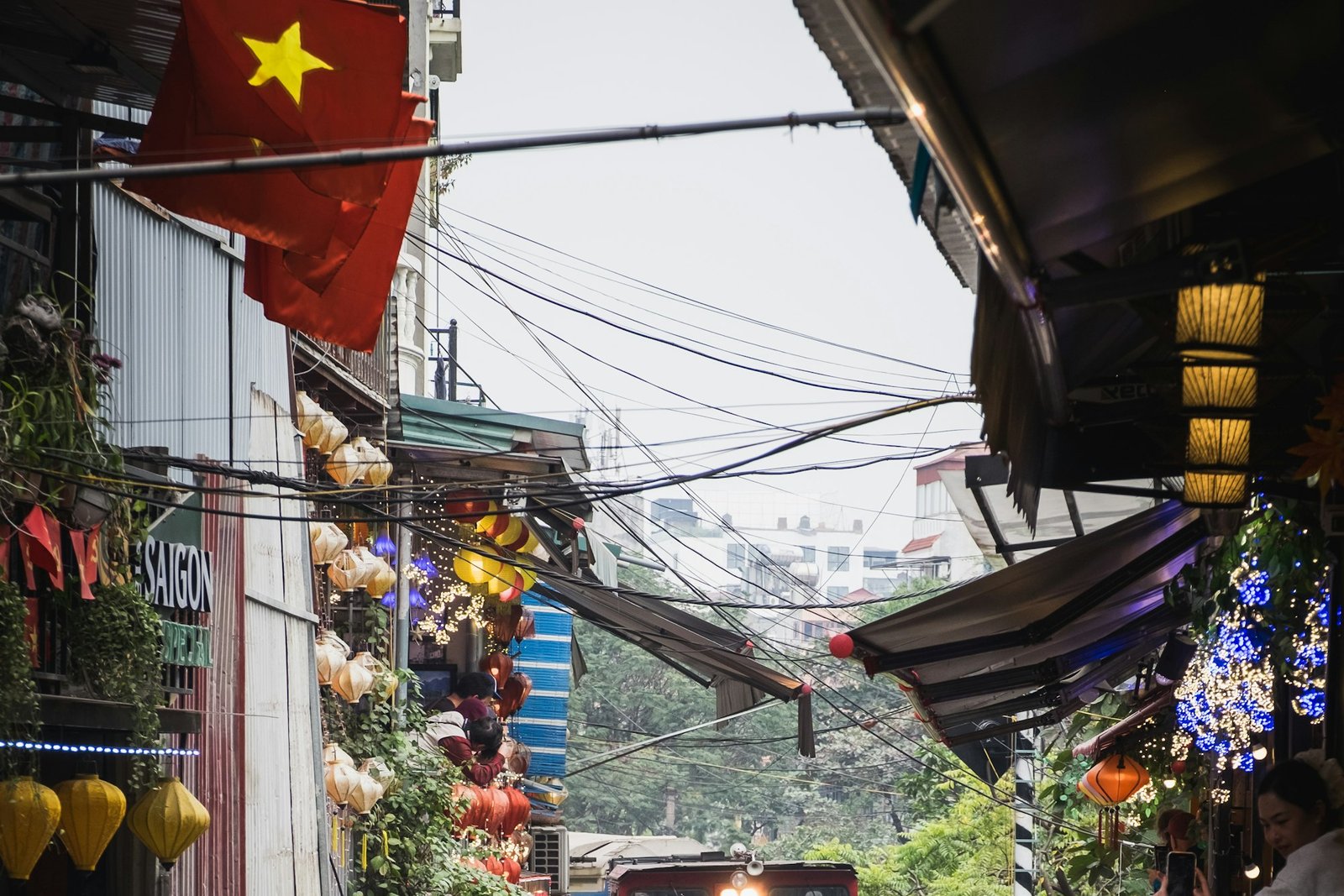
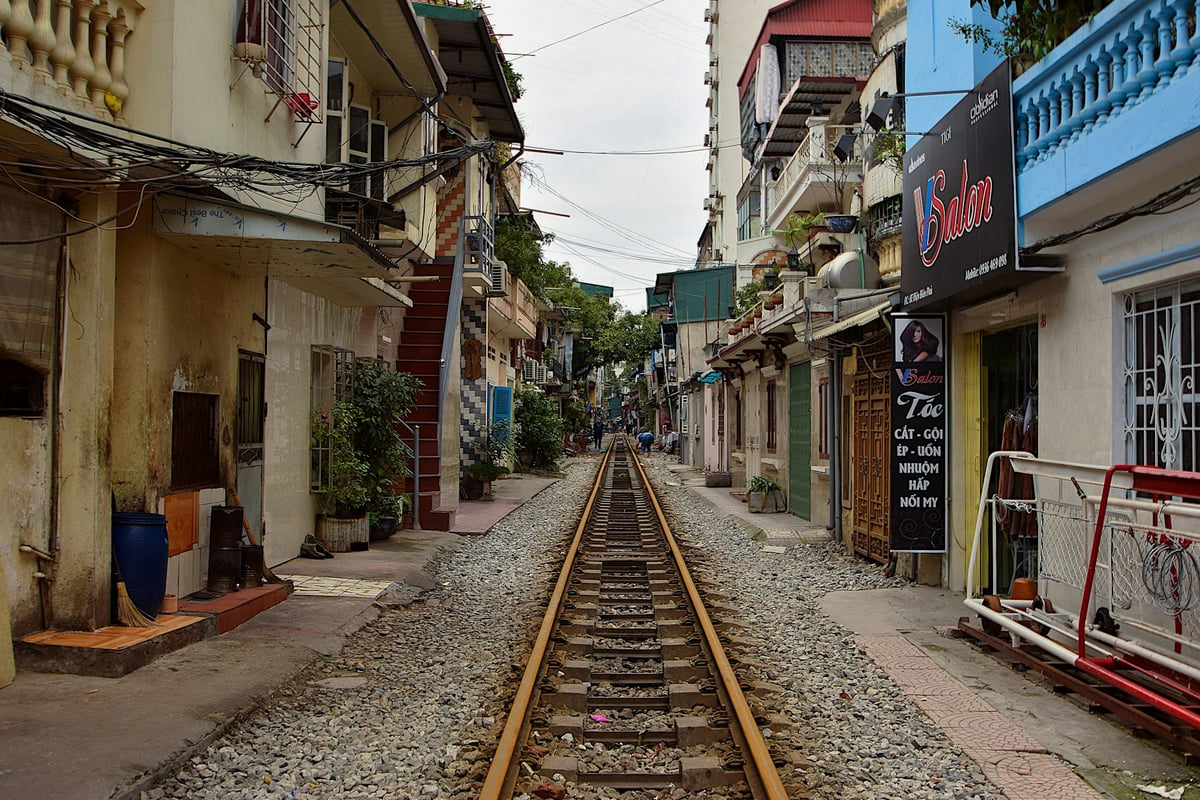
Train Street is a residential stretch of Hanoi where the railway runs so close to the buildings that people set tables out between passes and pull them in when a train comes. It is one of the city's most photographed places and one of its most contested, and the access situation has changed repeatedly.
Check before you go
The most important thing on this page: authorities have closed and reopened access to the main sections more than once on safety grounds, and the rules in force change. Barriers have been put up, cafes cleared, and then operations resumed in some form. Anything an article tells you about current access, including this one, may be out of date.
Ask your hotel on the day, or look for very recent reports. Somebody in the city that morning is a better source than an article written months earlier, including this one.
Why it keeps closing
Because it is a live railway with trains passing a few feet from where people sit. The safety concern is not hypothetical and the closures are not arbitrary. Treating the street as a photo opportunity rather than somebody's home and somebody's working line is the behaviour the restrictions exist to manage.
Where it is
There are several stretches. The best known runs near Le Duan and Kham Thien in the Old Quarter's southwestern edge, with another section around Phung Hung. Both are a short walk or a very short Grab ride from Hoan Kiem.
Where access is permitted, it is generally through one of the cafes along the line rather than from the street ends, and buying a drink is the arrangement.
Timing
Trains pass only a few times a day and the schedule shifts. Cafes along the line post the expected times and the staff will tell you, which is the practical reason to sit down and order something rather than hovering at the end of the street.
Late afternoon and early evening passes are the ones people aim for, because the light is better and the street is livelier. Arrive at least half an hour before an expected pass.
How to behave when a train comes
Staff will move you and the furniture against the wall. Do what they say and stay there, keeping arms, bags and tripods well back — their instructions are the minimum rather than a guaranteed margin, so leave yourself more room than you are given. Do not step out for a better angle, and never stand on the tracks for a photograph.
What a pass is actually like
Less dramatic than the photographs and more interesting. There is usually some warning — a horn, or the staff simply starting to move things — and tables and people go back against the wall. The train comes through slowly rather than at line speed, close enough that the air moves.
It lasts perhaps fifteen seconds. Then the tables go back out and everyone resumes. The thing most visitors remark on afterwards is how routine it is for everyone who lives there.
Photography
The shot most people want is down the line with the train approaching, which is also the shot that requires standing where you should not. Taken from a seated position against the wall, with a wider lens, it works perfectly well and nobody has to intervene.
The ethics of it, briefly
People live here. The houses opening onto the line are homes, the children playing between the rails are residents' children, and the street existed for decades before it became a destination. Buy something, ask before photographing anyone, keep your voice down in the evening, and leave when the cafe closes.
Much of the local frustration reported about Train Street concerns visitor behaviour rather than visitors as such. The closures have been justified on safety grounds, which is reason enough to behave as though the restrictions make sense.
Getting there
Both main sections are within walking distance of the Old Quarter — fifteen to twenty minutes from Hoan Kiem to the Phung Hung stretch, slightly more to the Le Duan one. A Grab costs very little and takes a few minutes, and drivers know both by name.
Go on foot if you can, because the approach through the surrounding streets is part of it: the line emerges from an ordinary residential district rather than from anything signposted, and the first sight of rails running between house fronts is better earned on foot.
If it is closed
Do not try to find a way in. Beyond the obvious, the fines and the railway's own enforcement are real, and a closed section is closed because somebody decided the risk was too high.
The alternative worth taking instead is the Long Bien Bridge, a French-built steel span bombed repeatedly during the war and patched ever since. You can walk across it, the trains still use the middle, and the view over the river and the banana fields on the sandbanks below is one of the better quiet half-hours in Hanoi.
FAQ
Is Hanoi's Train Street open?
The most important thing on this page: authorities have closed and reopened access to the main sections more than once on safety grounds, and the rules in force change. Barriers have been put up, cafes cleared, and then operations resumed in some form. Anything an article tells you about current access, including this one, may be out of date.
Where is Train Street in Hanoi?
There are several stretches. The best known runs near Le Duan and Kham Thien in the Old Quarter's southwestern edge, with another section around Phung Hung. Both are a short walk or a very short Grab ride from Hoan Kiem.
What time do the trains pass Train Street?
Trains pass only a few times a day and the schedule shifts. Cafes along the line post the expected times and the staff will tell you, which is the practical reason to sit down and order something rather than hovering at the end of the street.
Keep planning
Not sure how it all fits together?
Pick your trip length and we'll route a real day-by-day plan.