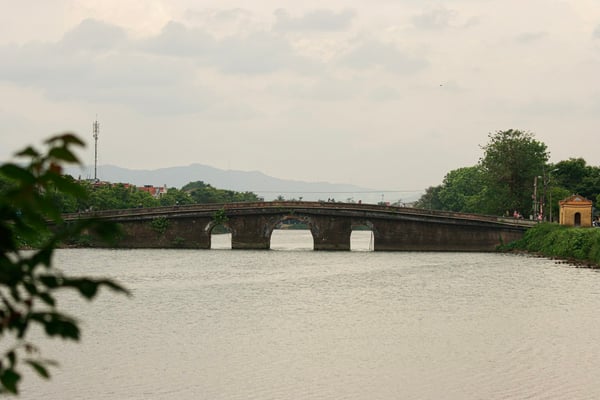
Hoi An was an international trading port for several centuries, dealing with Japanese, Chinese, Dutch and Portuguese merchants, before its river silted and the trade moved elsewhere. The old town survived largely intact. It is now a UNESCO World Heritage site and one of the most visited places in Vietnam.
The ticket system
Entry to the Ancient Town area is managed by a ticket that admits you to a set number of heritage sites chosen from a longer list — old merchant houses, assembly halls, the Japanese Covered Bridge, a museum or two. It is sold at booths around the perimeter of the old town.
Two things are worth asking at the booth, because both are reported differently by different visitors: how many sites your ticket covers, and how long it stays valid. Enforcement at the entrances also varies, which is the source of most of the confusion you will read online. The ticket is inexpensive, it funds conservation, and the heritage houses are worth going into.
What to see with it
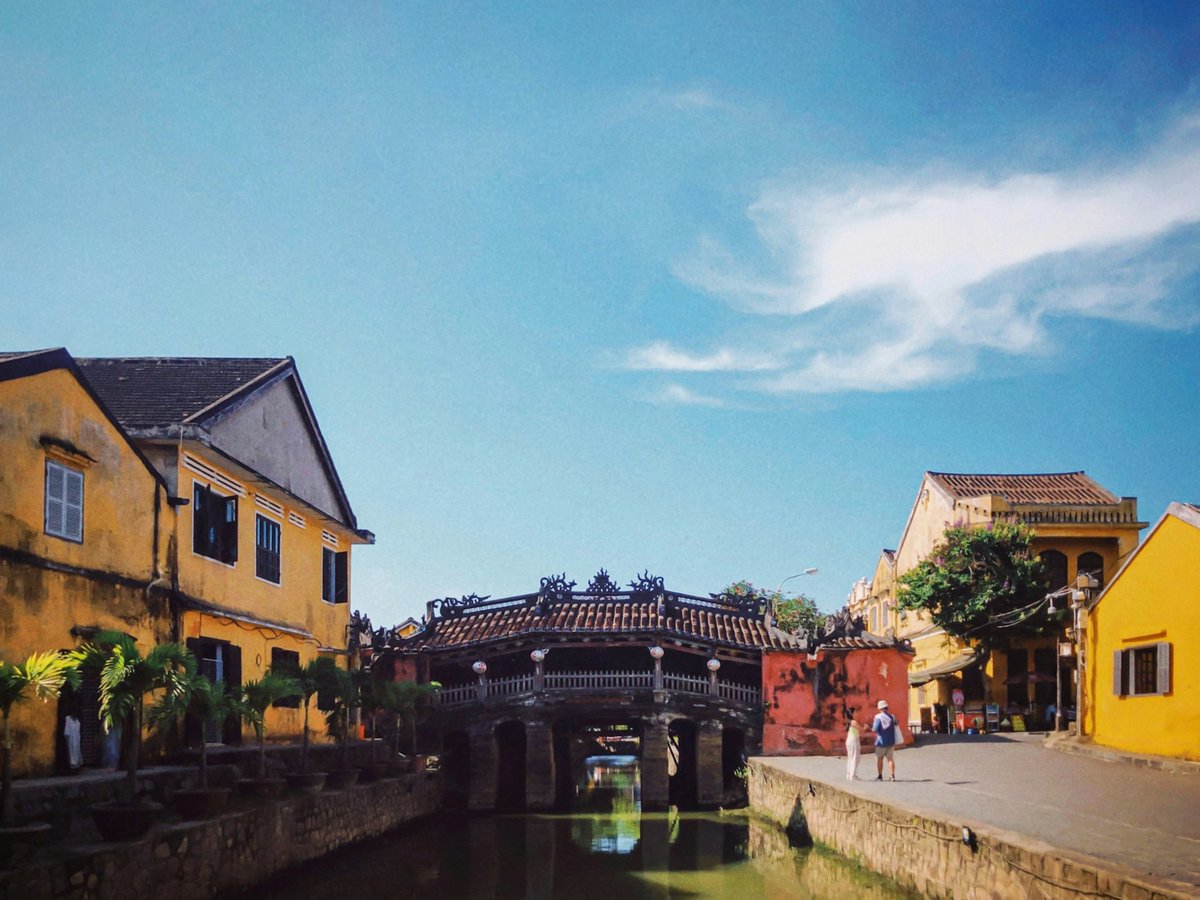
Tan Ky House and Phung Hung House are two merchant homes that show how these buildings worked — deep, narrow plots, internal courtyards, and Japanese, Chinese and Vietnamese elements in the same structure. The Fujian Assembly Hall is a Chinese community hall with elaborate decoration. The Japanese Covered Bridge is the town's emblem.
The hours that matter
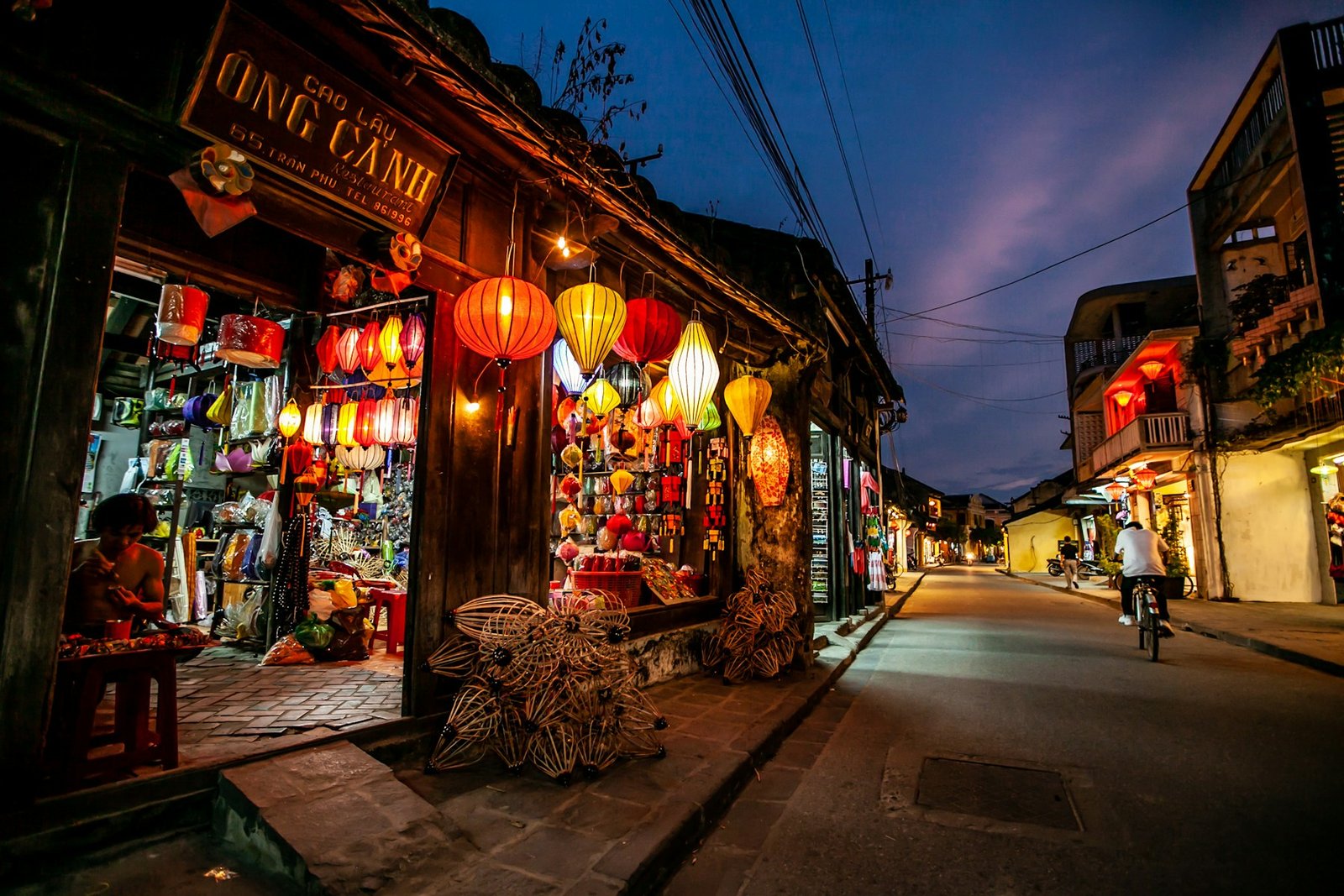
Early in the morning the Ancient Town belongs to people sweeping, setting up and buying breakfast. Through the middle of the day and into the evening it is busy. Late at night the day visitors have thinned out and the lanterns are lit.
If you remember one thing from this page, make it that. Hoi An gets described both as magical and as a tourist trap, and those descriptions are of the same streets at different hours.
The lantern nights
On the fourteenth day of the lunar month the old quarter dims its electric lighting and is lit by lanterns instead. It is beautiful and it draws a crowd. Check which date it falls on for your trip.
Eating
Hoi An has dishes strongly associated with the town and hard to find elsewhere. Cao lau is the signature — thick noodles, pork, greens and very little broth, said locally to require water from particular wells in the town. White rose dumplings are the other. Banh mi is everywhere here and cheap.
Com ga Hoi An, turmeric chicken rice, completes the set. All four are sold within a few streets of each other.
Shopping, and the pressure
Hoi An sells lanterns, leather, tailoring and art, and the central streets are a near-continuous retail frontage. Shops with prices marked on the goods generally hold to them; in the market and with street vendors, bargaining is expected.
The practical advice is the same as anywhere in Vietnam: settle the number before anything begins, and in dong rather than dollars. That is how you avoid an argument at the end.
Beyond the old town
An Bang beach is ten to fifteen minutes by bicycle. The rice paddies and vegetable village at Tra Que sit between the two and make a pleasant cycle. My Son Sanctuary, the Cham temple complex, is roughly an hour away by road and is the usual half-day trip.
For the beach and Tra Que, a bicycle is the right way to do it — the land is flat and the distances are short. Accommodation often lends them; ask. My Son is a car or tour trip, not a cycle.
Tailoring
Hoi An's tailors are a real industry rather than a gimmick. It needs time: allow for two fittings, which in practice means not leaving the order to your last day.
When to go, and the flooding
Roughly February to August is the drier stretch and the period the beaches work best. September to November is the central coast's storm season, and the streets of Hoi An nearest the river flood in some years — in a bad one they can be navigable by boat.
That is worth planning around rather than fearing. The town carries on through most of it, but a trip built on beach days in October is a gamble.
Getting there
Hoi An has no airport and no railway station. Most arrivals come via Da Nang, which has both — the airport is around forty-five minutes to an hour away by car, the train station a little further. Grab runs between the two, as do hotel transfers and a local bus.
From Hue, the two usual approaches are the coastal train to Da Nang and a car from there, or a private car the whole way over the Hai Van Pass. From Hanoi or Ho Chi Minh City it is a flight to Da Nang; trains run too, and take far longer.
FAQ
Do you need a ticket for Hoi An Ancient Town?
Entry to the Ancient Town area is managed by a ticket that admits you to a set number of heritage sites chosen from a longer list — old merchant houses, assembly halls, the Japanese Covered Bridge, a museum or two. It is sold at booths around the perimeter of the old town.
What time of day is best in Hoi An?
Early in the morning the Ancient Town belongs to people sweeping, setting up and buying breakfast. Through the middle of the day and into the evening it is busy. Late at night the day visitors have thinned out and the lanterns are lit.
What should you eat in Hoi An?
Hoi An has dishes strongly associated with the town and hard to find elsewhere. Cao lau is the signature — thick noodles, pork, greens and very little broth, said locally to require water from particular wells in the town. White rose dumplings are the other. Banh mi is everywhere here and cheap.