Mui Ne is a coastal strip in Binh Thuan province, about four to five hours east of Ho Chi Minh City. It is known for two things that have nothing to do with each other: sand dunes that look like a desert, and some of the most reliable wind in Southeast Asia.
The wind
This is what Mui Ne is actually for. From roughly November to April the wind blows consistently along this coast, and the bay has been a kitesurfing and windsurfing destination for two decades. Schools, rental shops and instructors line the main road, and the standard of teaching is high because the market is competitive.
The same wind that makes the sport work makes the sea choppy and the beach blustery. If you are coming to lie on sand and swim, you have picked the windy season at the windy beach.
The dunes
Two sets, and they are different. The white dunes, further out, are the large ones — a genuine expanse of pale sand with a lake in the middle, reached by jeep and usually visited at sunrise. The red dunes, closer to town, are smaller, orange, and busier, and are the sunset option.
The standard way to see them is the jeep tour: a pre-dawn pickup, the white dunes for sunrise, the fairy stream, the fishing village, and back for breakfast. It is a well-worn circuit and it works.
The fairy stream
A shallow warm stream running through a small canyon of red and white sandstone formations, walked barefoot in ankle-deep water. Allow half an hour for it, it is genuinely pretty, and it appears on the standard jeep itinerary.
The fishing village
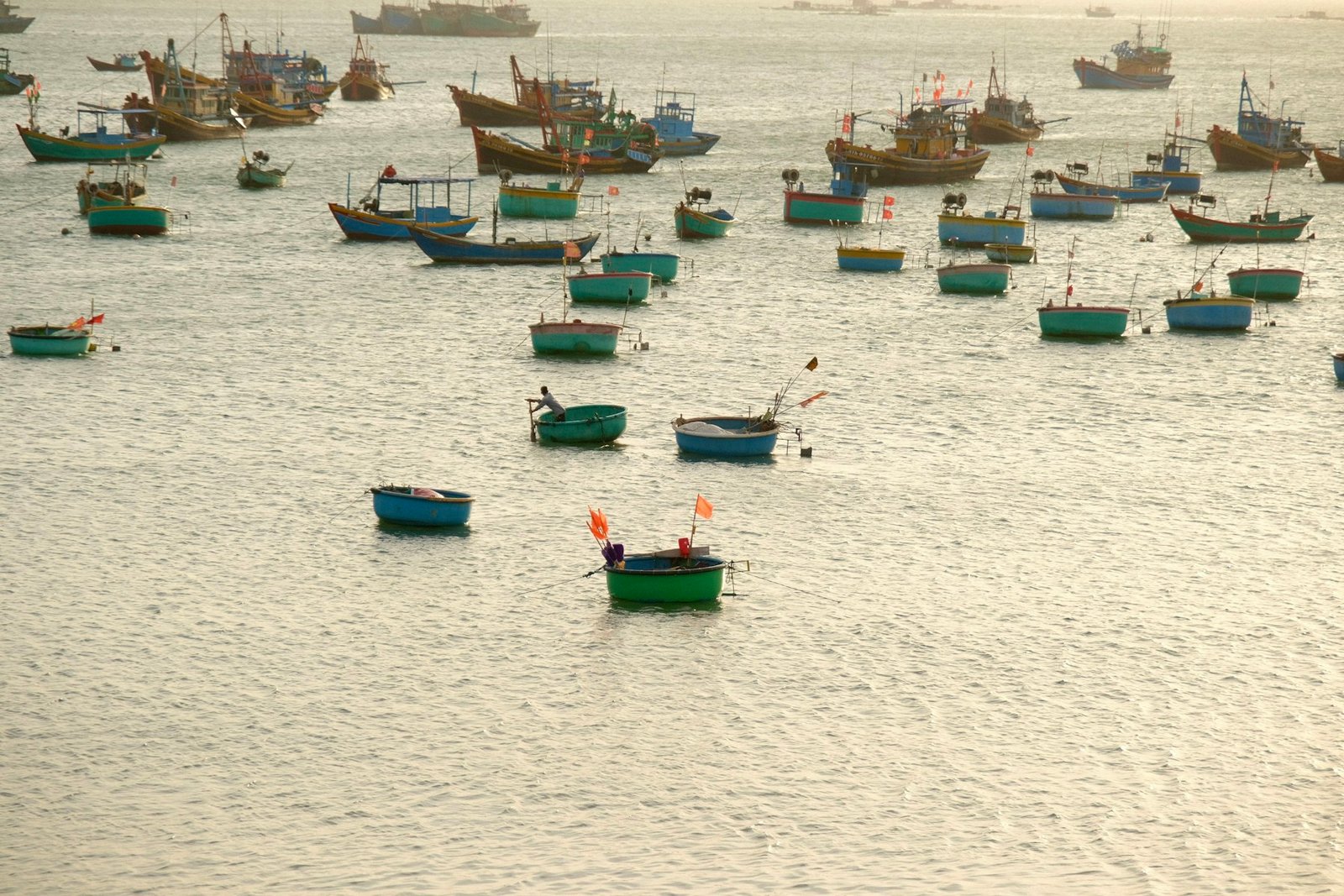
Mui Ne is still a working fishing port, and the harbour full of round coracle boats and the morning market on the sand are the most photographed thing here after the dunes. Go early; the boats come in at dawn and the activity is over by mid-morning.
The beach, honestly
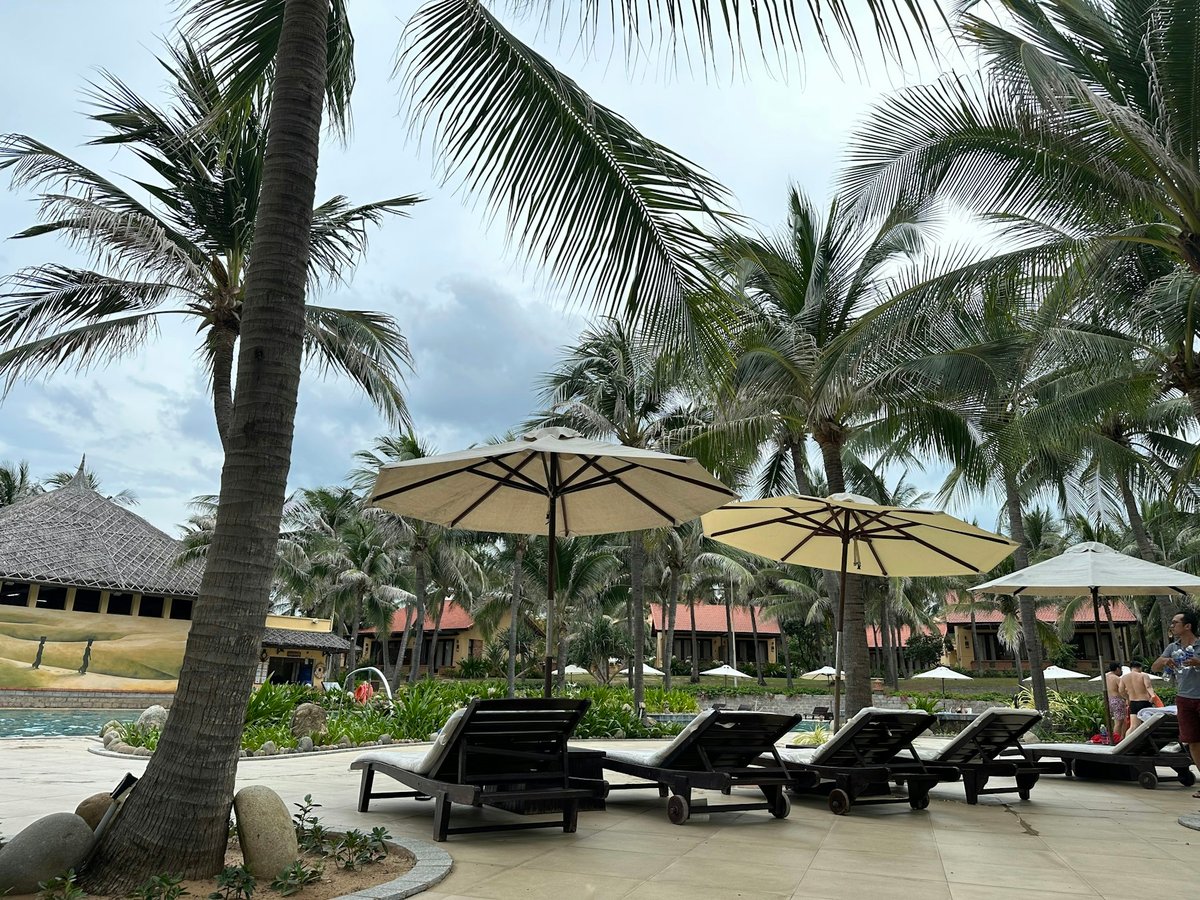
The main strip has lost a lot of sand to erosion in places, and several resorts have sea walls where there used to be beach. The eastern end towards the harbour and the western end towards Phan Thiet are better. In the windy season the water is choppy and swimming is unappealing along much of it.
In the calm months, roughly May to October, the sea is flat and the beach works — but that is also the wet season, with heavy afternoon rain. Mui Ne's wind and its swimming happen in opposite halves of the year.
Where to stay
The strip divides roughly in three. The western end towards Phan Thiet has the larger resorts and the better remaining beach. The middle is where most of the kite schools, guesthouses and restaurants are, and it is the practical base if the wind is why you came. The eastern end towards the harbour is quieter and closer to the fishing village and the dunes.
Because everything is on one road, the question is not which area has more but which end of the road you want to be walking along.
Getting there
Four to five hours from Ho Chi Minh City by bus or private car, and a similar time from Nha Trang in the other direction. Sleeper buses run the route frequently and cheaply. A railway station at Phan Thiet, about half an hour away, takes trains from Ho Chi Minh City.
Mui Ne is strung out along one long road, so getting around means a taxi, a Grab, or walking a long way. Check where on that road your accommodation sits.
How long to stay
Two nights covers the dunes, the fishing village and a day on the beach. If you are learning to kitesurf, a week is the minimum that makes sense. If you are simply breaking the journey between Ho Chi Minh City and Nha Trang, one night is enough.
Eating
Seafood at the harbour end is the cheapest and freshest. The main road has a long run of restaurants aimed at visitors, with Russian, Vietnamese and international menus side by side. The local speciality is banh canh cha ca, a thick noodle soup with fish cake, eaten at breakfast.
Who it suits
Kitesurfers, straightforwardly — this is one of the best places in the region to learn, in season. Photographers, for the dunes and the harbour. And anyone who wants a stop between the south and the central coast that is not another city.
It suits a conventional beach holiday considerably less well, and visitors who booked it as one are the ones who leave disappointed. The dunes and the wind are what you are coming for; the beach is incidental.
The Russian signage
Like Nha Trang, Mui Ne developed heavily around Russian package tourism, and the signage and menus along the main road reflect it. It is part of the character of the place now, and worth knowing if you were expecting something else.
FAQ
What is Mui Ne actually for?
This is what Mui Ne is actually for. From roughly November to April the wind blows consistently along this coast, and the bay has been a kitesurfing and windsurfing destination for two decades. Schools, rental shops and instructors line the main road, and the standard of teaching is high because the market is competitive.
What are the Mui Ne sand dunes like?
Two sets, and they are different. The white dunes, further out, are the large ones — a genuine expanse of pale sand with a lake in the middle, reached by jeep and usually visited at sunrise. The red dunes, closer to town, are smaller, orange, and busier, and are the sunset option.
Is Mui Ne still a working fishing village?
Mui Ne is still a working fishing port, and the harbour full of round coracle boats and the morning market on the sand are the most photographed thing here after the dunes. Go early; the boats come in at dawn and the activity is over by mid-morning.
Keep planning
Not sure how it all fits together?
Pick your trip length and we'll route a real day-by-day plan.