Vietnam shares long land borders with Cambodia, Laos and China, and the crossings into the first two are a normal part of a Southeast Asia trip. The thing that goes wrong is almost never the journey. It is the paperwork, and specifically which gate your visa is valid at.
The rule that decides everything
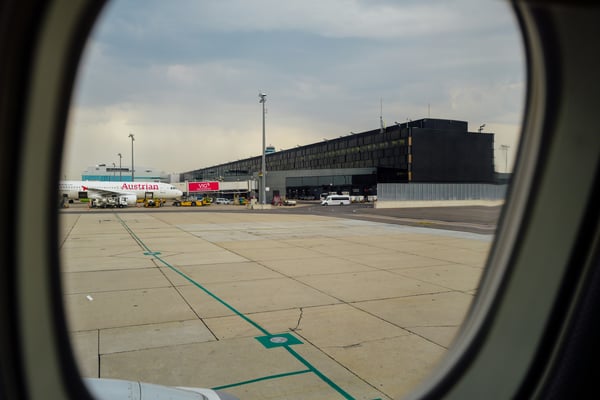
A Vietnamese e-visa works only at designated border gates. There are 83 of them since December 2025 — 17 airports, 27 land crossings and 39 seaports — and that covers every international airport in Vietnam. Gate eligibility is therefore never the obstacle when you fly, though your visa still has to be valid and name the port you actually use.
Land is different. Only some land crossings are on the list, so a crossing that exists and is open to foreigners is not necessarily one your e-visa works at. Check the specific gate before you commit to a route.
And a second rule people miss
Separately from gate eligibility, your e-visa names the entry point you selected on the application, and that selection is binding. If you intend to come back to Vietnam after Cambodia or Laos, you need entry permission that covers the return — either a multiple-entry visa, or a fresh single-entry one — and it has to name the gate you will actually use. Both rules have to be satisfied, not just one.
Vietnam to Cambodia
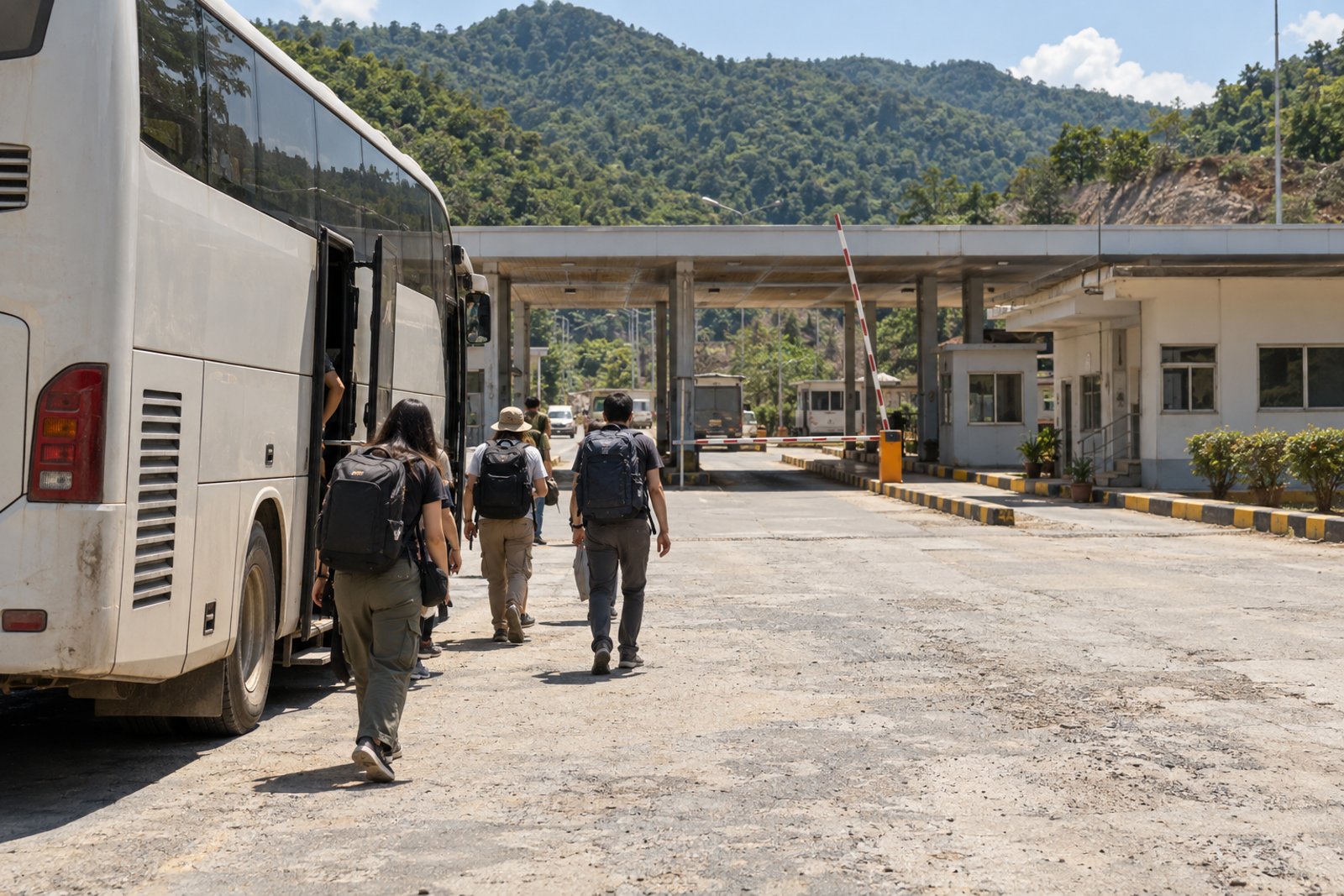
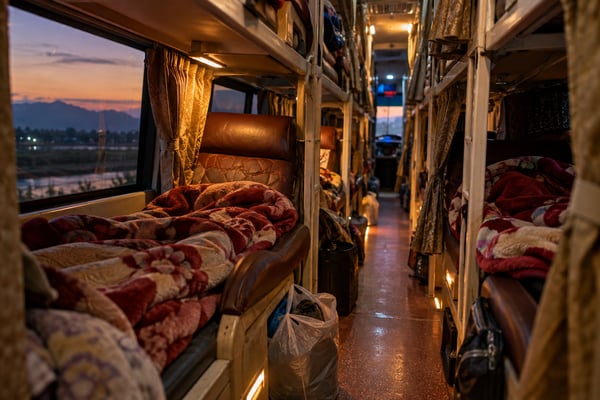
Moc Bai, between Ho Chi Minh City and Phnom Penh, is the busiest and easiest. Direct buses run the route in roughly six to seven hours including the border formalities, and the bus company walks passengers through the process. Cambodia issues visas on arrival to most nationalities including Americans, or you can obtain an e-visa in advance.
In the Mekong Delta, Ha Tien and the Chau Doc river route are the scenic alternatives, with the Chau Doc to Phnom Penh boat a genuinely pleasant way to travel. Both are smaller and slower.
Vietnam to Laos
The Lao Bao crossing on the old Route 9 from Dong Ha, and Nam Can from Vinh, are the usual options. These are long journeys on mountain roads, and the bus services across them have a mixed reputation for comfort and timekeeping. Laos issues visas on arrival at the main international crossings.
Be realistic about the time. Hanoi or Hue to Vientiane or Luang Prabang overland is a full day and often more, against a short flight. People do it for the scenery and the cost, not the convenience.
What the crossing itself is like
You exit one country and enter the next at two separate windows with a walk in between. Have your passport, your Vietnamese exit documentation and your onward visa or the fee for a visa on arrival. Keep small denominations of US dollars for the Cambodian and Lao fees.
Informal fees are sometimes requested at the smaller crossings. The official position is that the posted fee is the fee; asking for a receipt usually resolves it, and the organised bus services generally handle the process in a way that avoids the question.
Timing the crossing
Land borders keep their own hours and they are shorter than you expect — most close in the early evening and some take a long lunch. Arriving at a remote crossing an hour after it shuts means a night in a border town with very little in it.
Build the crossing into the middle of a day rather than the end of one, and confirm the current hours locally rather than from an article, because they change and the smaller gates change most. The organised through-buses are scheduled around the hours, which is one of the better arguments for taking one instead of assembling the journey yourself.
Leaving Vietnam needs valid status too
Vietnam requires a valid visa, a residence card or Immigration Department approval to exit as well as to enter. An overstayed visa is therefore a departure problem at a land border just as much as at an airport, and it is harder to resolve from a remote crossing.
The China border
Crossings into China exist, at Huu Nghi near Lang Son and at Lao Cai, and they are used by travellers continuing north. They are a different proposition from Cambodia and Laos: China requires a visa arranged well in advance for most nationalities including Americans, with no visa on arrival at these crossings, and the paperwork needs to be in place before you travel to the border.
If China is part of the plan, treat it as a separate project rather than an extension of a Vietnam trip, and confirm both the Chinese visa and the Vietnamese gate eligibility before fixing any dates.
Whether to do it at all
For Cambodia from Ho Chi Minh City, the overland route is genuinely competitive: six or seven hours door to door against a flight that, with two airport transfers, is not much quicker and costs more. For Laos, the flight usually wins unless the journey itself is the point.
The reason this matters beyond the day itself is that a loop out of Vietnam and back changes what you need from your Vietnamese visa — multiple entry, or a second application, named for the gate you will return through. A one-way exit into Cambodia at the end of a trip needs none of that. Which shape your trip has is therefore worth settling before you apply rather than after, and that ordering problem is what Vietnam, End to End works through.
FAQ
Can you use a Vietnamese e-visa at any land border?
A Vietnamese e-visa works only at designated border gates. There are 83 of them since December 2025 — 17 airports, 27 land crossings and 39 seaports — and that covers every international airport in Vietnam. Gate eligibility is therefore never the obstacle when you fly, though your visa still has to be valid and name the port you actually use.
Which border crossing is best for Cambodia?
Moc Bai, between Ho Chi Minh City and Phnom Penh, is the busiest and easiest. Direct buses run the route in roughly six to seven hours including the border formalities, and the bus company walks passengers through the process. Cambodia issues visas on arrival to most nationalities including Americans, or you can obtain an e-visa in advance.
What is a Vietnamese land border crossing like?
You exit one country and enter the next at two separate windows with a walk in between. Have your passport, your Vietnamese exit documentation and your onward visa or the fee for a visa on arrival. Keep small denominations of US dollars for the Cambodian and Lao fees.