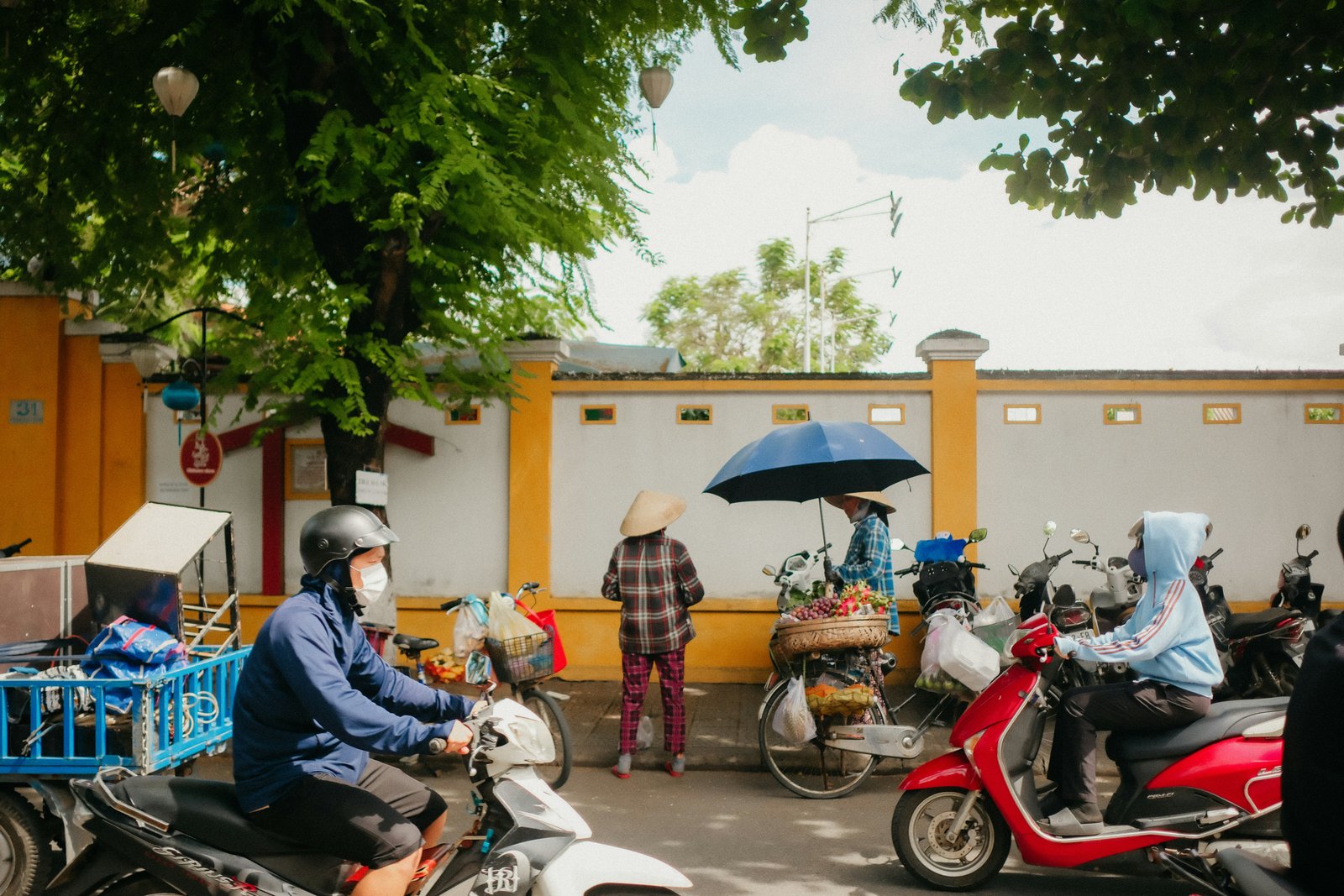
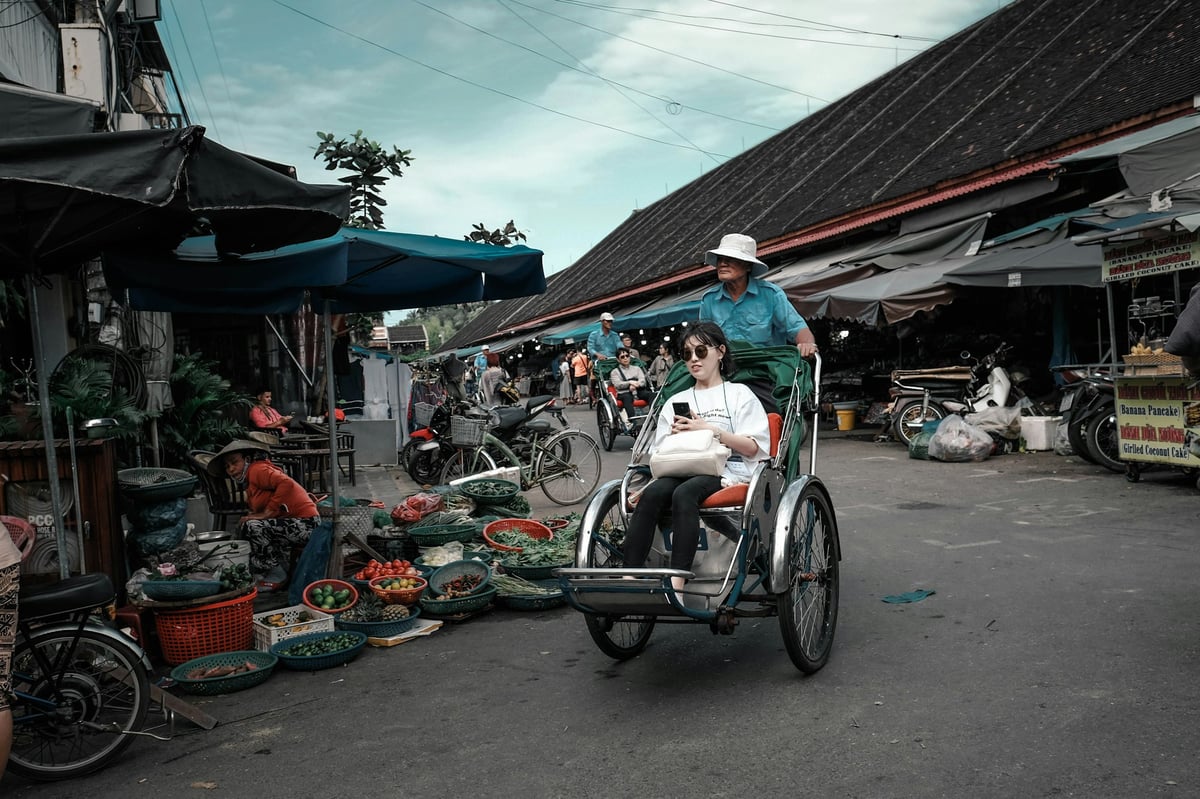
The first time you stand at a kerb in Hanoi or Ho Chi Minh City and look at an unbroken river of motorbikes, the gap you are waiting for is never going to come. That is the first thing to understand: you are not waiting for a gap. You are joining the flow.
The technique
Step off at a slow, steady, predictable pace and keep going, watching the traffic as you move. The system works because riders who have seen you can steer around a path they can predict; what breaks it is unpredictability, since stopping halfway or darting forward forces anyone who had already adjusted to re-solve the problem at close range. It is a technique for improving your odds, not a guarantee that every rider has noticed you — which is why you keep looking.
Keep watching the traffic as you go. Predictability is the technique, not a guarantee, and the point of watching is to see the one rider who has not seen you.
What does not apply
Cars, buses and trucks do not flow around you the way scooters do. They are heavier, slower to change line, and often cannot see you. Wait those out. The technique is for the two-wheeled river, not for everything on the road.
Learning it in the first hour
Cross alongside a local. Stand near someone who is about to cross, go when they go, and stay on their downstream side. Two or three crossings of that and the rhythm makes sense. It is the fastest way to acquire the nerve, and nobody minds.
Pick your first crossing deliberately: a wide street with a median gives you a halfway refuge, and a quieter side street in the morning is gentler than a six-lane junction at six in the evening.
Hanoi and Ho Chi Minh City are not the same problem
Hanoi's Old Quarter has narrow streets, slower speeds and a very high density of two-wheelers, which makes it intimidating but forgiving: everything is moving at a pace you can read. Crossing there is mostly a question of nerve.
Ho Chi Minh City's boulevards are wider and faster, with more cars mixed into the flow and longer distances to cover in the open. The technique is the same but the margin for error is smaller, and a median refuge is worth walking to find. If you are nervous, learn the skill in Hanoi and arrive in the south already fluent.
Where the rules differ from home
Green pedestrian signals exist and are not a guarantee of an empty road — right-turning traffic generally continues, and motorbikes may cross regardless. Treat a green light as improved odds rather than permission.
Pavements are frequently parked solid with motorbikes, so pedestrians walk in the road as a matter of course. Walk with the traffic beside you rather than against it where you can, and expect scooters on the pavement too; this is normal rather than aggressive.
Phones
Do not cross reading your phone, and more importantly do not stand near the kerb reading it. Petty theft is the common crime against visitors in Vietnamese cities, and snatching a phone from a moving motorbike is its signature form — a stationary person holding one at the roadside is an easy mark. Stop with your back to a wall if you need to look at a map.
Grab, and when walking is the wrong answer
Distances in both cities are longer than a map suggests, and the heat makes a two-mile walk in July considerably less pleasant than the same walk in a temperate climate. Ride-hailing fares are low enough that taking a car or a motorbike taxi for anything over about a mile is a sensible default rather than a luxury, particularly in the middle of the day.
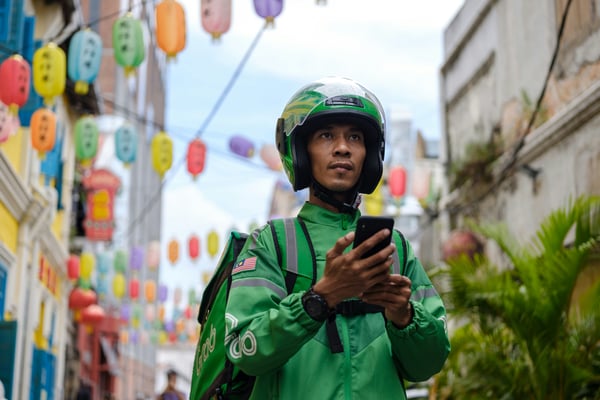
A GrabBike — riding pillion behind a driver — is also the fastest way across a congested city and the cheapest. You are handed a helmet, and the driver is navigating traffic he reads fluently. It feels alarming for about four minutes and then becomes the obvious way to get around.
At night, and in the rain
Both make you harder to see and make riders less willing to slow. Wet roads mean longer stopping distances on bald tyres, and a tropical downpour cuts visibility to very little. Wear something light-coloured at night if you can, and be more conservative about which crossings you take on.
Walking with children or limited mobility
The flow technique assumes you can maintain a steady pace and change nothing. With a small child, hold them on the downstream side and cross with a group rather than alone. With limited mobility or anything that makes your pace unpredictable, use signalled crossings where they exist, cross with locals, and do not be shy about using a taxi or Grab for a distance you would otherwise walk — fares are low enough that it is a reasonable default rather than an indulgence.
The wider point
Traffic is the part of Vietnam that most alarms American visitors on arrival and the part they adapt to fastest. Within three days the river stops looking like chaos and starts looking like a system, because it is one.
What is worth keeping in proportion is which road risks actually matter. Crossing on foot, done sensibly, is a skill you acquire in a day. Riding a motorbike yourself is a different question entirely — a US licence and an International Driving Permit are both invalid in Vietnam, and that has consequences for your insurance as well as your legality.
FAQ
How do you cross the street in Vietnam?
Step off at a slow, steady, predictable pace and keep going, watching the traffic as you move. The system works because riders who have seen you can steer around a path they can predict; what breaks it is unpredictability, since stopping halfway or darting forward forces anyone who had already adjusted to re-solve the problem at close…
How do you learn to cross the road on your first day?
Cross alongside a local. Stand near someone who is about to cross, go when they go, and stay on their downstream side. Two or three crossings of that and the rhythm makes sense. It is the fastest way to acquire the nerve, and nobody minds.
Is crossing the street harder in Hanoi or Ho Chi Minh City?
Hanoi's Old Quarter has narrow streets, slower speeds and a very high density of two-wheelers, which makes it intimidating but forgiving: everything is moving at a pace you can read. Crossing there is mostly a question of nerve.
Keep planning
Not sure how it all fits together?
Pick your trip length and we'll route a real day-by-day plan.