Vietnam's long distances and cheap overnight transport make the sleeper a genuine planning tool: on the right leg you cover the distance and the night's accommodation at once. The choice between bus and train is not really about money, because both are inexpensive. It is about what each one costs you in comfort and risk.
What each one is
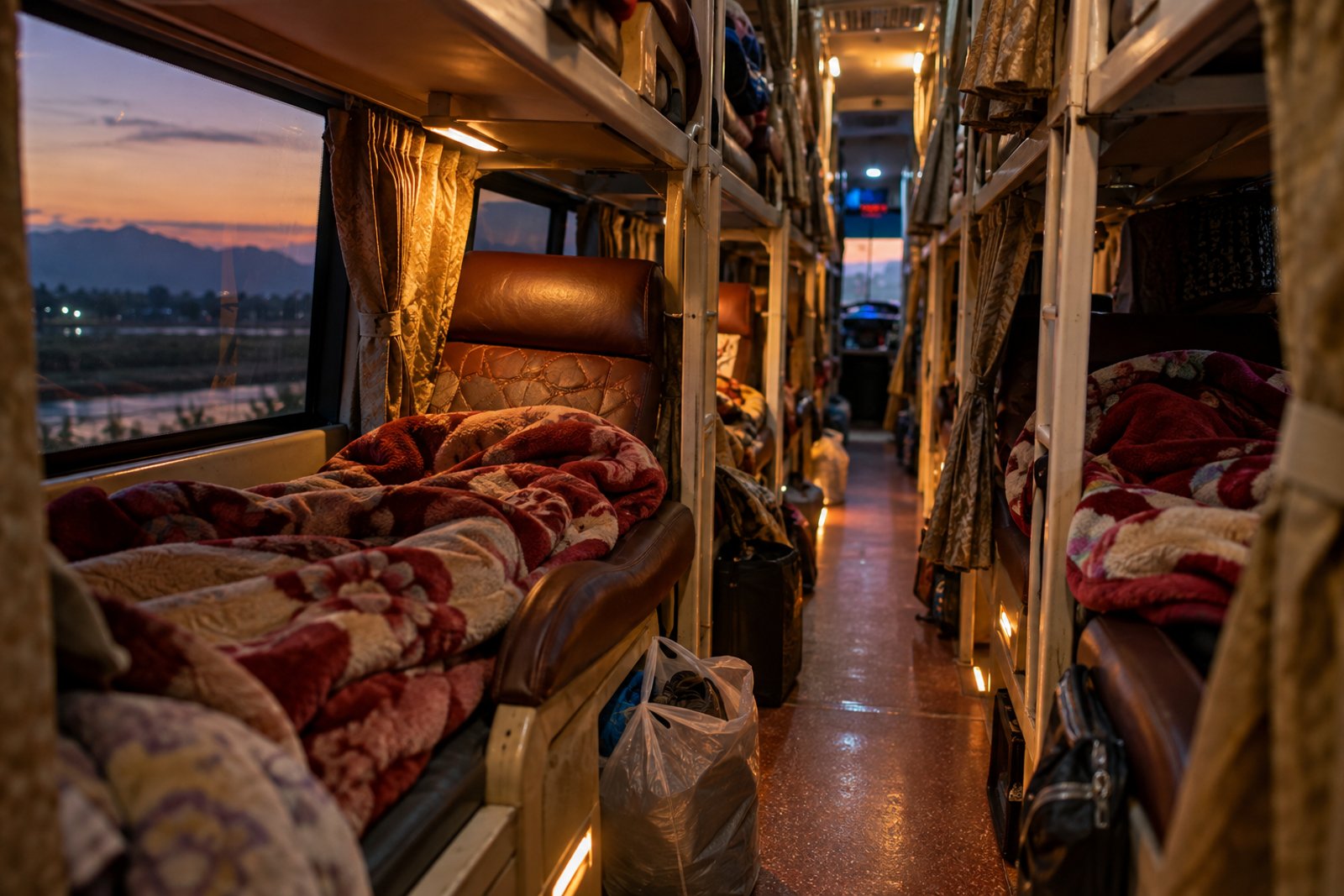
The sleeper bus is a coach fitted with reclining berths rather than seats, usually in two tiers down three aisles. You lie down, more or less flat, in a space built to a Vietnamese frame. Shoes come off at the door and go in a bag. Routes cover essentially the whole country, including places the railway does not reach.
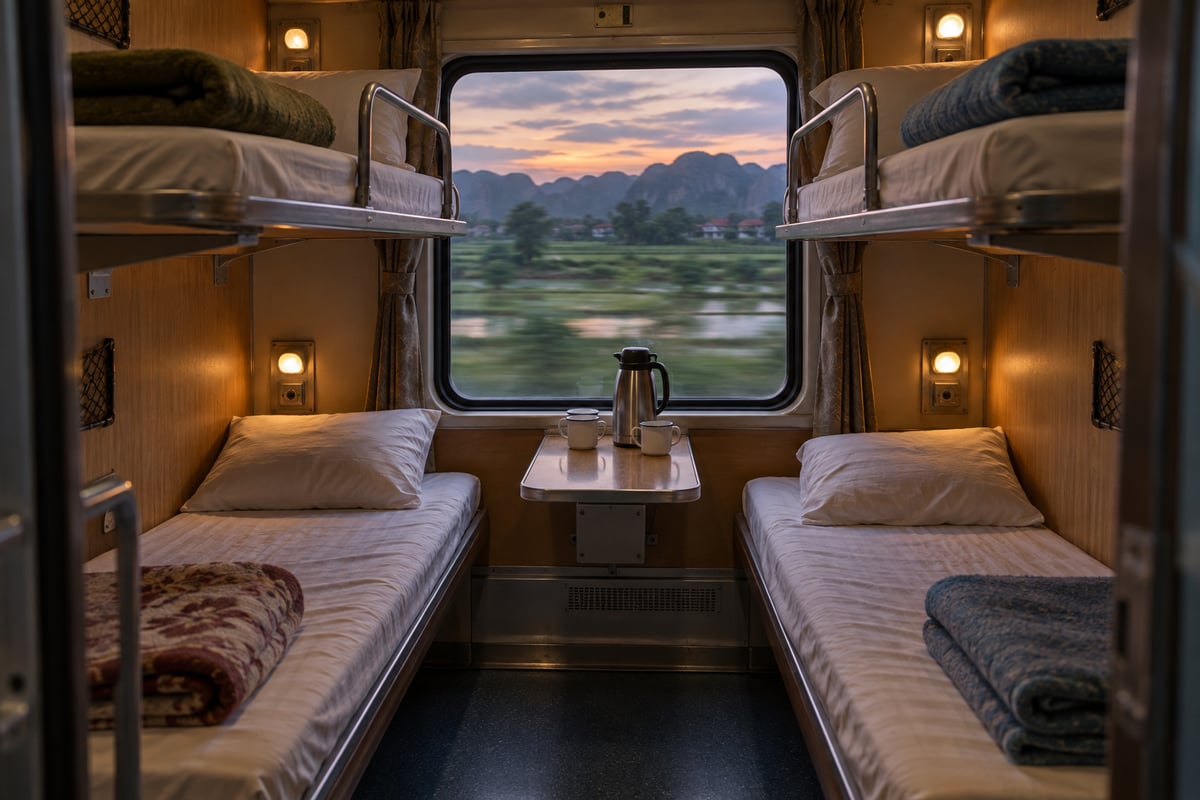
The sleeper train is a four or six-berth compartment on the Reunification line, air-conditioned on the better services, with a door you can close. It runs only where the single north–south railway runs, plus the Hanoi to Lao Cai branch for Sapa.
The honest comfort comparison
The train wins, and it is not close if you are tall. Sleeper bus berths are short, and anyone around six feet will spend the night with their knees bent. The train also gives you a flat berth you can sit up in, a door, and the ability to walk about. The bus is cheaper and goes more places.
The safety question
This is where the two genuinely diverge, and it is worth being plain about. Road safety is the hazard the State Department warns about at greatest length in Vietnam, and an overnight coach on mountain roads sits inside that risk in a way a train on rails does not. Operator quality varies widely, and unlike comfort it is not something you can assess from the seat.
That does not make sleeper buses unreasonable — millions of journeys happen uneventfully, and most travellers who take them are fine. It does mean the choice is not purely about comfort. Reviews will tell you about legroom and punctuality rather than maintenance or driving, so they are a weak proxy for safety; the honest position is that you cannot easily verify an operator, which is itself a reason some travellers prefer the train.
Where each makes sense
Take the train for Hanoi to Hue or Da Nang, and for Hanoi to Lao Cai if you are going to Sapa by rail. These are the legs where the railway goes exactly where you want and the overnight timing works.
Take the bus where the train does not go — Da Lat, Mui Ne, the Mekong towns, Phong Nha, Cat Ba — or where the bus is dramatically more direct. Many of these are daytime journeys, which sidesteps the overnight question entirely.
And sometimes, take neither
For the longest hops, a cheap internal flight usually beats both. Hanoi to Ho Chi Minh City by sleeper bus is over thirty hours; the same trip is a little over two hours in the air for a fare that is often not much higher than the bus. Spending a day and a half horizontal to save a modest amount is a trade worth making consciously rather than by habit.
Practical notes for either
Book ahead in high season and well ahead around Tet. Bring a layer: both buses and trains run the air conditioning hard. Bring earplugs and an eye mask. Keep your passport, cards and phone on your body rather than in a bag in the luggage hold or on a shelf. On buses, pick a berth in the middle of the vehicle, away from the wheels and the door.
Choosing a bus operator
If you are taking the bus, the operator is the decision, not the price. Look for recent reviews rather than a brand name, because quality on a given route changes as companies rotate vehicles. Book through your accommodation or a reputable agency rather than the cheapest aggregator, and be wary of a fare that undercuts everything else on the route by a wide margin.
Two specifics worth asking about: whether the service is a cabin bus with individual pods rather than open berths, which is markedly more comfortable and increasingly common on the main routes, and whether the ticket includes a transfer to the central drop-off point. Long-distance buses often terminate on the edge of a city rather than downtown, and arriving there before dawn without an onward plan is a well-known way for an otherwise fine journey to end badly.
What you are really choosing
Look at what this decision quietly settles. An overnight leg can save a hotel night and shift a journey out of daylight hours, which is the main reason it is tempting on a two-week trip — but it also fixes where you wake up, which fixes the next day's plan, and it trades a comfortable arrival for an early one. Two overnight legs might free up two daytime journeys; how much of that you actually get back depends on how well you sleep sitting up in a moving vehicle, which for most people is not very well.
How many overnight legs a trip can absorb, and which ones to spend them on, is the sort of thing that only resolves when you look at the whole route at once — which is what Vietnam, End to End is for.
FAQ
What is the difference between a sleeper bus and a sleeper train?
The sleeper bus is a coach fitted with reclining berths rather than seats, usually in two tiers down three aisles. You lie down, more or less flat, in a space built to a Vietnamese frame. Shoes come off at the door and go in a bag. Routes cover essentially the whole country, including places the railway does not reach.
Which is safer, the sleeper bus or the sleeper train?
This is where the two genuinely diverge, and it is worth being plain about. Road safety is the hazard the State Department warns about at greatest length in Vietnam, and an overnight coach on mountain roads sits inside that risk in a way a train on rails does not. Operator quality varies widely, and unlike comfort it is not something…
Which routes suit the train and which the bus?
Take the train for Hanoi to Hue or Da Nang, and for Hanoi to Lao Cai if you are going to Sapa by rail. These are the legs where the railway goes exactly where you want and the overnight timing works.