Vapes and heated tobacco are banned in Vietnam: what happens at the airport, and on a transit
Vietnam bans e-cigarettes and heated tobacco, so a vape in your bag is confiscated on arrival or at transit security; here is what the ban covers and what to do instead.
Editorial Written and fact-checked for American travelers
If you vape, leave the device at home when you fly to Vietnam. Vietnam's National Assembly has banned e-cigarettes and heated tobacco products, and the ban covers bringing them in, carrying them and using them, not only selling them. Ordinary cigarettes are still allowed within the customs allowance. Below: which devices the ban covers, what happens at the airport, what changes on a transit, and what to do if you have already packed one.
What Vietnam's vape ban covers
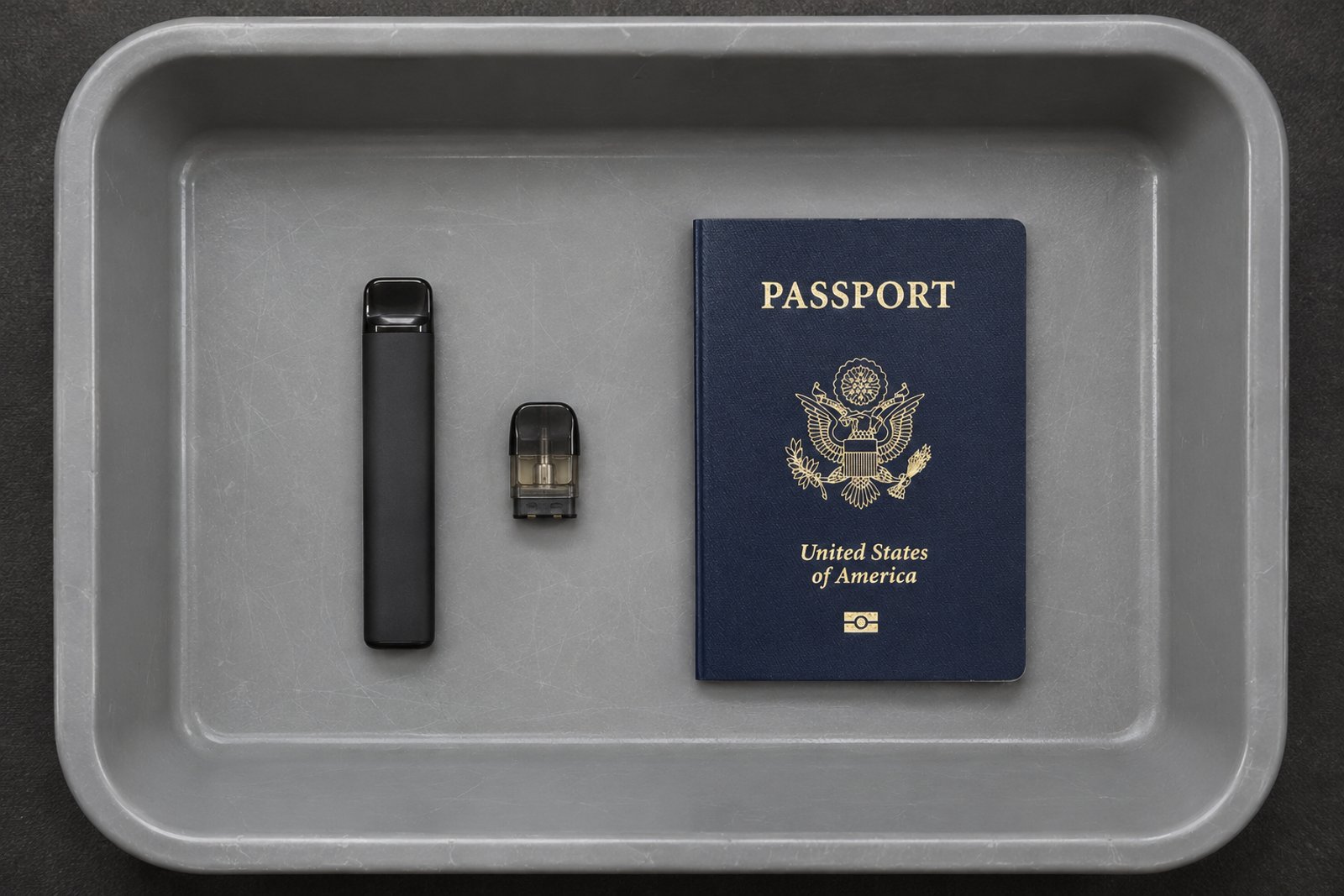
Vietnam's vape ban covers e-cigarettes of every kind, from disposables and pod systems to refillable tanks and their liquids, and heated tobacco devices such as IQOS and glo along with their tobacco sticks. The ban is on import, storage, transport and use as well as sale, and it now feeds into a customs import-ban list that changed on 5 September 2026, when Decree 292/2026 replaced Decree 69/2018, so advice written before then may be out of date.
The practical reading for an American visitor is simple: nothing you inhale through a battery is allowed. That includes nicotine-free vapes. The law looks at what the product is, not at what is in the liquid, so a "zero nicotine" label does not move a device out of the ban.
Cannabis vapes are a separate and much more serious problem. A THC or CBD cartridge is a drug question, not a tobacco question. The US State Department warns that substances used legally in another country can still lead to arrest in Vietnam, and a cartridge bought legally in California is exactly that case. Our guide to bringing medication into Vietnam explains how Vietnam treats controlled substances.
What is still allowed
Ordinary tobacco is still legal. The duty-free allowance for an arriving adult is 200 cigarettes, or 250 grams of shredded tobacco, or 20 cigars, and the rest of the arrival allowances are set out in our page on Vietnam customs and duty-free rules. The line runs between tobacco you burn, which is allowed, and devices that heat or vaporise, which are banned.
What happens at a Vietnamese airport if you carry a vape
At a Vietnamese airport, a vape found at arrival customs is treated as a banned import. The usual outcome for a visitor is that the device and liquids are taken from you, and the law also allows an administrative fine. Entry happens at every international airport in Vietnam, from Noi Bai in Hanoi to Tan Son Nhat in Ho Chi Minh City and Da Nang, and the rule is the same at all of them.
This site has not confirmed the current fine amounts from the decree, so no figure appears here. What can be said is that the risk is real, not theoretical. Arriving bags are x-rayed, and a vape packed in hand luggage, which is where airlines require you to carry it, is easy to see on a screen.
What you should not do is try to talk your way past it. A visitor who hands over a device and pays any fine has a bad first hour. A visitor who argues, or who is found with several devices or sealed packs of pods that look like stock for sale, risks being treated as a trader rather than a user, and that is a different and more serious matter.
Why the airline rule makes it harder to hide
Airlines and aviation regulators require e-cigarettes and their lithium batteries to travel in the cabin, never in checked baggage, and they forbid using or charging them on board. So the one place an airline will let you carry a vape is the bag that goes through security scanning in front of an officer. There is no legal way to fly a vape into Vietnam out of sight.
What changes on a transit through Vietnam
A transit through Vietnam, for example Hanoi or Ho Chi Minh City on the way to Bangkok or Bali, does not make a vape safe to carry. Staying airside means you skip arrival customs, but you still pass transfer security, and Vietnam's ban covers carrying and storing the products as well as importing them. Because consular access for detained Americans is routinely delayed, often by several weeks, a transit is not the place to test the rule.
The likely outcome at transfer security is the same as on arrival: the device is taken. It is not that you can keep it because you are not entering the country. If your itinerary touches Vietnam at all, the cleanest plan is to fly without the device and buy a replacement at your final destination, if that country allows it.
Two transit cases deserve extra care:
A self-transfer. If you booked two separate tickets and have to collect your bag and check in again, you are entering Vietnam, with an e-visa, immigration and arrival customs. Everything in the airport section above applies.
An overnight connection. A hotel night between flights also means formally entering the country. A device in your bag is then an import, and using it at the hotel is use.
What to do if you already packed a vape for Vietnam
If you discover a vape in your bag before you board for Vietnam, the cheapest fix is to leave it behind: with a friend at your departure airport, in your car, or in the bin before security. Once the plane has landed, declaring the device at Vietnamese customs is better than being found with it, because the outcome you want at Noi Bai or Tan Son Nhat is a simple confiscation, not a finding that you tried to hide a banned product.
To declare, take the channel for goods to declare rather than the nothing-to-declare lane, and show the device and any liquids to the officer. It costs a few minutes and possibly a fine. It does not end with an officer finding something you walked past them with.
If you see people vaping in Hanoi or Saigon
You may still see people vaping in a street cafe, or devices on sale behind a shop counter. That tells you enforcement is uneven, not that the products are legal. A foreigner caught in a sweep or a document check has a weaker hand than a local, and the money you save buying a device in Vietnam is small next to a fine, a police report and a lost afternoon.
How to manage nicotine in Vietnam without a vape
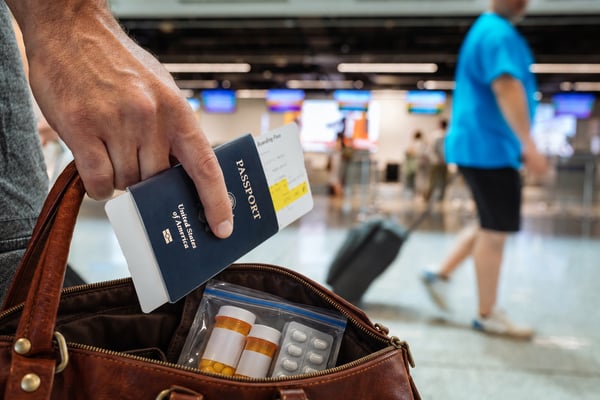
A trip to Vietnam without a vape needs a plan before you fly. The legal options for a nicotine user are ordinary cigarettes within the 200 cigarettes, or 250 grams of shredded tobacco, or 20 cigars allowance, or nicotine-replacement products such as patches, gum or lozenges bought in the US and carried in their sealed, labeled packs.
Start the switch a week early. Changing from a vape to patches on a long-haul flight is the hardest version of the change. A week of practice at home makes the flight and the first days much easier.
Pack enough for the whole trip. Nicotine gum and patches are sold in Vietnamese pharmacies, but brands and strengths differ from the US.
Keep it in the original packaging. Sealed, labeled boxes are the easiest thing in any bag to explain.
Smoking rules are a separate question. Smoking is restricted indoors in many public places, and hotels set their own rules. Our overview of whether Vietnam is safe for Americans covers the other local laws a visitor is most likely to run into.
Frequently asked questions
Is a nicotine-free vape allowed in Vietnam?
No. The ban covers the e-cigarette as a product, whatever the liquid contains. A zero-nicotine device is treated the same as any other vape.
Can I bring an IQOS or heated tobacco sticks into Vietnam?
No. Heated tobacco devices and their sticks are covered by the same ban as e-cigarettes. Ordinary cigarettes, cigars and loose tobacco are still allowed within the duty-free allowance.
Can I keep a vape in my checked bag on a flight through Vietnam?
No. Airlines forbid e-cigarettes in checked baggage because of their lithium batteries, so a vape has to travel in your hand luggage, which is the bag that goes through security screening.
What happens if customs finds a vape in my bag?
For a visitor with one personal device, the usual outcome is confiscation, and an administrative fine is possible. Several devices or sealed stock can be treated as trading, which is more serious.
Keep planning
Not sure how it all fits together?
Pick your trip length and we'll route a real day-by-day plan.