Vietnam sits at the State Department's lowest advisory level. The risk Americans worry about and the risk that actually hurts them are not the same thing.
Editorial Written and fact-checked for American travelers
Vietnam is a safe country to travel in, and the US government says so in the plainest terms it has. The more useful question is not whether it is safe but which risks are real — because the thing most American visitors worry about is not the thing that actually sends them home early.
What the official advisory says
The State Department places Vietnam at Level 1 — Exercise Normal Precautions, the lowest of its four levels. That is a lower advisory than the Department currently assigns to France or Germany, both of which sit at Level 2. For an American audience whose mental picture of Vietnam was shaped by a war that ended fifty years ago, that single data point is worth sitting with.
Level 1 is not a promise that nothing goes wrong. It means the baseline caution you would use in any unfamiliar city is the appropriate level of caution here. The advisory itself is short and worth two minutes of your time before you fly.
How Americans are actually received
Warmly, and more warmly than most first-time visitors expect. The median Vietnamese citizen was born long after 1975, Vietnam and the United States are significant trading partners, and American visitors are commonplace. In Vietnam it is called the American War, museums present it from the Vietnamese side without much softening, and that is a national account of a national trauma rather than a comment on you standing in the room.
The crime risk: petty, persistent, avoidable
Petty theft is the dominant crime risk, and the State Department is direct about it: Vietnam is generally safe for travelers, but petty crime is common, especially in popular tourist locations. Violent crime against foreigners is rare. What is not rare is losing a phone.
The signature method is a snatch from a moving motorbike — your phone leaves your hand while you are standing on a sidewalk reading a map, and the bike is gone before you have registered what happened. Ho Chi Minh City is where this is most common. The defense is unglamorous and effective: do not walk and scroll, keep your phone in your hand only when you have stopped and have your back to a wall, and wear bags on the traffic-away side.
Scams are price-ambiguity, not theft
Nearly every common Vietnamese tourist scam is the same trick wearing different clothes: a service begins before a price is named, then the price arrives. Taxi meters that run fast, cyclo rides quoted per person rather than per trip, an unsolicited shoe repair in Hanoi's Old Quarter, a motorbike rental with pre-existing scratches charged at return. One habit prevents most of them — agree the number, in dong, before anything starts. Grab and Xanh SM remove the taxi version entirely by fixing the fare in the app. The exception is the motorbike-rental damage claim, where the price was never the issue: that one needs photographs of the bike before you ride off.
The risk nobody writes about
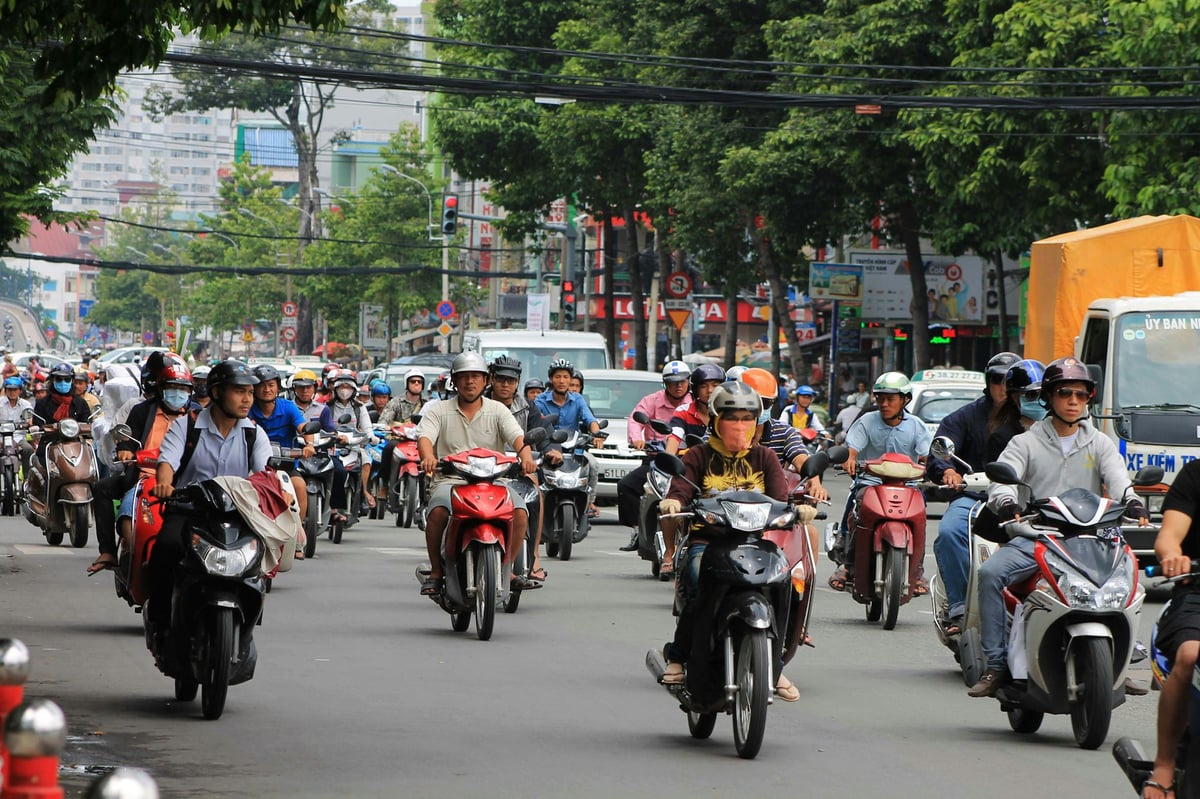
Road traffic is what actually injures visitors to Vietnam, not crime, and the gap between those two risks is not close. The country's roads are crowded and chaotic, most people are on motorbikes, and a tourist on a rented scooter with no local riding experience is the highest-exposure person on the road.
Two things compound it. US driver's licences and International Driving Permits are both invalid in Vietnam, and riding without a Vietnamese licence can void the travel insurance that would otherwise pay your medical bills. We have written up what that means in practice in our guide to renting a motorbike in Vietnam, and it is the single most consequential safety decision on a Vietnam trip.
Crossing the street is a skill
Walk at a slow, constant, predictable pace rather than darting, and keep watching the traffic as you go. Riders read your trajectory and steer around it, so sudden changes are what cause collisions — the rider has to re-solve the problem mid-manoeuvre. Predictability is the technique, not a guarantee: cars and buses do not swerve the way scooters do, so wait those out, and crossing alongside a local is the easiest way to learn the rhythm.
Legal risks worth taking seriously
Drug offences carry severe penalties, and the mechanics are worth understanding if you are coming from a state where cannabis is legal. Police sometimes test blood for drugs, and substances used legally in another country can still lead to arrest in Vietnam if they are detectable in your system on arrival. Ingredients in some ordinary prescription medicines, including common ADHD treatments, may also be illegal — a reason to travel with documentation for anything you are carrying.
What makes this weigh more than it otherwise would is the aftermath. Consular access to detained Americans is routinely delayed, often by several weeks, so the embassy may not reach you quickly. Overstaying your visa compounds similarly: fines, then delays obtaining permission to leave.
Unexploded ordnance, in proportion
Wartime ordnance remains in the ground in parts of Vietnam, and the risk is real but narrow. The greatest exposure is at construction sites, and landmine risk is low in urban and populated areas, including tourist destinations. On a DMZ tour or a rural trek, stay on marked paths and do not pick up metal objects. In Hanoi, this is not something to think about.
Health, air and emergencies
Tap water is not drinkable anywhere in Vietnam and bottled water is cheap and universal; ice is a judgement call we work through in the health guide. Air pollution is a genuine consideration — the State Department flags it as a significant problem in major cities, Hanoi above all, and advises travelers with respiratory conditions to speak to a doctor first. Vaccination questions are covered in our Vietnam health and vaccines guide.
Emergency numbers: 113 for traffic police, 115 for an ambulance. Be aware that these are frequently answered only in Vietnamese, and for a serious medical event in Hanoi or Ho Chi Minh City you are usually better off going directly to an international hospital than waiting for dispatch.
Taken together, the pattern is that Vietnam's real risks are ordinary ones handled badly rather than exotic ones. The largest of them — how you move around the country — is partly settled weeks before you arrive, when you choose between riding, hiring a driver and flying the long legs. Vietnam, End to End works that set of choices through in sequence.
FAQ
What does the State Department say about Vietnam?
The State Department places Vietnam at Level 1 — Exercise Normal Precautions, the lowest of its four levels. That is a lower advisory than the Department currently assigns to France or Germany, both of which sit at Level 2. For an American audience whose mental picture of Vietnam was shaped by a war that ended fifty years ago, that single data point is worth sitting with.
What is the main crime risk in Vietnam?
Petty theft is the dominant crime risk, and the State Department is direct about it: Vietnam is generally safe for travelers, but petty crime is common, especially in popular tourist locations. Violent crime against foreigners is rare. What is not rare is losing a phone.
What actually injures visitors to Vietnam?
Road traffic is what actually injures visitors to Vietnam, not crime, and the gap between those two risks is not close. The country's roads are crowded and chaotic, most people are on motorbikes, and a tourist on a rented scooter with no local riding experience is the highest-exposure person on the road.