Vietnam looks like an easy country to eat vegetarian in — the herbs, the vegetables, the rice — and then you discover that fish sauce is in almost everything, including dishes with no visible animal protein. It is still very manageable, but it needs a strategy rather than optimism.
The problem, stated plainly
Nuoc mam, fish sauce, is the base seasoning of the cuisine in the way salt is elsewhere. It is in dipping sauces, in marinades, in broths, in dressings for vegetable dishes. Shrimp paste, mam tom, appears in northern and central cooking. Pork or chicken stock underlies many broths that arrive looking vegetable-based.
A dish of stir-fried morning glory is not vegetarian by default. Neither is a bowl of noodles with tofu in it. This is not a matter of carelessness on the cook's part; it is how the food is seasoned.
Com chay: the real answer
Vietnam has a large Buddhist vegetarian tradition and, with it, a whole category of restaurant: com chay, literally vegetarian rice. These kitchens cook without meat, fish or fish sauce, which is the thing that makes them useful. They are inexpensive, common, and often found near pagodas.
Look for the word "chay" on a sign, or the Buddhist swastika symbol, which in this context marks a vegetarian kitchen. Many are canteen-style: you point at what you want from a tray of dishes and pay by the plate.
The lunar calendar
Many Vietnamese Buddhists eat vegetarian on the first and fifteenth days of the lunar month. On those days, com chay places are at their busiest and best stocked, and ordinary restaurants often add vegetarian options. It is a good time to be eating this way.
Regional differences
The south is the easiest. Buddhist practice is more widespread there, com chay places are more numerous, and the southern cooking's heavier use of coconut milk and vegetables translates well. Ho Chi Minh City in particular has a dense network of both canteens and modern vegan restaurants.
The centre is harder, because Hue and Hoi An's signature dishes are built around pork, shrimp and fish — though Hue, as a Buddhist centre with a long monastic tradition, has excellent vegetarian cooking if you look for it. The north sits between the two, with shrimp paste appearing more often than elsewhere.
The useful phrases
Toi an chay — I eat vegetarian. This is the single most useful thing to be able to say, and in a Buddhist context it is well understood to mean no meat, no fish, no fish sauce.
Khong nuoc mam — no fish sauce. Say it explicitly, because "vegetarian" in a non-Buddhist restaurant may not be heard as excluding it.
Khong thit, khong ca, khong trung, khong sua — no meat, no fish, no egg, no milk, for vegan requirements. Writing these down and showing them works better than pronunciation.
Dishes that work
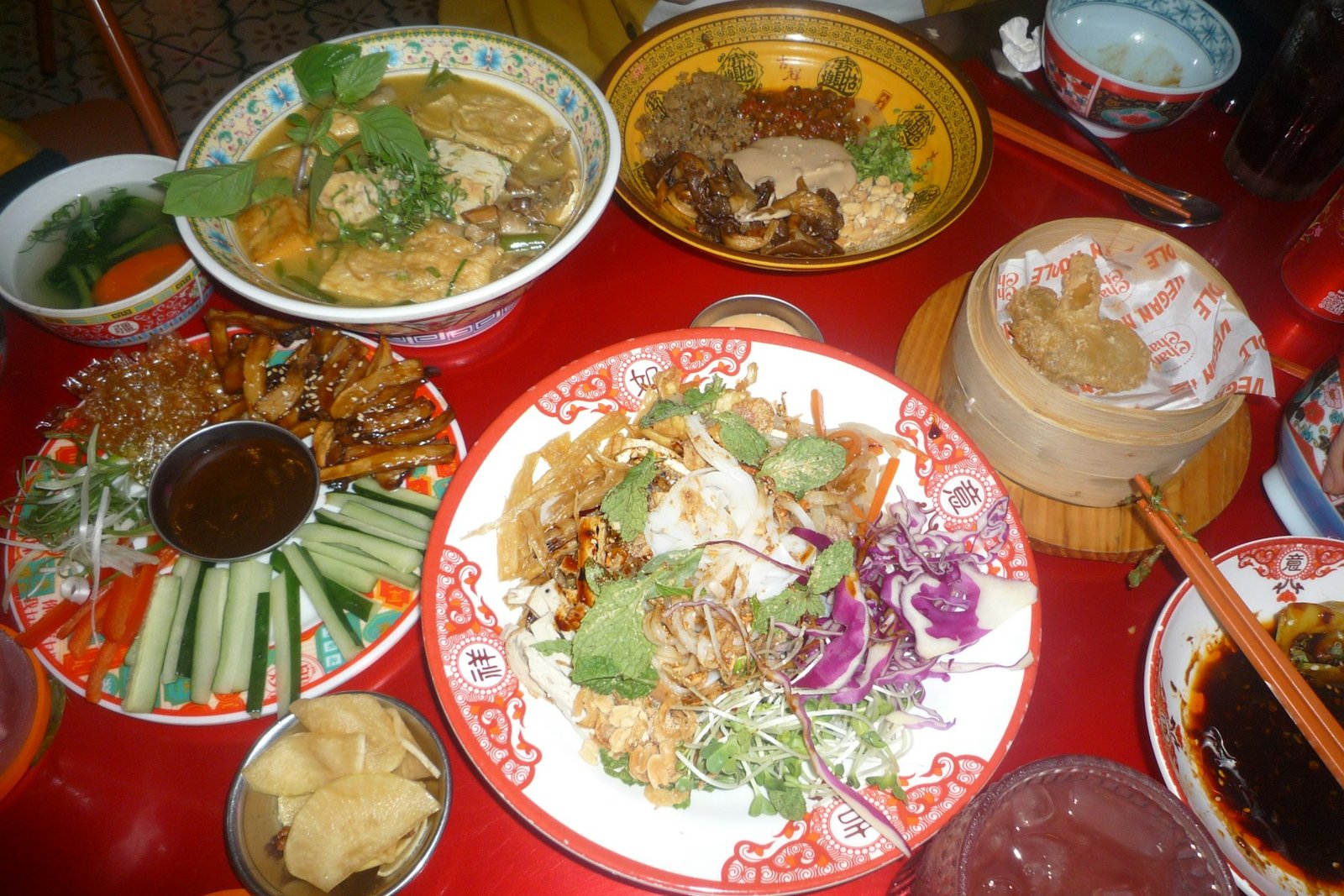
Many standard dishes have genuine chay versions: pho chay, bun rieu chay, banh mi chay, goi cuon chay with tofu and herbs, com tam chay. These are not compromises invented for visitors — Buddhist cooking has made mock-meat versions of the national dishes for a long time, and some of them are very good.
Beyond that: fresh spring rolls without the shrimp, banh xeo made without pork, rau muong xao toi if you confirm no fish sauce, and the enormous variety of vegetable, tofu and mushroom dishes in a com chay canteen.
Vegan specifically
Com chay cooking is often vegan as well as vegetarian, since dairy barely features in the tradition and many kitchens avoid egg too. That makes the chay network the practical starting point for vegans — but confirm egg and dairy at the individual place rather than assuming the category.
Outside it, egg is the common hidden ingredient — in banh mi, in some noodle dishes, in desserts. Dairy barely features in traditional Vietnamese cooking, but condensed milk is everywhere in drinks. Ask for coffee black, or with coconut milk where it is offered.
Where it gets hard
Street food, ironically, because stalls make one dish one way and have no vegetarian version. Smaller towns, where com chay places are fewer. And group situations, where the shared dishes are the point.
Finding places
The mapping apps list com chay restaurants and the vegetarian-specific apps cover the cities well. In Ho Chi Minh City and Hanoi there is also a growing number of modern vegan restaurants aimed at a younger Vietnamese and international clientele, which are a different and more expensive proposition from the canteens.
Looking near a significant pagoda is the most useful search heuristic, in small towns as much as in cities. It is where chay kitchens tend to cluster.
Breakfast
The hardest meal, because the standard Vietnamese breakfast is a meat-based noodle soup. The workable options are xoi, sticky rice, sold from baskets in the morning in both sweet and savoury versions; banh mi ordered without the pork and pate; and the com chay places that open early, which many do.
How it actually goes
Most vegetarian visitors to Vietnam eat extremely well, and the ones who struggle are usually the ones who tried to make the general restaurant scene work rather than using the chay network. Switch your default from "what can I remove from this dish" to "where is the nearest chay place", and the country becomes straightforward.
FAQ
Why is vegetarian food difficult in Vietnam?
Nuoc mam, fish sauce, is the base seasoning of the cuisine in the way salt is elsewhere. It is in dipping sauces, in marinades, in broths, in dressings for vegetable dishes. Shrimp paste, mam tom, appears in northern and central cooking. Pork or chicken stock underlies many broths that arrive looking vegetable-based.
What is com chay?
Vietnam has a large Buddhist vegetarian tradition and, with it, a whole category of restaurant: com chay, literally vegetarian rice. These kitchens cook without meat, fish or fish sauce, which is the thing that makes them useful. They are inexpensive, common, and often found near pagodas.
Which part of Vietnam is easiest for vegetarians?
The south is the easiest. Buddhist practice is more widespread there, com chay places are more numerous, and the southern cooking's heavier use of coconut milk and vegetables translates well. Ho Chi Minh City in particular has a dense network of both canteens and modern vegan restaurants.
Keep planning
Not sure how it all fits together?
Pick your trip length and we'll route a real day-by-day plan.