Vietnam is a good country to shop in for a kitchen, because the things worth buying are cheap, light and hard to get at home. Here is what actually earns its space, and what to know about getting it back.
Fish sauce
The one to buy properly. Good nuoc mam is made from anchovies and salt and nothing else, fermented in wooden vats for a year or more. Phu Quoc has a protected designation for it and the island's warehouses sell it directly; Cat Hai in the north is the other named producer.
Look at the label for the degree of protein, usually given as a number of degrees N. Higher is stronger and more expensive, and the best is drunk-tasted the way olive oil is. Buy glass if you can and bubble-wrap it; a bottle that breaks in a suitcase is a memorable problem.
Coffee and a phin
Vietnamese coffee is cheap and good, and the small metal phin filter costs almost nothing and is the right way to brew it. Buy both together.
Check whether the coffee is pure or roasted with butter or other additives — much mass-market Vietnamese coffee is, which gives the characteristic flavour but behaves differently in a home machine. Specialty roasters in Hanoi, Ho Chi Minh City and Da Lat sell single-origin Vietnamese arabica if that is what you want.
Pepper
Vietnam is one of the world's largest pepper producers and the stuff sold in the markets is fresher than most of what reaches a Western supermarket. Phu Quoc pepper has a reputation of its own. Buy whole peppercorns, not ground.
Dried and shelf-stable things
Rice paper for fresh rolls, which is light, flat and almost indestructible in a bag.
Dried rice noodles in the widths you cannot buy at home — the flat pho noodles and the thin bun vermicelli.
Shrimp paste and fermented bean curd if you are serious; both are pungent and need sealing well.
Dried shiitake, wood ear and lily buds, which are light and keep for years.
Cinnamon and star anise, both grown in Vietnam, for pho broth.
Sauces beyond fish sauce
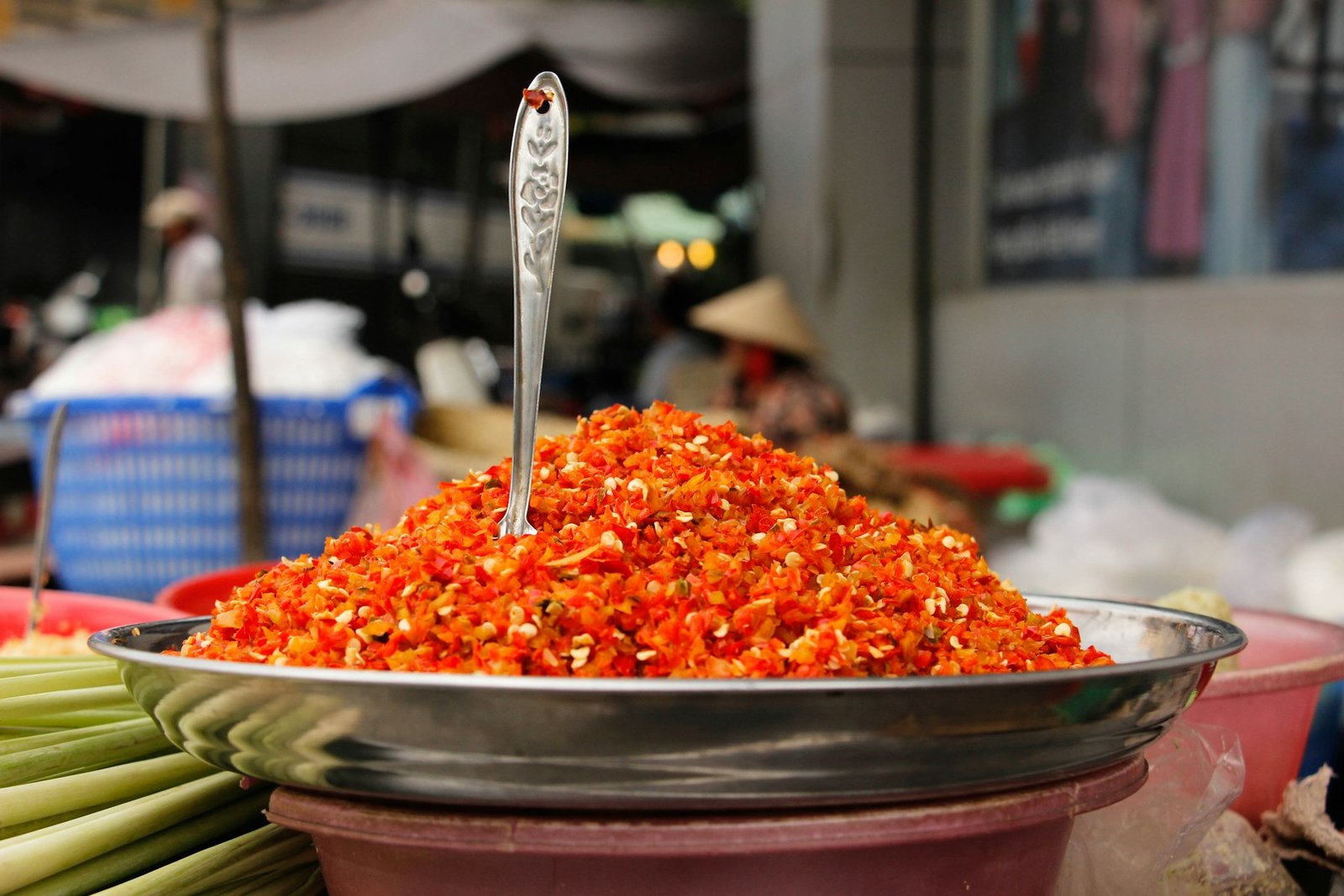
Hoisin and chilli sauce are made everywhere and the Vietnamese versions differ from what is sold abroad. Tuong ot, the Vietnamese chilli sauce, is thinner and sharper than the better-known Thai kind. Mam nem, fermented anchovy sauce, and mam ruoc, shrimp paste, are the strong ones and need serious sealing.
Sate, the chilli-and-lemongrass oil served with bun bo Hue, is underrated as a thing to bring back and transforms a bowl of noodles at home.
Tea
Vietnamese green tea, lotus tea and the artichoke tea from Da Lat all travel well. Lotus tea in particular is specific to here and makes a good present. The tea shops in the markets will vacuum-seal it.
Kitchen equipment
A claypot, a rice paper mould, a wooden mortar — all cheap, all heavy. The phin is the one piece of equipment that is genuinely worth the weight.
Lacquerware, textiles and the non-edible
Outside the kitchen cupboard, the things that travel well are lacquerware bowls and trays, which are light and genuinely made here; embroidered and block-printed textiles; and the conical hat, which is impossible to pack and which people buy anyway.
Ceramics from Bat Trang, the pottery village outside Hanoi, are the other category — heavy, breakable, and worth it if you are checking a bag and pack carefully.
Where to buy
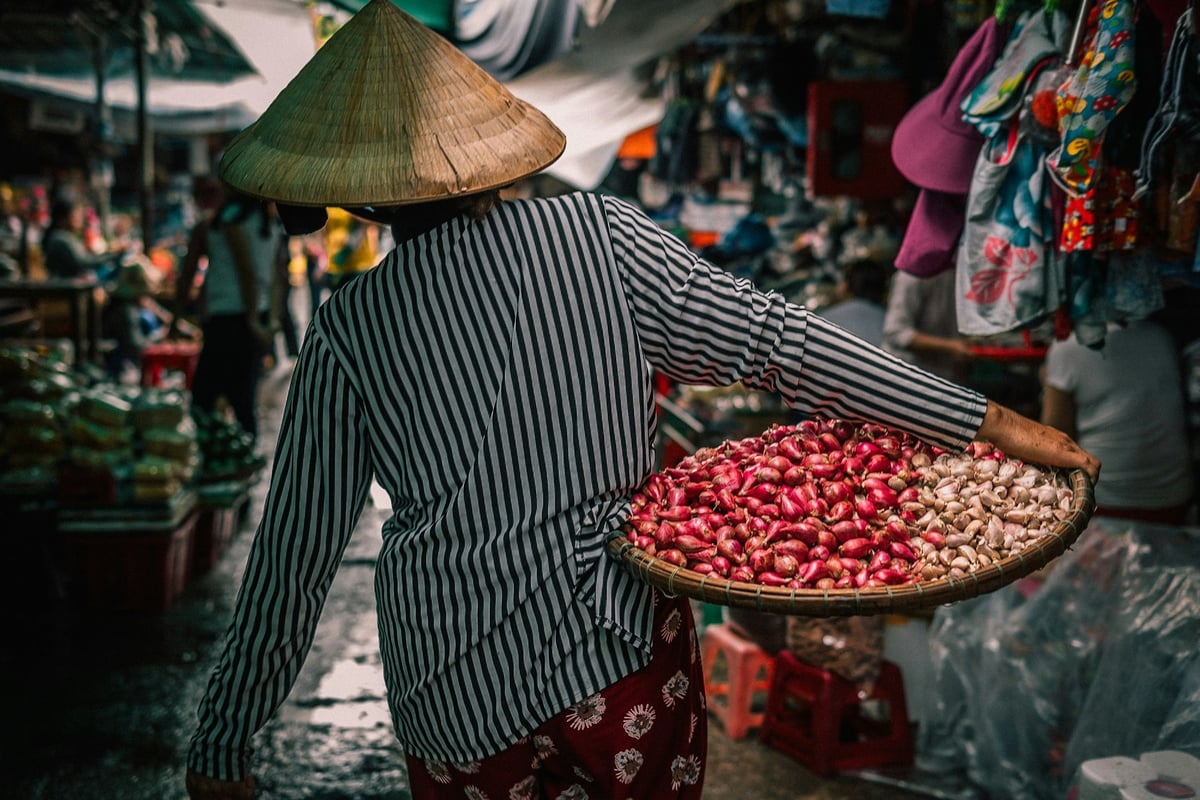
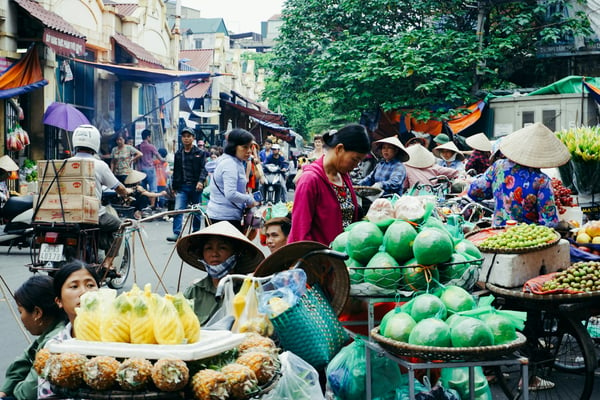
Supermarkets are the easiest and the prices are fixed: the large Vietnamese chains stock everything above, often better packaged for travel than the markets. Markets are cheaper and more interesting but you are buying loose and bargaining.
Airport shops sell most of this at a premium, which is worth knowing as a fallback rather than a plan. Buy the liquids in town and the last-minute things at the airport.
What not to bother with
Fresh herbs, which will not survive and will not clear customs. Fresh lemongrass and galangal, for the same reason — the frozen versions at an Asian supermarket at home are better than what arrives after a long flight. Anything requiring refrigeration. And the branded instant noodles, which are sold at home for roughly the same price.
Getting it home
The rules that will actually catch you are your own country's, on arrival home. Agricultural and customs restrictions on food are stricter than most people expect. Processed, commercially packaged, shelf-stable goods are generally the straightforward category; fresh produce, meat and some seeds are generally not.
Check your own border agency's current list rather than assuming, and declare food when the form asks. An undeclared prohibited item is the expensive outcome; a declared one is a conversation.
Liquids and flights
Fish sauce, chilli sauce and any liquid go in checked baggage, double-bagged. The smell survives a loose cap, and so does the stain.
FAQ
What fish sauce should you buy in Vietnam?
The one to buy properly. Good nuoc mam is made from anchovies and salt and nothing else, fermented in wooden vats for a year or more. Phu Quoc has a protected designation for it and the island's warehouses sell it directly; Cat Hai in the north is the other named producer.
Is Vietnamese coffee worth bringing home?
Vietnamese coffee is cheap and good, and the small metal phin filter costs almost nothing and is the right way to brew it. Buy both together.
Is Vietnamese pepper worth buying?
Vietnam is one of the world's largest pepper producers and the stuff sold in the markets is fresher than most of what reaches a Western supermarket. Phu Quoc pepper has a reputation of its own. Buy whole peppercorns, not ground.
Keep planning
Not sure how it all fits together?
Pick your trip length and we'll route a real day-by-day plan.