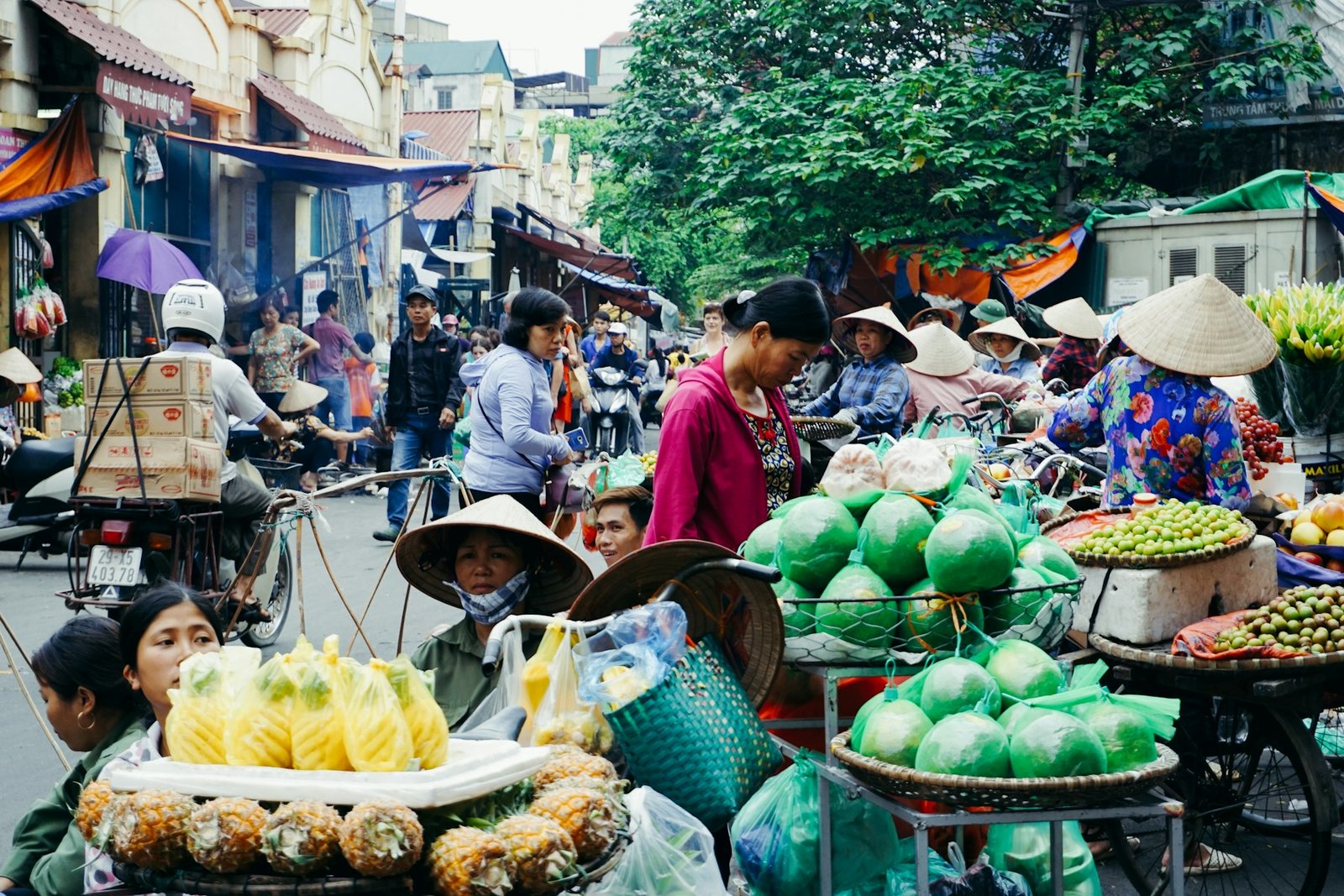
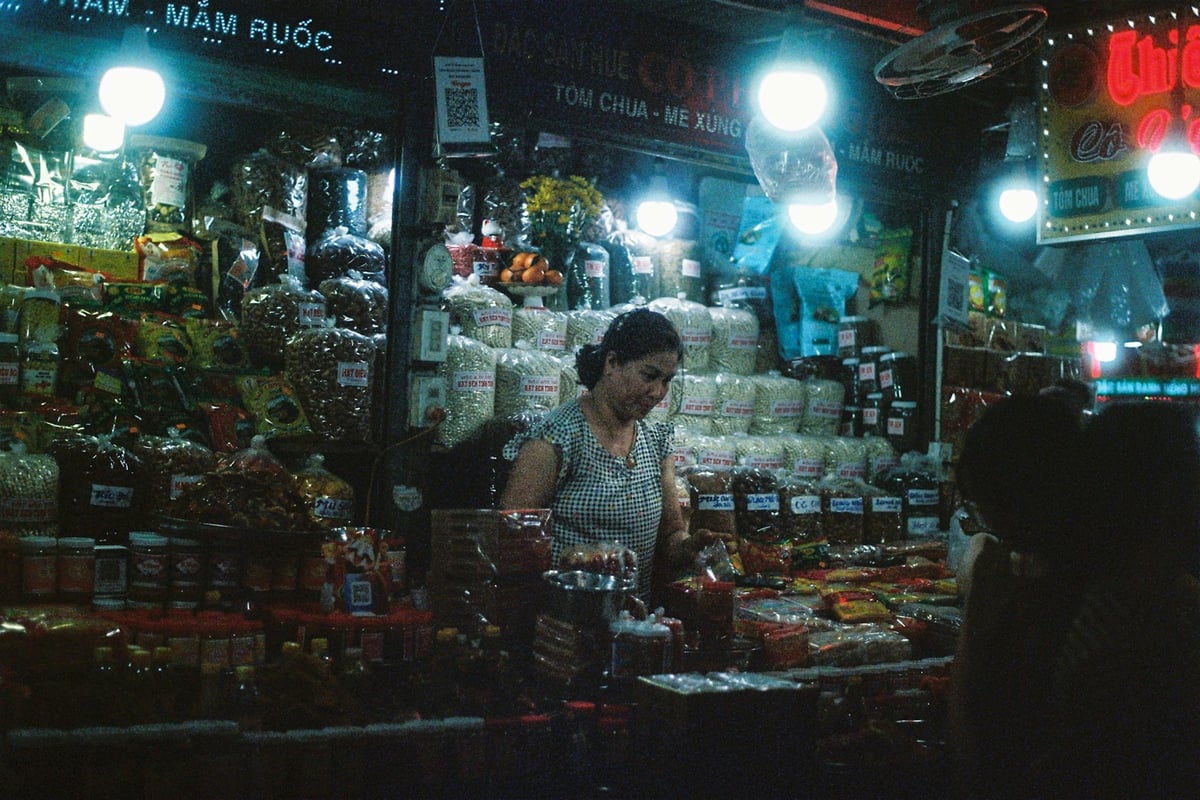
Markets in Vietnam fall broadly into two kinds: the ones a city sends visitors to, and the ones where people buy their food. The line is not always sharp — Hoi An's central market is both at once — but the two want different things from you, and knowing which one you are standing in saves a certain amount of confusion.
The visitor markets
Ben Thanh, Ho Chi Minh City. The best known in the country, under a landmark clock tower in District 1. Clothing, souvenirs, coffee and spices, and a food court at the back that is the best part of it. Prices are not marked and bargaining is expected. An hour, not an afternoon.
Dong Xuan, Hanoi. The Old Quarter's big covered market, three floors, more wholesale than Ben Thanh and less aimed at foreigners despite its fame. The surrounding streets at night become a market of their own at the weekend.
Hoi An central market. Small, photogenic, on the river at the edge of the Ancient Town, with a food hall and a lot of fabric. It is both a working market and a visitor attraction at the same time, which is unusual.
The working markets
Binh Tay, Cholon. The wholesale market for the western half of Ho Chi Minh City, in the Chinese quarter, and a completely different experience from Ben Thanh — bulk goods, almost no foreign visitors, and a scale that takes a while to absorb.
Dong Ba, Hue. The city's main market on the river by the Citadel, with the conical hats the city is known for, and a food section that is where to eat in Hue away from the restaurants.
Han Market and Con Market, Da Nang. Han is the central one and sees visitors; Con is bigger, scruffier and is where the city actually shops and eats.
Tan Dinh, Ho Chi Minh City. The fabric market, near the pink church, and the place to go if you want cloth rather than clothes.
The ones that are a destination in themselves
Cai Rang, Can Tho. The floating wholesale market on the Hau river, which runs before dawn and is finishing by mid-morning. It needs an overnight in Can Tho and an early boat.
Bac Ha, Lao Cai province. A Sunday highland market near Sapa where Hmong and other communities come in from the surrounding valleys. It is several hours from Sapa and it runs one day a week, which means planning a visit around it.
The valley markets around Ha Giang and Sapa. Smaller versions on fixed weekdays, and the reason to check which day you will be where.
What a Vietnamese market is organised like
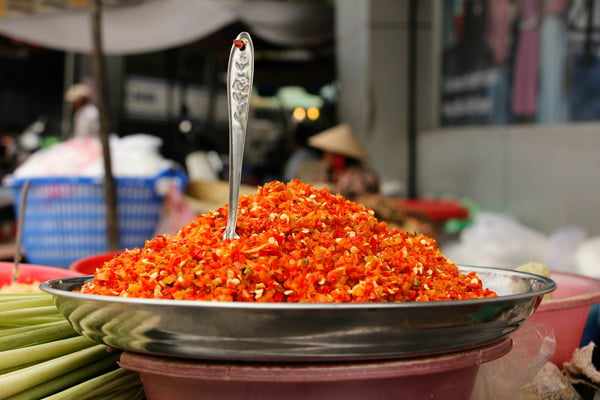
By trade rather than by stall. Fresh produce and meat at one end, usually at the back or on the ground floor; dry goods, spices and rice in the middle; fabric, clothing and household goods above or along one side; and the food section, which is a row of counters selling one dish each, generally near an entrance.
That layout repeats across the country, which means once you can read one market you can read all of them. The food section is the part to find first.
How to use a market well
Go early. Food markets do their real business between about six and nine in the morning, and by midday the fresh produce has gone and the sellers are packing up. This is the single biggest difference between a market that feels alive and one that feels like a shed.
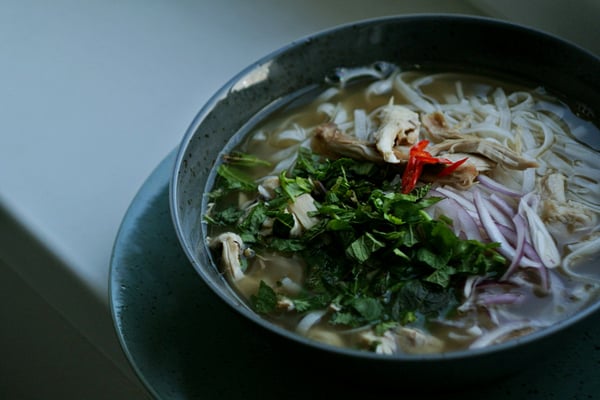
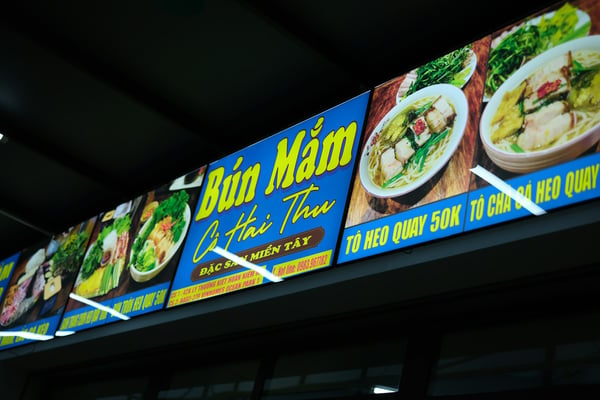
Eat there. Almost every market of any size has a food section and it is generally cheaper and better than the restaurants nearby.
Settle prices before anything is wrapped, in dong, and count your change. Where goods have tickets on them, the price is usually fixed; where they do not, it is not.
Photography
Ask before photographing a stallholder. Many are happy and some are not, and buying something first changes the exchange entirely. Avoid blocking a narrow aisle for a shot during the busy hours; people are working.
What is actually worth buying
Coffee, pepper, cinnamon, dried fruit and cashews — compact, good value and they travel. Lacquerware and ceramics if you can pack them. Fabric by the metre at Tan Dinh or Dong Ba.
Less so: branded clothing and electronics, where the gap between what you are told and what you are buying is widest, and anything you have not seen the price of elsewhere first.
A note on the meat and fish sections
They are not sanitised and they are not hidden. Live fish, poultry and whole animals are handled in the open, which is normal here and startling to some visitors. If that is not something you want to walk through, the food and dry-goods sections are usually reachable from a different entrance — ask, or walk the perimeter first.
The night markets
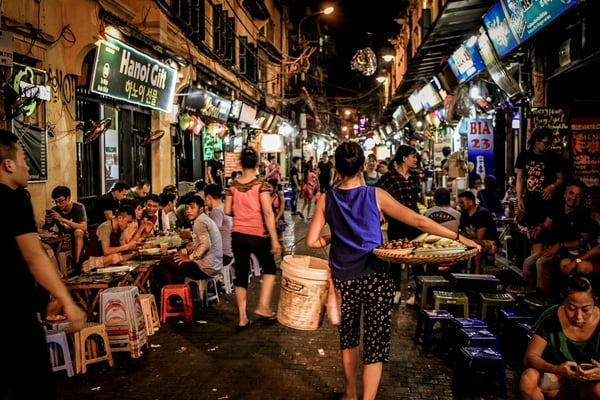
A separate category, aimed at visitors and at young Vietnamese: Hoi An's lantern-lit riverside, the streets around Ben Thanh after the hall closes, Hanoi's weekend Old Quarter market, and Da Lat's. They are food and souvenirs rather than produce, and they are an evening out rather than a shopping trip.
FAQ
Which Vietnamese markets are aimed at visitors?
Ben Thanh, Ho Chi Minh City. The best known in the country, under a landmark clock tower in District 1. Clothing, souvenirs, coffee and spices, and a food court at the back that is the best part of it. Prices are not marked and bargaining is expected. An hour, not an afternoon.
Which Vietnamese markets are working markets rather than tourist ones?
Binh Tay, Cholon. The wholesale market for the western half of Ho Chi Minh City, in the Chinese quarter, and a completely different experience from Ben Thanh — bulk goods, almost no foreign visitors, and a scale that takes a while to absorb.
Which Vietnamese markets are worth a trip in themselves?
Cai Rang, Can Tho. The floating wholesale market on the Hau river, which runs before dawn and is finishing by mid-morning. It needs an overnight in Can Tho and an early boat.
Keep planning
Not sure how it all fits together?
Pick your trip length and we'll route a real day-by-day plan.