Vietnam's three climate zones rarely line up, so the practical way to read its weather is month by month and region by region rather than as a single national season. What follows is that grid, written for someone deciding when to fly rather than someone studying meteorology.
December to February: cold north, dry south
The north is cool and damp — Hanoi in the 50s and 60s Fahrenheit, grey more often than not, with a fine persistent drizzle. Sapa is genuinely cold and the mountain passes can be fogged in. Pack layers and a waterproof shell, which first-timers heading to Southeast Asia almost never do.
The centre is transitional and improving, with Hue and Hoi An drying out through January. The south is at its best: Ho Chi Minh City, the Mekong and Phu Quoc sit in the heart of the dry season with warm days, low humidity by local standards and reliable sun. This is peak season in the south and prices follow.
The Tet exception
Whatever the weather is doing, Lunar New Year overrides it as a planning factor. In 2027 Tet falls on 6 February with a public-sector holiday announced for 4 to 10 February, and the travel surge runs well past the official days. Check the dates for your year before fixing anything in February.
Three climates that never agree: Hanoi · Da Nang · Ho Chi Minh City. (Enable JavaScript for the interactive map.)
March to April: the national sweet spot
This is the window where all three regions are simultaneously good. The north warms into the 70s and sheds the winter drizzle, the centre is firmly dry with beach weather arriving, and the south is still dry before the May rains. Humidity is tolerable everywhere and the light is clear.
If your itinerary covers Hanoi, the central coast and Ho Chi Minh City in one trip, this is the period that asks you to compromise least. The trade is that others have worked this out too, so book accommodation earlier than you otherwise would.
May to August: hot everywhere, wet in two places
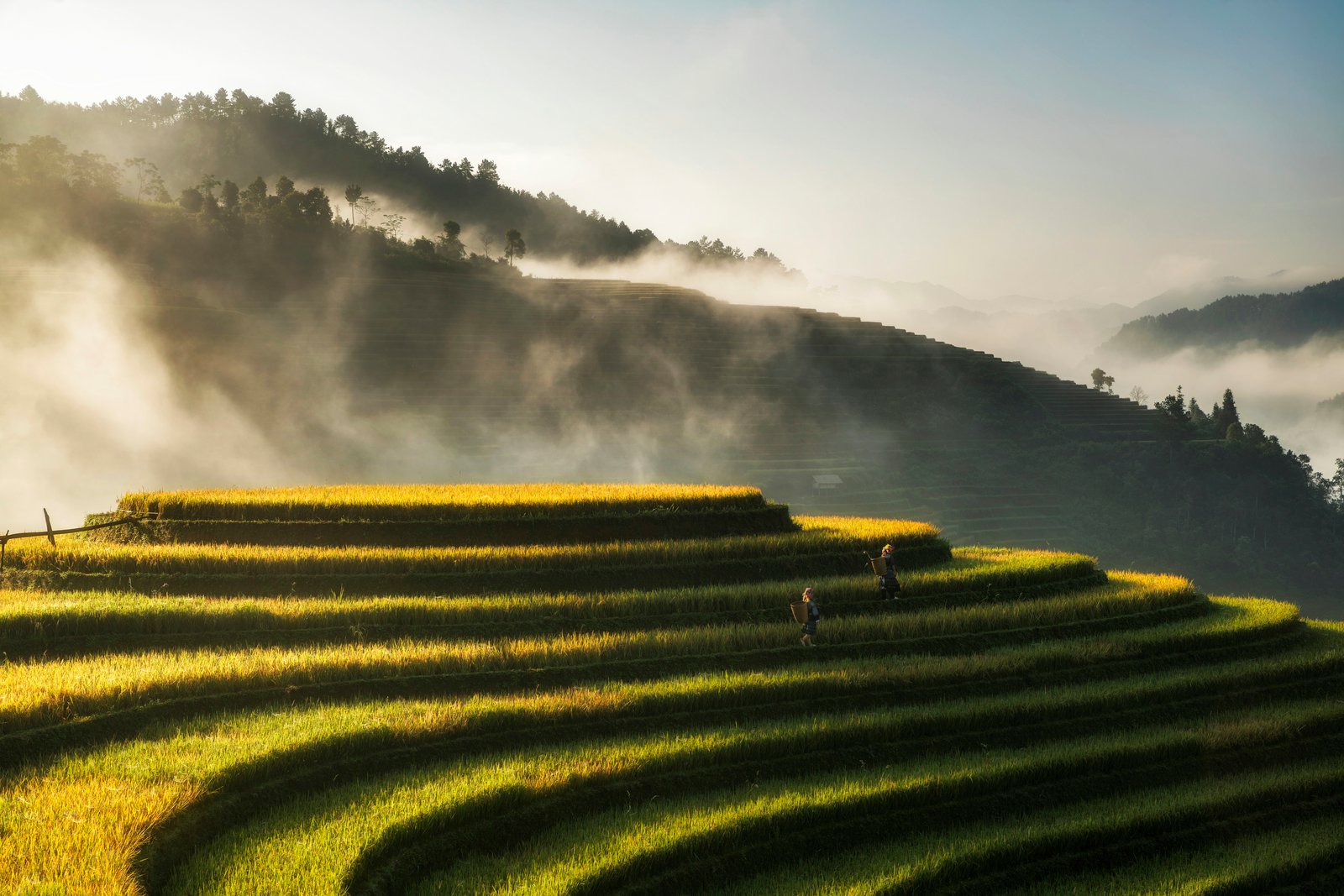
The north turns hot and humid, with the 90s common in Hanoi and the year's heaviest rain falling in July and August. Sapa stays cooler and becomes a genuine escape, and the rice terraces are green and growing through this period.
The centre is the surprise: this is its dry, hot season, and Da Nang and Hoi An have their best beach weather of the year. If your trip is beach-led and must happen in summer, the central coast is the answer. The south is in wet season, which in practice means clear mornings and a heavy afternoon hour of rain rather than washed-out days.
What the summer heat actually feels like
Temperature alone understates it. Humidity in Hanoi and Ho Chi Minh City in July regularly makes the mid-90s feel like well over a hundred, and midday sightseeing stops being enjoyable. The local rhythm adjusts for this — early starts, a long flat middle of the day, activity again after four — and copying it makes summer travel far more pleasant than fighting it.
September to November: the split
These months divide the country more sharply than any others. The north is excellent: October and November bring clear skies and comfortable temperatures, with the terrace harvest falling around September and October. The south is drying out and improving through November.
The centre, meanwhile, is in its typhoon season. Hue and Hoi An take the brunt, Hoi An's old town floods in most years, and coastal boat trips including Ha Long cruises further north can be cancelled on short notice. Storms are forecastable a few days out but not bookable around months in advance, so autumn itineraries through the centre need slack built in.
Ha Long Bay has its own rules
Cruises run year-round, but the bay is weather-sensitive in a way the rest of the north is not. Summer brings the risk of storm cancellations, and winter brings the mist that makes the karsts atmospheric in photographs and invisible in person. October and November give the best odds of clear water and clear air, which is one reason the north's autumn is worth protecting in an itinerary.
How to use this grid
Work backwards from the region you most want to see rather than from the month. If Hoi An and the central beaches are the point of the trip, February to August is the stretch that reliably works, and September to November is the one to avoid. If Sapa and the northern mountains are the point, aim for September to November or March to April. If you want all three regions, March and April is the least compromised window — October is excellent in the north and south but remains a gamble on the central coast, which no amount of sequencing fixes.
One practical note that applies all year: Vietnam has a single time zone and does not observe daylight saving, so the gap to the United States shifts by an hour twice a year rather than staying fixed. Check it when you book rather than assuming.
FAQ
What is Vietnam's weather like from December to February?
The north is cool and damp — Hanoi in the 50s and 60s Fahrenheit, grey more often than not, with a fine persistent drizzle. Sapa is genuinely cold and the mountain passes can be fogged in. Pack layers and a waterproof shell, which first-timers heading to Southeast Asia almost never do.
Is March to April the best window for Vietnam?
This is the window where all three regions are simultaneously good. The north warms into the 70s and sheds the winter drizzle, the centre is firmly dry with beach weather arriving, and the south is still dry before the May rains. Humidity is tolerable everywhere and the light is clear.
What is Vietnam like from May to August?
The north turns hot and humid, with the 90s common in Hanoi and the year's heaviest rain falling in July and August. Sapa stays cooler and becomes a genuine escape, and the rice terraces are green and growing through this period.
Keep planning
Not sure how it all fits together?
Pick your trip length and we'll route a real day-by-day plan.