Draught beer brewed that morning, sold on the pavement at a price nothing else competes with. What it is, where it is, and why it belongs to the north.
Editorial Written and fact-checked for American travelers
Bia hoi is fresh, unpasteurised draught beer, brewed daily and delivered to the bars that sell it the same day. It has no preservatives and does not keep, which is why it is sold and drunk within hours and why it costs almost nothing. It is one of the most distinctive things to drink in Vietnam.
What it actually is
A light lager, low in alcohol, served from kegs or plastic barrels into glasses on the pavement. Because it is not pasteurised and not bottled, the economics are different from packaged beer: no bottling, no long distribution chain, and no shelf life to pay for. The price reflects that.
It is mild. Nobody drinks bia hoi for the strength; they drink it because it is cold, cheap and endless, and because of where it is drunk.
Where it is
Bia hoi is a northern institution, concentrated in Hanoi and the surrounding provinces. It exists in the south, but it is not part of daily life there in the way it is in the north — the southern equivalent is bottled Saigon or 333 on the same plastic stools.
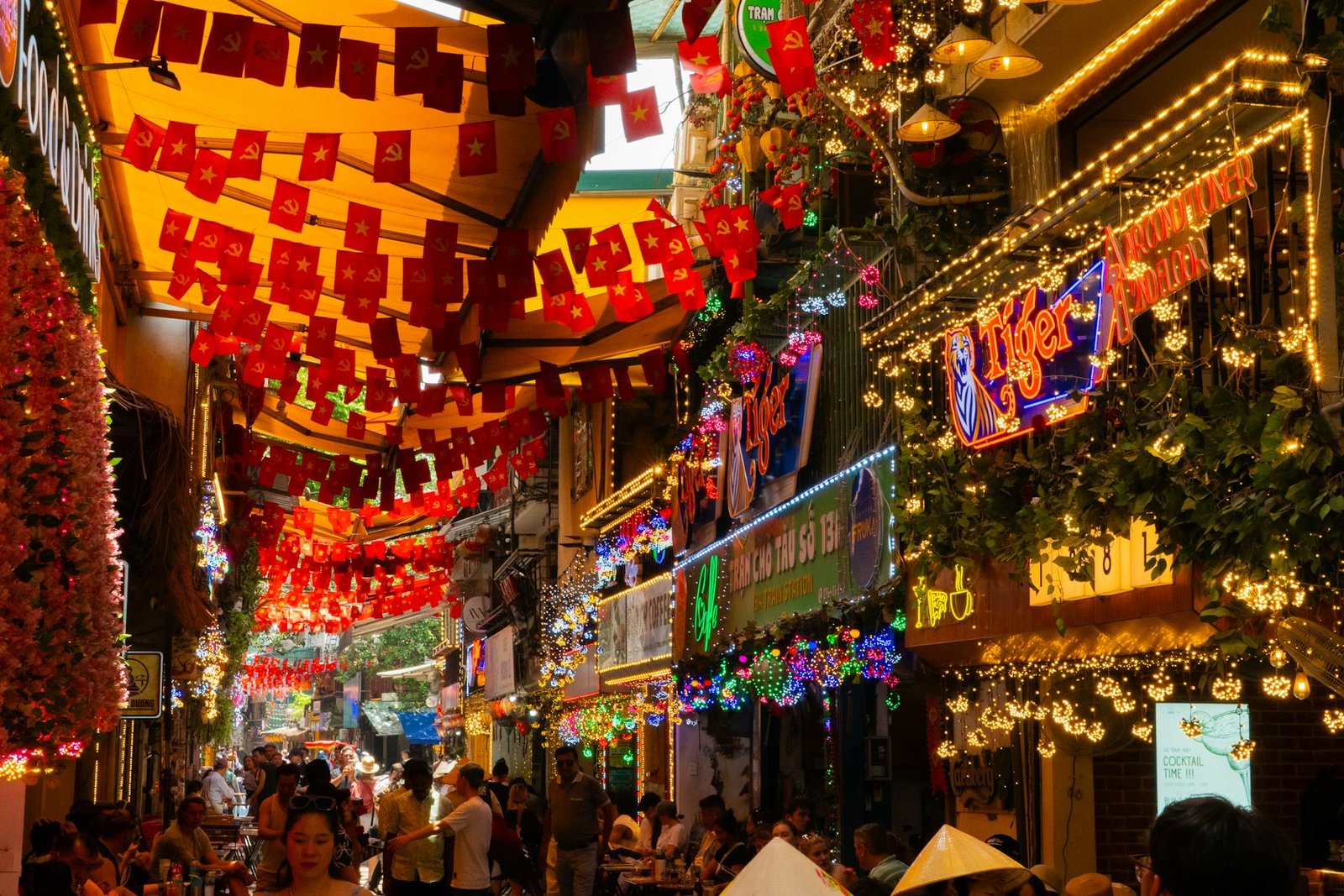
In Hanoi, the junction known as Bia Hoi Corner in the Old Quarter is the famous one and is heavily touristed. The better experience is at any of the hundreds of neighbourhood bia hoi places away from the centre, where the clientele is local and the price is lower still.
How it works
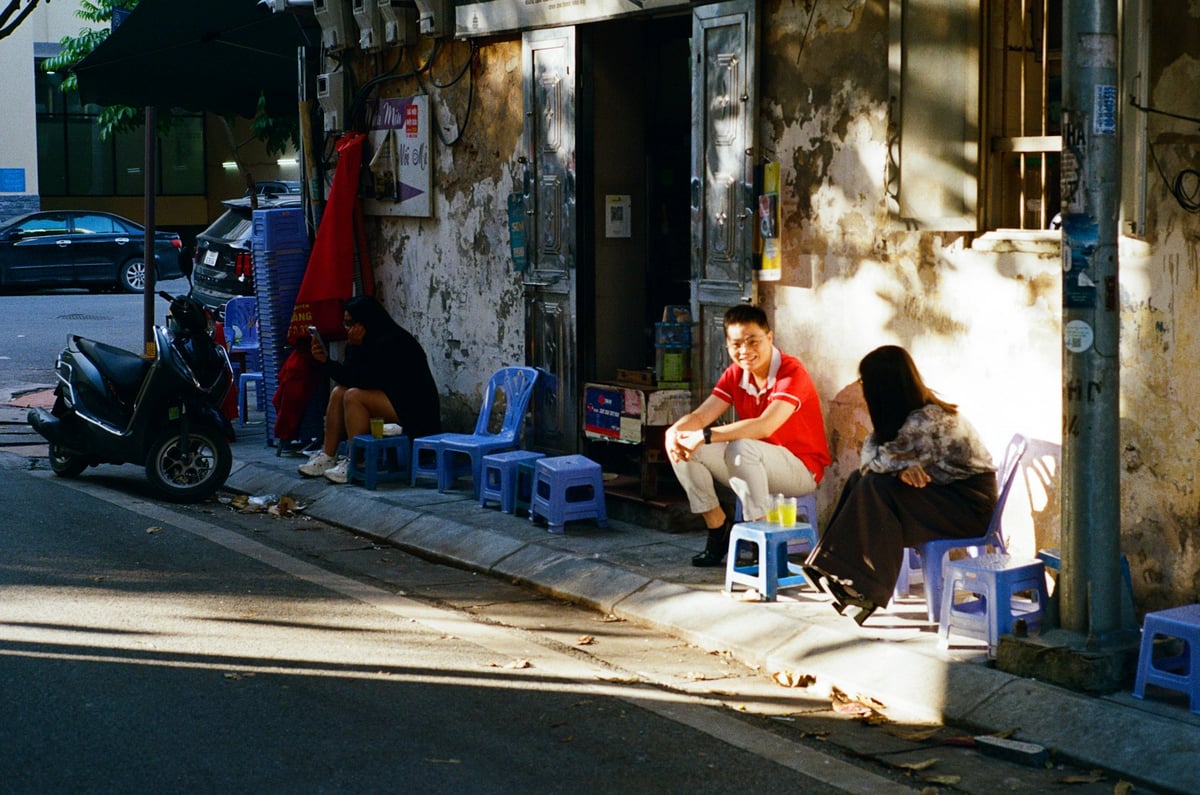
You sit on a low plastic stool at a low table, usually on the pavement. Beer arrives in glasses and keeps arriving; you are generally charged at the end for what you drank. Food is ordered alongside and is the other half of the attraction.
The beer is often poured ahead into rows of glasses, which is normal. It is delivered fresh each day and the places that sell a lot get through it.
What to eat with it
Bia hoi places are drinking-food places. The standard range is nem chua ran, fried fermented pork; lac rang, salted peanuts; nom, a shredded green papaya salad with beef jerky; grilled skewers; and fried tofu. It is salty, sharp food designed to keep you drinking.
Ordering a few plates between a group and letting the beer keep coming is the whole format.
How to find a good one
Away from the Old Quarter, look for the signs: a corner with low tables spilling onto the pavement, a steel keg or a plastic barrel with a tap, and a crowd that is mostly local and mostly after work. The word "bia hoi" on a sign is literal — these places are not trying to be discovered.
There is no need to book, there is rarely a menu in English, and pointing at what the next table is eating works. If the place is full at six in the evening, that is the recommendation.
The hours
Bia hoi is an after-work drink. Places fill up from late afternoon, peak in the early evening, and many have sold their day's supply and closed by nine or ten. This is not a late-night activity, and arriving at eleven expecting to find it in full swing is how people conclude it does not exist.
The price
It is the cheapest beer you will encounter, and considerably cheaper than bottled beer in the same establishment. Prices are posted at most places; at the tourist-facing corners in the Old Quarter they are higher and sometimes not posted, so ask.
Practical points
The glasses are often rinsed rather than washed, which is worth knowing. The beer itself is brewed, alcoholic and delivered daily, which is a different risk profile from the food on the table — but it is not a guarantee of anything.
Do not drive afterwards. Vietnam enforces zero alcohol while driving, and that is not a graduated limit — any alcohol at all is an offence. Take a Grab.
The etiquette
Glasses are raised together rather than drunk individually — "mot, hai, ba, vo" is the count and the toast, and you will hear it across the room all evening. Topping up other people's glasses before your own is normal courtesy. None of it is demanding, and nobody expects a visitor to know it.
Beyond bia hoi
Vietnam has a serious craft beer scene now, concentrated in Hanoi and Ho Chi Minh City, brewing with local ingredients. It is a different evening and a different price, and it is genuinely good. Bia hoi is not competing with it.
Bottled Vietnamese lagers — Bia Hanoi in the north, Saigon and 333 in the south, Huda in the centre — are the everyday alternative and are sold everywhere.
Taking beer home
Bia hoi cannot travel; it has no shelf life. Bottled Vietnamese beer can, within the customs allowance you are flying into. Vietnam's own inbound allowance is 1.5 litres of spirits at 20% ABV or above, or 2 litres under 20%, or 3 litres of beer, and your own country's rules apply on the way back.
FAQ
What is bia hoi?
A light lager, low in alcohol, served from kegs or plastic barrels into glasses on the pavement. Because it is not pasteurised and not bottled, the economics are different from packaged beer: no bottling, no long distribution chain, and no shelf life to pay for. The price reflects that.
Where do you find bia hoi in Vietnam?
Bia hoi is a northern institution, concentrated in Hanoi and the surrounding provinces. It exists in the south, but it is not part of daily life there in the way it is in the north — the southern equivalent is bottled Saigon or 333 on the same plastic stools.
What food is served with bia hoi?
Bia hoi places are drinking-food places. The standard range is nem chua ran, fried fermented pork; lac rang, salted peanuts; nom, a shredded green papaya salad with beef jerky; grilled skewers; and fried tofu. It is salty, sharp food designed to keep you drinking.
Keep planning
Not sure how it all fits together?
Pick your trip length and we'll route a real day-by-day plan.