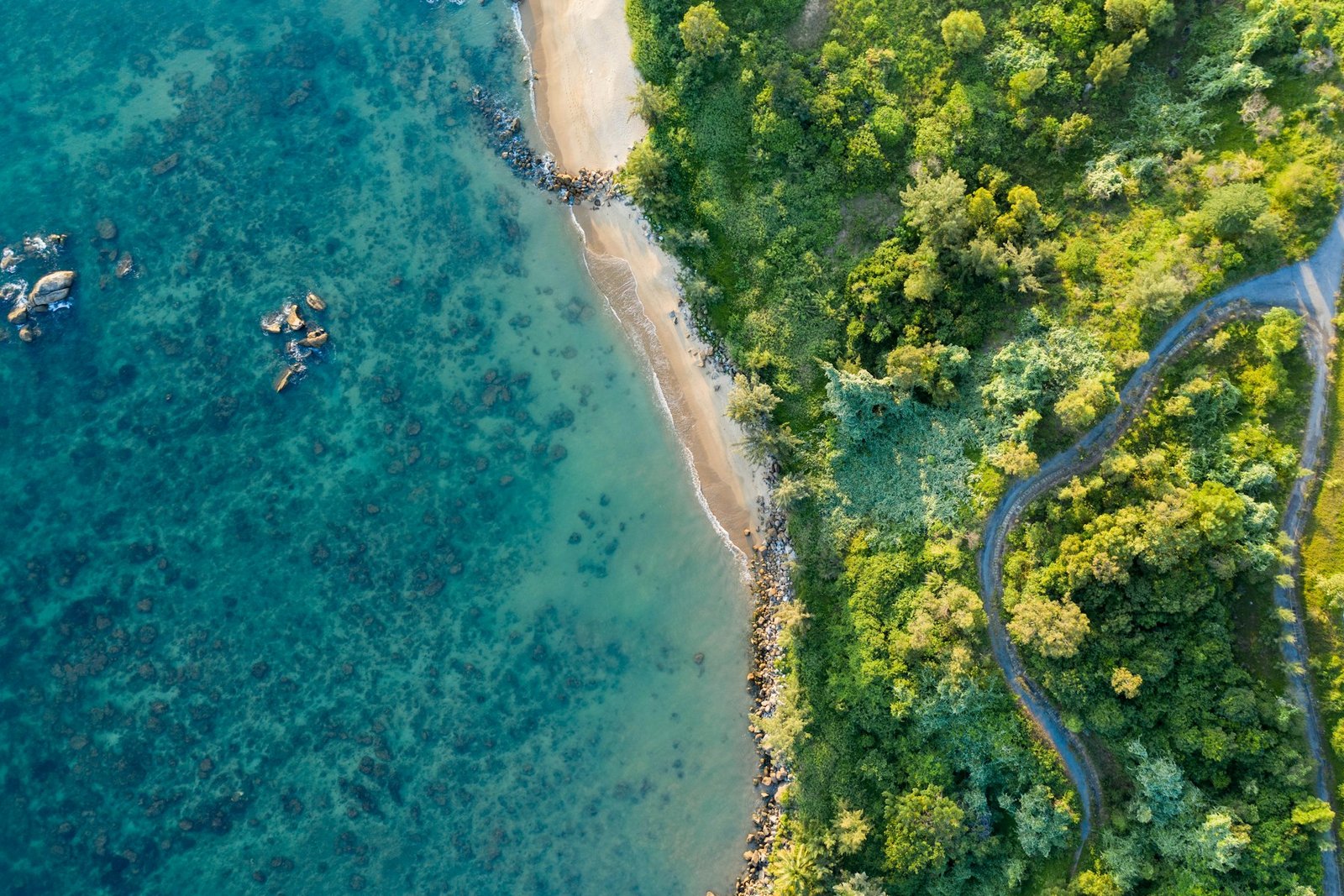
Vietnam's coastline runs most of the length of the country and takes in a large number of islands, and the beaches are genuinely different from each other — in development, in season, and in how hard they are to reach. There is no single answer to which is best. There is a reasonably clear answer to which suits a particular trip.
Start with the month
This is the part that decides more than preference does, because the coast does not have one season. The central coast, which includes Hoi An, Da Nang and Nha Trang's northern neighbours, has a storm season from roughly September to November. Nha Trang's own dry stretch runs roughly January to August. Phu Quoc's dry season is roughly November to April — overlapping Nha Trang's from January to April, and the reverse of it either side.
So the useful question is not which beach is best but which beach is dry when you are travelling.
The coast, by where it sits: Hoi An · Nha Trang · Mui Ne · Phu Quoc. (Enable JavaScript for the interactive map.)
The ones on the main route
An Bang and the Hoi An beaches. The convenient choice: ten to fifteen minutes from the Ancient Town by bicycle, low-rise, with beach restaurants. It is not the best sand in the country and it does not need to be, because it is a beach afternoon inside a trip about something else.
My Khe, Da Nang. A long city beach with a wall of hotels behind it, clean and used heavily by locals early and late. Best treated as a city with a beach rather than a beach destination.
Nha Trang. Six kilometres of municipal beach in front of a working city, with islands and diving offshore. On the main overland route and the easiest beach day to drop into a north-south itinerary.
The islands worth a detour
Phu Quoc. The largest island, the best sand, an international airport, and the most development. Sao Beach is the postcard; the south is heavily built; the north is quieter. It is a beach holiday rather than a stop.
Con Dao. The quiet one. Empty beaches, a national park, limited flights and a prison complex that is a significant historical site. Three or four nights minimum because of the transport, and the reason to go is that very few foreign visitors do.
Cat Ba and Lan Ha. Northern, and the beaches are small — the point here is the limestone bay rather than the sand. The best beach-adjacent experience in the north is kayaking, not lying down.
The ones people miss
Quy Nhon, halfway between Hoi An and Nha Trang, is an undeveloped coastal city on the railway with good beaches and very few foreign visitors. Mui Ne has wind and dunes rather than swimming. Doc Let, north of Nha Trang, is a long white beach an hour from the city. The Cham Islands off Hoi An are a day trip in calm weather.
What the development looks like
Worth saying plainly, because the photographs do not. Da Nang and Nha Trang are walls of high-rise hotels behind a public beach. Phu Quoc's south has a large resort and entertainment complex and its north is being built on. Mui Ne has lost sand to erosion in places and several resorts have sea walls where beach used to be.
The undeveloped coast exists — Con Dao, Quy Nhon, stretches north of Nha Trang — and it is undeveloped because it is harder to reach. That trade is the whole geography of Vietnamese beaches in one sentence.
Matching the beach to the trip
A first two-week trip north to south: An Bang for the afternoons, and Nha Trang if the route and the month allow. No detour needed.
A trip that should end on sand: Phu Quoc, which has the flights and the sand, or Con Dao if you have the days and want nobody there.
A trip with children: An Bang or Da Nang, both of which have the infrastructure and the food within reach, or Phu Quoc for a longer stay.
A trip where the water is the point: Nha Trang or Con Dao for diving, Lan Ha for kayaking, Mui Ne for wind.
What to expect from the sea
Conditions change with the season everywhere on this coast. Flags and local advice are the thing to follow rather than how the water looks, and rip currents are a real hazard on the open-coast beaches in the windy months.
Lifeguards are present on the municipal beaches at Da Nang and Nha Trang and are not a given elsewhere.
Getting to each one
An Bang and My Khe need no detour at all. Nha Trang is on the railway and the highway. Phu Quoc and Con Dao are flights. Quy Nhon is on the railway and is the easiest of the quiet ones to reach. Cat Ba is a bus and a ferry from Hanoi.
Development
Vietnam's coast is building fast, and a beach that was quiet five years ago may not be now. Recent reviews and recent photographs are worth more here than anywhere else in the country when you are choosing.
FAQ
Does Vietnam's coast have a single beach season?
This is the part that decides more than preference does, because the coast does not have one season. The central coast, which includes Hoi An, Da Nang and Nha Trang's northern neighbours, has a storm season from roughly September to November. Nha Trang's own dry stretch runs roughly January to August. Phu Quoc's dry season is roughly…
Which Vietnamese beaches fit easily into a first trip?
An Bang and the Hoi An beaches. The convenient choice: ten to fifteen minutes from the Ancient Town by bicycle, low-rise, with beach restaurants. It is not the best sand in the country and it does not need to be, because it is a beach afternoon inside a trip about something else.
Which Vietnamese islands are worth a detour?
Phu Quoc. The largest island, the best sand, an international airport, and the most development. Sao Beach is the postcard; the south is heavily built; the north is quieter. It is a beach holiday rather than a stop.
Keep planning
Not sure how it all fits together?
Pick your trip length and we'll route a real day-by-day plan.