Hanoi · Ha Long Bay · Hue · Hoi An · Da Nang · Ho Chi Minh City · Mekong Delta · Phu Quoc · Sapa
Vietnam for AmericansFor American travelers

Why Every Vietnamese City Has the Same Street Names

Hai Ba Trung, Tran Hung Dao, Le Loi, Nguyen Hue. The same dozen names run through every town in Vietnam because they are a history lesson painted on signs. Here is who they were.

Editorial
Written and fact-checked for American travelers
·5 min read·
Why Every Vietnamese City Has the Same Street Names
On this page
  1. 01The pattern and where it came from
  2. 02The ancient resistance
  3. 03The eighteenth century and the French
  4. 04The twentieth century on the signs
  5. 05What to do with this

Spend a week in Vietnam and the street names start to repeat. You stayed on Le Loi in Hue, crossed Tran Hung Dao in Hanoi, and now Ho Chi Minh City has both, plus a Hai Ba Trung, a Nguyen Hue and a Ly Thuong Kiet, which you are sure were in Da Nang as well. They were. Vietnamese cities name their main streets after the same set of national heroes, in a pattern that was deliberate, and learning a dozen of them turns every city map into a short course in two thousand years of resisting invasion.

The pattern and where it came from

Vietnamese street names are drawn from a national list of heroes, dynasties, battles and dates, applied city by city after independence, so that the same names recur from Hanoi to the delta. The French had named the streets after French soldiers and administrators. After 1954 in the north and 1975 in the south, those names were replaced with Vietnamese ones, and the ones chosen were the figures a unified country wanted everyone to know.

The result is that the biggest street in most towns is named for a general who defeated the Chinese or the Mongols.

The pattern is not identical everywhere. Hanoi's Old Quarter keeps its medieval guild names, Ho Chi Minh City keeps a few French scientists, and every town adds its own local heroes. But the core list is national, and you will see it on every map.

How to read an address

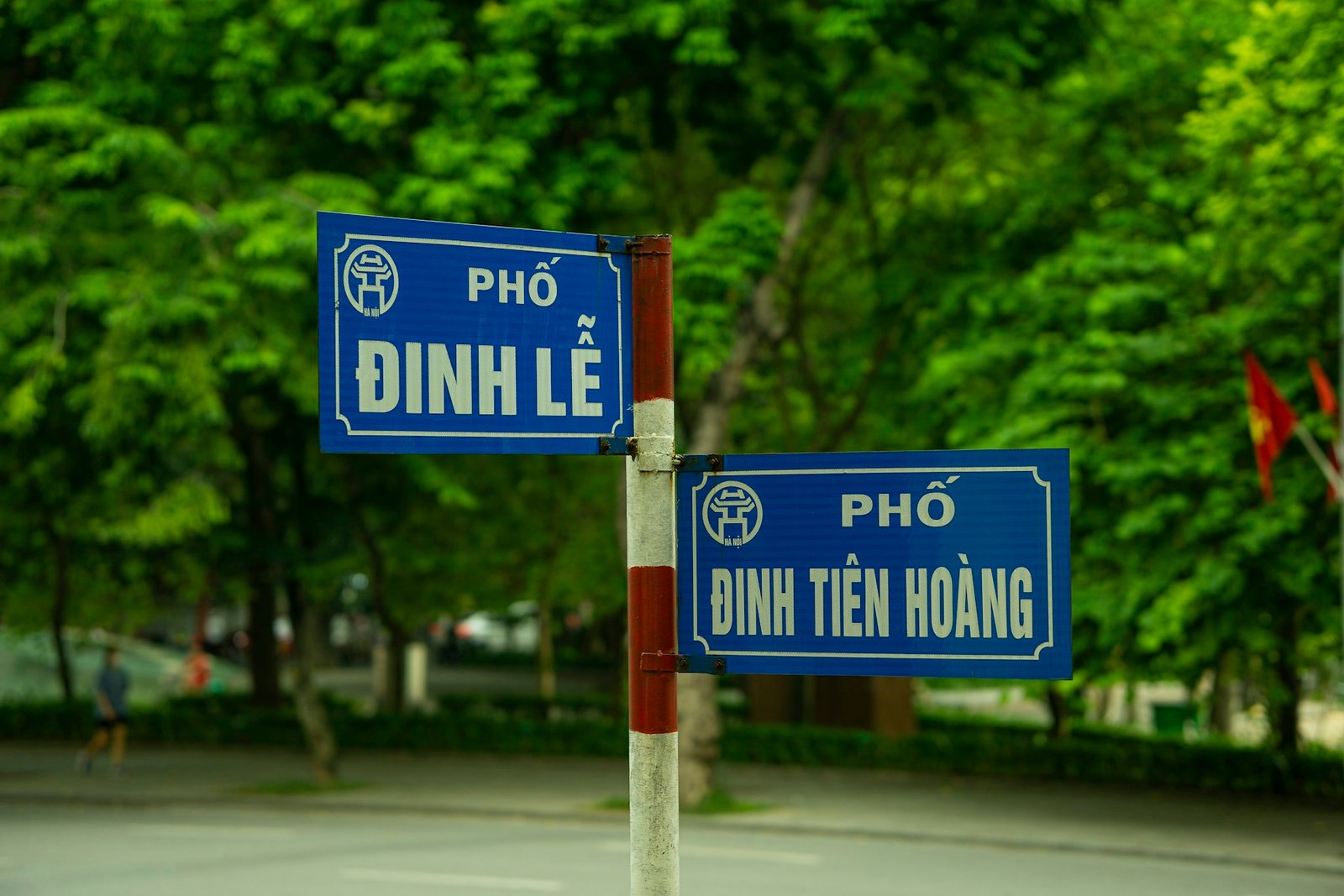
Vietnamese addresses put the house number first and the street name after it, and an address with a slash, such as 123/4, means house 4 in the alley that opens at number 123. The word for street, đường or phố, often appears before the name on signs and is dropped in speech.

The ancient resistance

Hai Ba Trung, the Trung sisters, led a revolt against Chinese rule in the year 40 and ruled for about three years before the Chinese returned; their name is on a major street in every city and they are the emblem of Vietnamese nationhood and of its women. Ba Trieu, a woman who led another rising two centuries later, usually has a street nearby.

Ngo Quyen won the battle on the Bach Dang river in 938 that ended a thousand years of Chinese rule, and his name marks that ending.

Hung Vuong, the legendary founding kings, give their name to the broad ceremonial avenue in many towns, and to the public holiday in the spring when the nation commemorates them.

The dynasties

Ly Thai To founded Thang Long, today's Hanoi, as the capital in 1010, and his statue stands beside the lake there. Ly Thuong Kiet was his dynasty's great general against the Song. Tran Hung Dao turned back three Mongol invasions in the thirteenth century, the last with the same trick of stakes in the Bach Dang river, and his is perhaps the most universal street name of all. Le Loi drove out the Ming in the 1420s, and Nguyen Trai was the scholar and strategist beside him. Le Thanh Ton, the Le dynasty's greatest emperor, extended the country south into Champa in the fifteenth century.
[object Object]

The eighteenth century and the French

Nguyen Hue and Quang Trung are the same man: the Tay Son brother who united the country in the 1780s and routed a Chinese army at Tet in 1789, and who took Quang Trung as his reign name. Ho Chi Minh City's grand pedestrian boulevard is named for him under one name and other cities use the other.

Phan Boi Chau and Phan Chu Trinh were the early twentieth-century nationalists who argued, in different ways, for ending French rule; their streets are often side by side.

A few French names survived the purge. Pasteur, whose institutes still operate in Vietnam, and Yersin, who worked in Nha Trang and founded Dalat, kept their streets in Ho Chi Minh City because they were doctors rather than soldiers. Alexandre de Rhodes, the Jesuit credited with the Romanised script Vietnamese is written in, has a street by the Saigon cathedral.

The Old Quarter's exception

Hanoi's thirty-six streets begin with Hang, meaning merchandise, followed by what the guild once sold: Hang Gai for silk, Hang Ma for paper offerings, Hang Bac for silver. Some still sell it. These are the oldest street names in Vietnam and the only common set that is about trade rather than heroes.

The twentieth century on the signs

The modern names are dates and revolutionaries. Dien Bien Phu is the 1954 battle that ended French rule. Cach Mang Thang Tam is the August Revolution of 1945. Streets named 3 Thang 2 mark the founding of the Communist Party on 3 February 1930, and 30 Thang 4 marks 30 April 1975, the day Saigon fell.

Le Duan was the party's leader through the war and after; Vo Nguyen Giap was its general; Vo Thi Sau and Nguyen Van Troi were young resistance fighters executed by the French and the South respectively. A traveller who can read these dates can read the politics of the sign.

The Saigon renamings

Ho Chi Minh City's central streets changed names after 1975, and older Vietnamese Americans may know them by the old ones. Tu Do, the bar street of the war years, became Dong Khoi; Cong Ly became Nam Ky Khoi Nghia. Asking a relative for directions to a street that no longer exists on the map is a common first-trip experience for returning families, and a prewar map of the city, sold as a reproduction, settles most of it.

What to do with this

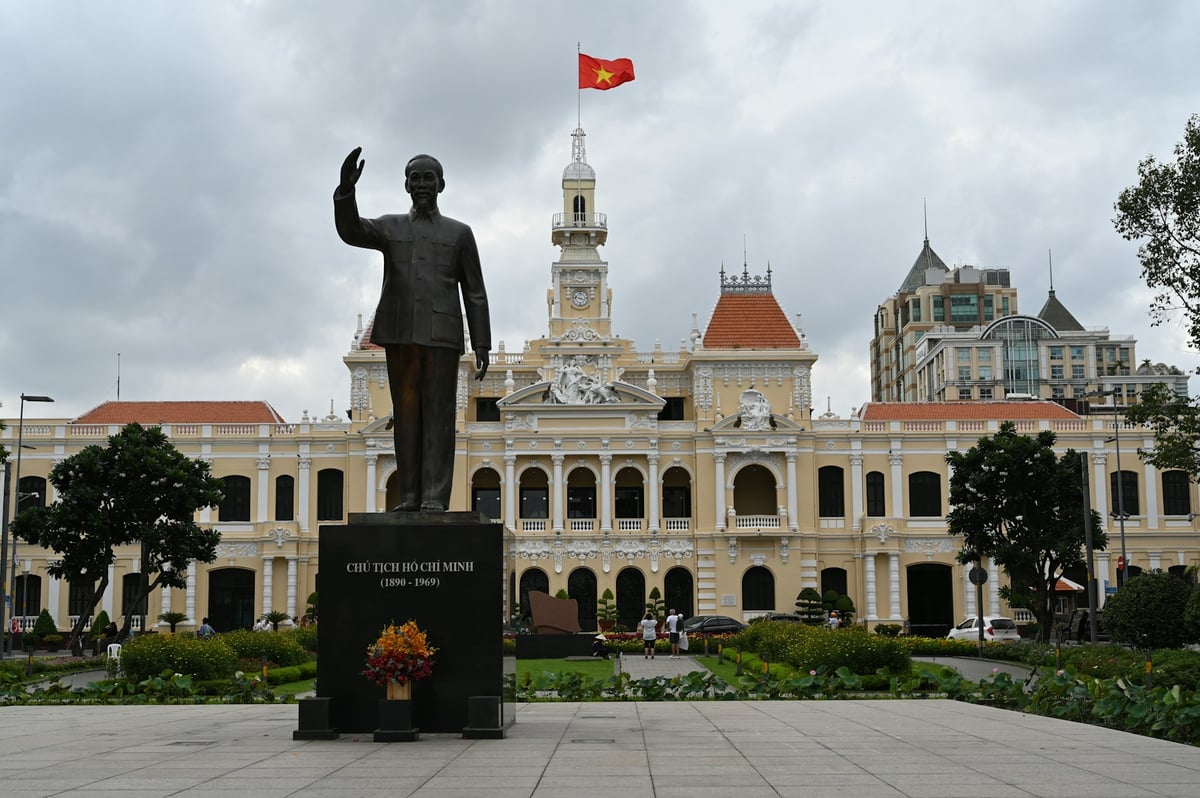
Use it as a mnemonic. Tran Hung Dao is usually a major artery, Le Loi and Nguyen Hue usually run through the centre, Hai Ba Trung is never far away, and the Hang streets mean you are in Hanoi's oldest quarter. The names also explain the statues: the mounted general in the square by the Saigon river is Tran Hung Dao, pointing at the water where his stakes went in.

Once you can read the signs, the cities stop being interchangeable and start telling you, in the same order, the same story.

Keep planning
Not sure how it all fits together?

Pick your trip length and we'll route a real day-by-day plan.

Build your trip →