My Son is a complex of Hindu temple ruins in a valley roughly an hour west of Hoi An, built by the Cham over many centuries. It is a UNESCO World Heritage site and the Cham temple complex most visitors to central Vietnam see.
What you are looking at
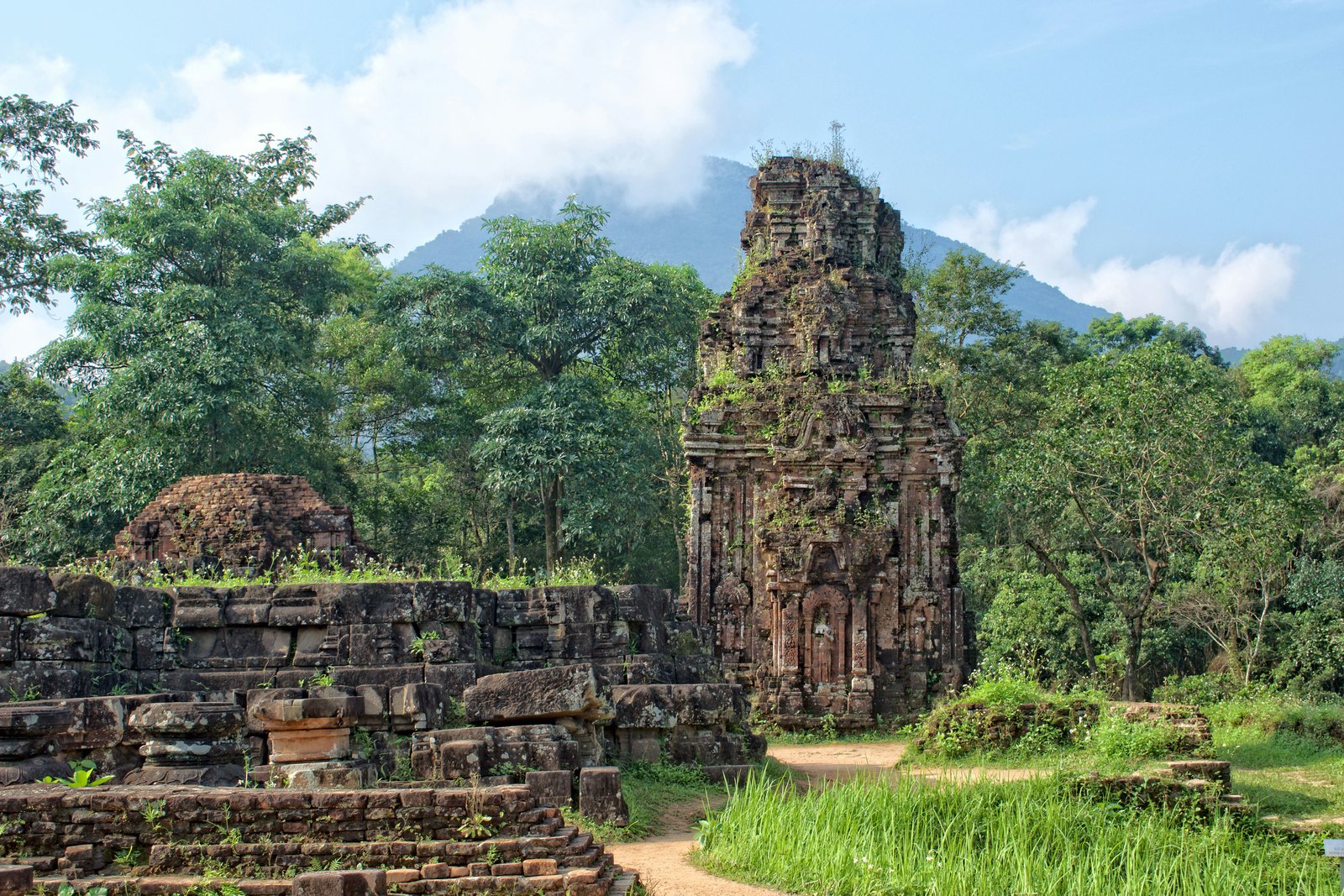
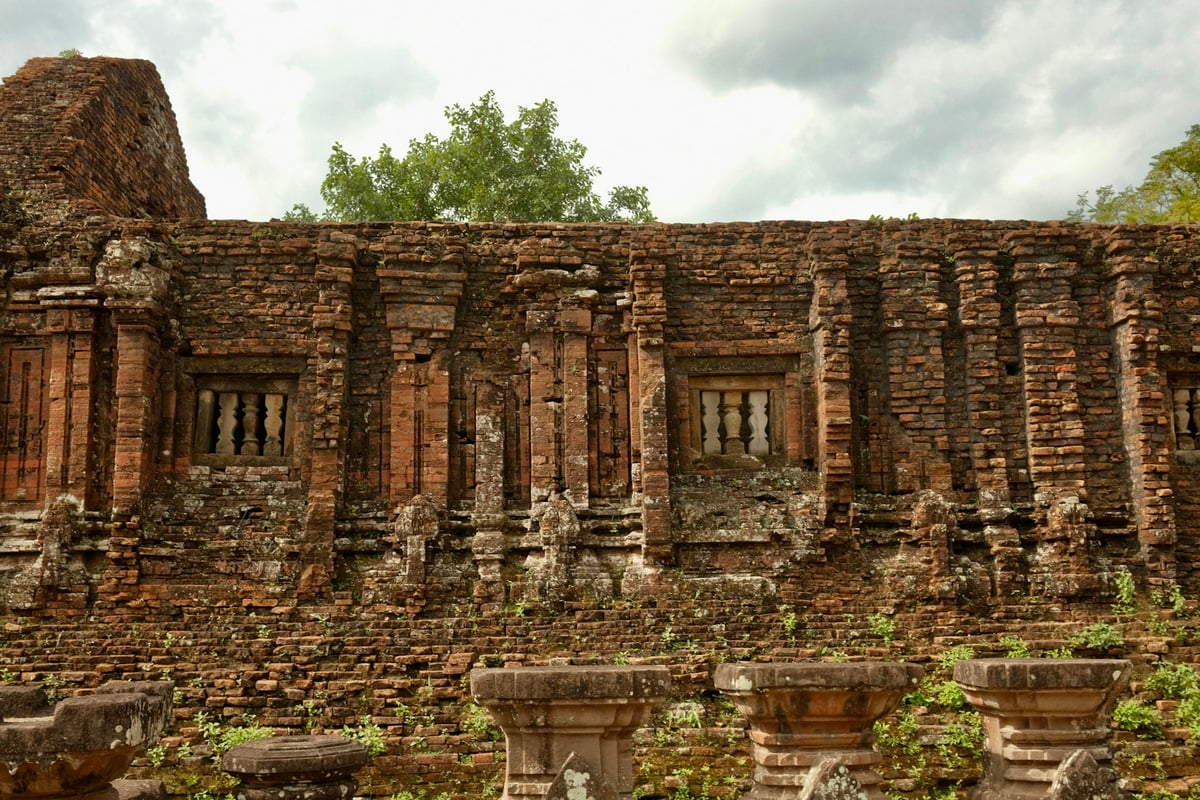
The Cham kingdom held much of central Vietnam for a long period and was Hindu rather than Buddhist, and the architecture reflects that — the towers read closer to Indian and Khmer temple building than to a Vietnamese pagoda. They are built of fired brick, laid with almost no visible mortar, and the complex was dedicated largely to Shiva.
Groups of towers are labelled by letter. The groups usually pointed out to visitors are B, C and D, which are the better preserved; Group A is largely gone.
The war
The valley was used militarily during the war and was bombed, and a number of towers were destroyed. Craters remain visible on the site. Restoration has been partial, so much of what you see is ruin rather than reconstruction.
About an hour from Hoi An: Hoi An · My Son Sanctuary. (Enable JavaScript for the interactive map.)
Go early
This is the practical heart of it. The site opens early, the coaches from Hoi An and Da Nang arrive through the morning, and the valley is hot and busy by the middle of the day. An early arrival gives you cooler air, better light and fewer people.
Sunrise departures are offered for exactly that reason. The alternative is late afternoon, once the coaches have gone. The middle of the day is the part to avoid.
Getting there
Roughly an hour from Hoi An by road. Options are a group tour, a private car with a driver, or riding — though a US licence and an International Driving Permit are both invalid in Vietnam, driving without a Vietnamese licence can mean a fine, arrest, or jail, and your insurer may decline a claim after an accident.
Some tours return by boat along the Thu Bon river, which adds time. Entry is often ticketed separately from the tour price; ask which applies before you book.
What a visit involves
An electric buggy runs from the ticket area towards the temple groups, and from there it is walking on uneven ground between them. Allow two to three hours including the moving around. There is a small museum near the entrance worth ten minutes before you walk in.
Reading the site without a guide
Unguided, My Son is a set of brick towers with limited signage, and a good deal of what makes it interesting is not self-evident. A guide, hired at the entrance or included in a tour, is more worthwhile here than at sites that explain themselves.
If you go without one, the things to look for are the brickwork, laid with almost no mortar line; the sandstone lintels and pedestals, many of them carved; the kalan, or main sanctuary tower, at the centre of each group; and the linga and yoni stones that were the focus of worship. The Cham sculpture museum in Da Nang holds a large part of the statuary removed from here, and visiting it before or after changes what you see.
Practicalities
There is little shade in the valley and it gets hot. Bring water, a hat and sunscreen, and wear shoes you can walk on broken ground in. Insect repellent is sensible.
A Cham dance performance is staged near the entrance at set times. It is short and clearly presented for visitors; check the schedule if you want it.
When to go in the year
The valley is in the open and the ground between the groups is uneven, so the weather shapes a visit more than it does in a town. The drier stretch, roughly February to August, is hot but straightforward. September to November is the central coast's storm season, when the paths are muddy and a downpour can shorten the visit.
Is it worth it
My Son is far smaller than Angkor, and much of it is rubble, so if you have been to Cambodia it will feel modest. If you have not, it is an atmospheric and genuinely ancient site in a beautiful valley, and the damage is part of what it has to say.
Either way the early start is what makes the difference. My Son first thing and My Son in the middle of the day are different experiences.
Tour or private car
Group tours from Hoi An run on a fixed schedule, which usually means arriving when the other coaches do unless you specifically book the sunrise departure. A private car costs more and lets you set the hour, which on this site is the thing most worth paying for.
If you book a group tour, ask two questions: what time it leaves Hoi An, and whether the entry ticket is included. The departure time is what decides whether you arrive before or after the coaches.
Combining it
It pairs naturally with a slow afternoon back in Hoi An rather than with anything else demanding. Tours that bundle My Son with the Marble Mountains and a Da Nang city tour move you constantly and leave little time at each stop.
FAQ
What are you looking at at My Son?
The Cham kingdom held much of central Vietnam for a long period and was Hindu rather than Buddhist, and the architecture reflects that — the towers read closer to Indian and Khmer temple building than to a Vietnamese pagoda. They are built of fired brick, laid with almost no visible mortar, and the complex was dedicated largely to Shiva.
What time should you arrive at My Son?
This is the practical heart of it. The site opens early, the coaches from Hoi An and Da Nang arrive through the morning, and the valley is hot and busy by the middle of the day. An early arrival gives you cooler air, better light and fewer people.
How do you get to My Son from Hoi An?
Roughly an hour from Hoi An by road. Options are a group tour, a private car with a driver, or riding — though a US licence and an International Driving Permit are both invalid in Vietnam, driving without a Vietnamese licence can mean a fine, arrest, or jail, and your insurer may decline a claim after an accident.
Keep planning
Not sure how it all fits together?
Pick your trip length and we'll route a real day-by-day plan.