Hue to Hoi An is one of the shorter journeys on a Vietnam itinerary and one of the more interesting. The two places are separated by a mountain spur that drops to the sea, and how you cross it changes the day considerably.
The geography, briefly
Hue sits north of the Hai Van Pass, Da Nang immediately south of it, and Hoi An about forty-five minutes further south again. There is no airport or railway station at Hoi An, so every version of this journey goes through or past Da Nang.
That means the real choice is how you get from Hue to Da Nang. If you take the train, you continue from Da Nang to Hoi An by car.
Over the pass, not through the tunnel: Hue → Hai Van Pass → Da Nang → Hoi An. (Enable JavaScript for the interactive map.)
By train to Da Nang, then car
The railway runs along the coast below the road, and the Hue to Da Nang run is widely regarded as one of the best rail stretches in Southeast Asia. Allow around three hours. Tickets cost very little and are sold at the stations and through the national railway's booking site.
At Da Nang you take a Grab or a pre-booked car for the last leg to Hoi An. The whole thing is cheap, the scenery is the point, and it replaces a transfer you were making anyway. Ask for a seat on the sea side when you book.
By private car over the pass
A car with a driver, the whole way, over the Hai Van Pass rather than through the tunnel beneath it. With stops at the summit and perhaps a beach, it is a half day rather than a transfer.
This is the flexible version: your luggage goes door to door, you stop where you want, and you can add the Marble Mountains or Lang Co on the way. Say explicitly when booking that you want the pass and not the tunnel, because the tunnel is the default for much traffic.
By car through the tunnel
Faster and cheaper than the pass, and it sees none of the view. This is what a standard hotel transfer will usually do unless you ask otherwise. Reasonable if you are short of time or the weather has closed the view anyway.
By motorbike
The pass is well known as a ride, and the easy-rider arrangement — riding pillion behind an experienced local while your bag travels by van — is a common way to do this leg. It turns the transfer into the day's activity.
Riding it yourself is a different matter. A US licence and an International Driving Permit are both invalid in Vietnam, driving without a Vietnamese licence can mean a fine, arrest, or jail, and your insurer may decline a claim after an accident. The road is also demanding: switchbacks, trucks, sudden cloud and wet surfaces, and road traffic is the main hazard for visitors to Vietnam.
By bus
Tourist buses and sleeper buses run the route and are the budget option. They generally take the tunnel. They are a reasonable choice if the budget is the constraint and the view is not the point.
What is worth stopping for
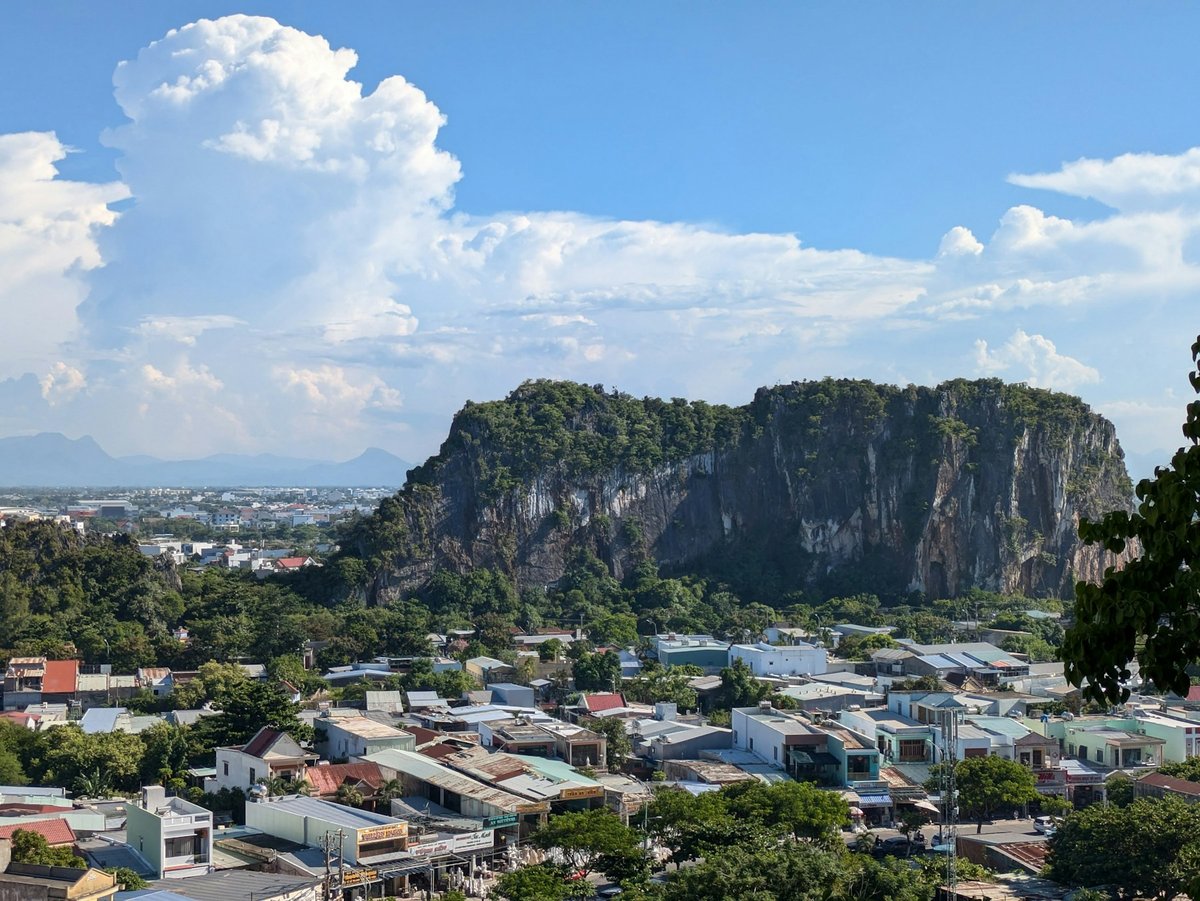
If you are going by road, the stops are what justify the version. The summit of the pass, with the old gate and the view back along the coast when the cloud allows. Lang Co, a long beach and lagoon at the northern foot of the pass. The Marble Mountains, a cluster of limestone hills with caves and pagodas just south of Da Nang, which sit almost exactly on the route.
A car doing all three turns the transfer into a full day out. A car doing none of them is just a transfer, and the train does that better.
How long each takes
Hue to Da Nang is about 100 kilometres. The train runs to a timetable; allow around three hours plus the last leg to Hoi An. A car through the tunnel is a straightforward morning. A car over the pass with stops is a half day. An easy-rider trip takes most of a day, because the stopping is what you are paying for.
None of these is a quick hop, and the mistake is treating this leg as dead time to be minimised rather than as something worth building the day around.
Weather and the view
The pass makes its own weather and can be sitting in cloud when both Hue and Da Nang are clear. September to November is the central coast's storm season and the worst stretch for a road crossing — cloud on the top, wet surfaces, and a view that may not appear.
The railway runs lower and closer to the sea, which is why it is the version least affected by cloud sitting on the pass. Check the forecast the evening before if you are deciding between the two.
Which to pick
Train if you want the best of it for the least money and effort, and it is also the version least affected by cloud sitting on the pass. Private car over the pass if you have luggage, company, or want to stop. Easy-rider if the road itself is the reason. Tunnel or bus if you are simply moving.
Booking it
Train tickets are sold at Hue station and online through the railway's own site; book a day or two ahead for the better carriages. Cars and easy-rider trips are arranged through hotels and local operators in Hue, usually the day before. Agree in advance what is included — the stops, the luggage, whether the price covers the run from Da Nang to Hoi An.
Vietnam's other long legs raise the same question in harder form, and that is something Vietnam, End to End works through.
FAQ
How far is Hue from Hoi An?
Hue sits north of the Hai Van Pass, Da Nang immediately south of it, and Hoi An about forty-five minutes further south again. There is no airport or railway station at Hoi An, so every version of this journey goes through or past Da Nang.
Is the train from Hue to Da Nang worth taking?
The railway runs along the coast below the road, and the Hue to Da Nang run is widely regarded as one of the best rail stretches in Southeast Asia. Allow around three hours. Tickets cost very little and are sold at the stations and through the national railway's booking site.
Should you take a car over the Hai Van Pass?
A car with a driver, the whole way, over the Hai Van Pass rather than through the tunnel beneath it. With stops at the summit and perhaps a beach, it is a half day rather than a transfer.