Vietnam asks nothing of you medically at the border, which is a different statement from saying you need nothing. The distinction between what is required to enter and what a doctor would recommend is the whole of this subject, and conflating the two is how travelers end up either under-prepared or paying for medication they will never need.
Required versus recommended
No vaccinations are required to enter Vietnam. The State Department states it in exactly those words, and no proof of vaccination is needed at the border for a standard tourist arrival from the United States.
That is an immigration fact, not medical advice, and it is where most articles stop. The CDC maintains a separate and longer list of vaccines it recommends for Vietnam — recommendations that carry no border consequence whatsoever but exist because the diseases do. Nobody will stop you boarding without them.
What the CDC actually recommends
For Vietnam the CDC recommends Hepatitis A, Hepatitis B, and typhoid for most travelers, alongside keeping routine vaccinations current. Hepatitis A and typhoid are both food-and-water transmitted, which is the relevant route in a country where the best eating is done at street stalls. Hepatitis B is recommended for unvaccinated travelers of all ages.
Several others are conditional rather than universal, and the distinction saves money. Japanese encephalitis is aimed mainly at people moving to affected rural areas or spending long periods there, though CDC also says to consider it for shorter trips with significant rural or outdoor exposure, or accommodation without good mosquito protection. Rabies is weighed on animal contact and remoteness. The CDC's Vietnam page lists the full set with its reasoning.
Malaria: probably not your problem
Most visitors to Vietnam do not need antimalarial medication, which contradicts the blanket advice people are given about Southeast Asia. The CDC is specific: transmission is rural only, with rare cases in the Mekong and Red River deltas, and there is no transmission in Hanoi, Ho Chi Minh City, Da Nang, Hai Phong, Nha Trang or Quy Nhon.
Read that list against a normal itinerary. Hanoi, Da Nang and Ho Chi Minh City are named on it outright, and the rest of a standard first trip — Ha Long Bay, Hoi An — is coastal and urban rather than the rural forest where transmission sits. For most city-and-coast itineraries that makes prophylaxis a question to raise with a travel clinic rather than an automatic purchase.
When it does apply
Rural and forested areas are a different matter, and the far north is rural. Sapa, Ha Giang and extended time in the central highlands are not covered by the city exemption above, and if your trip is built around trekking rather than cities the calculation changes. Chloroquine and mefloquine resistance is present in a named set of provinces — Binh Phuoc, Dak Lak, Dak Nong, Gia Lai, Khanh Hoa, Kon Tum, Lam Dong, Ninh Thuan and Tay Ninh — where the CDC points to atovaquone-proguanil, doxycycline or tafenoquine instead. Elsewhere its options are wider. Which applies depends on exactly where you are going, which is a conversation for a travel clinic with your actual route in front of them.
The mosquito risk with no vaccine
Dengue is the mosquito-borne illness most likely to affect a visitor to Vietnam, and unlike malaria it is urban, seasonal and not preventable by medication. Cases rise during and after the rainy season, and the Aedes mosquitoes that carry it bite during the day rather than at dusk.
Bite avoidance is therefore the whole strategy, and it is the same strategy everywhere: repellent with DEET or picaridin applied to exposed skin, long sleeves in the evening, and air conditioning or a screened room. This matters more in the south and during the May-to-November wet months.
Food, water and the stomach question
Tap water is not drinkable anywhere in Vietnam, including the major cities. Bottled water is cheap and sold everywhere, and most hotels and many cafes will refill a bottle. Brush your teeth with bottled water if you are being careful, though many travelers do not and are fine.
Ice is the judgement call. The CDC's advice is to avoid ice, on the basis that it may be made from untreated water. In practice most cafes and restaurants in Vietnamese cities use commercially produced ice — the cylindrical kind with a hole through the middle — and iced coffee is close to unavoidable if you want to drink what the country drinks. The honest position is that the industrial product is widely used and widely consumed without incident, that neither its shape nor its popularity proves how it was handled, and that the cautious choice remains the CDC's. Be stricter in rural areas and anywhere the ice is loose chipped rather than uniform.
How to choose a street stall
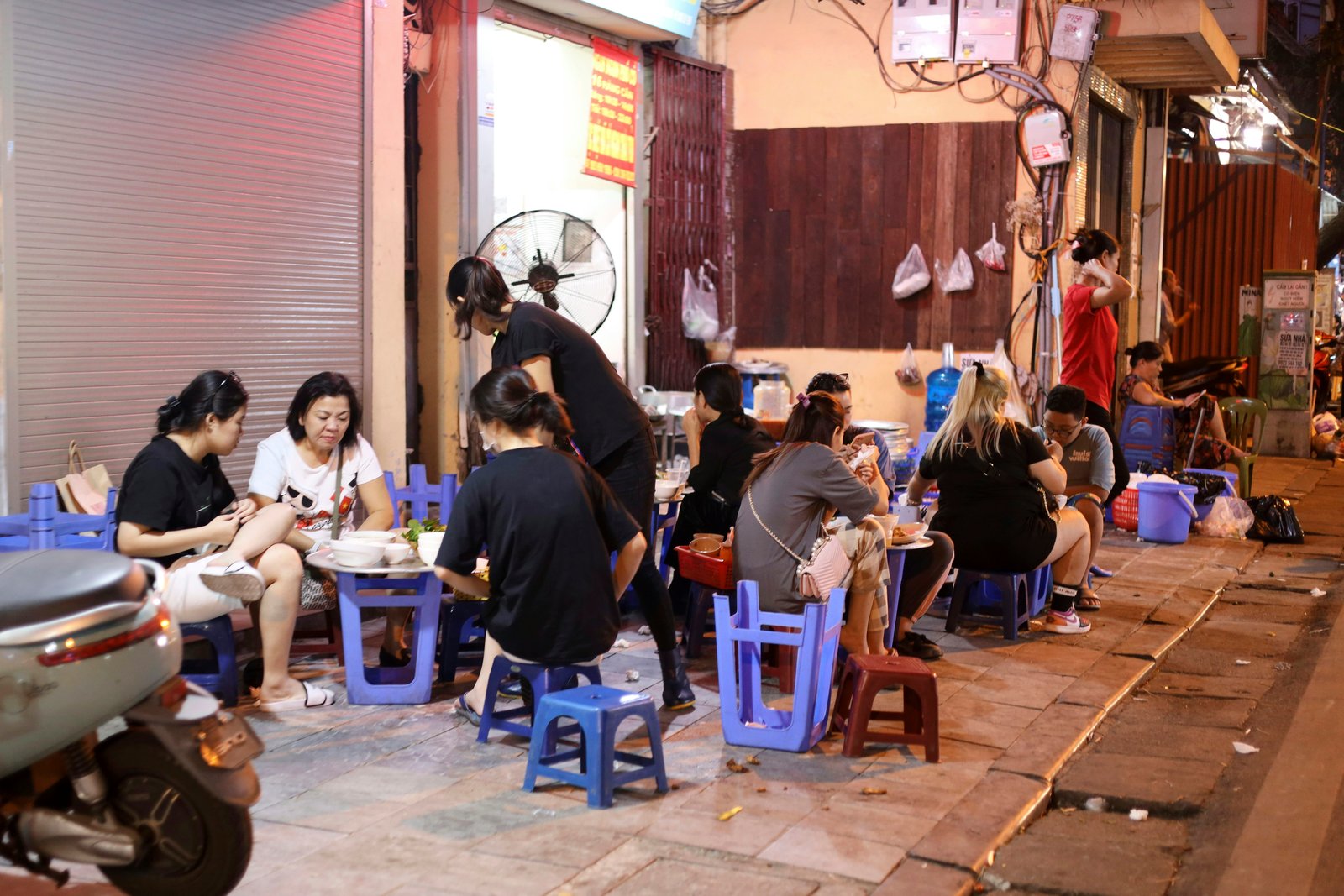
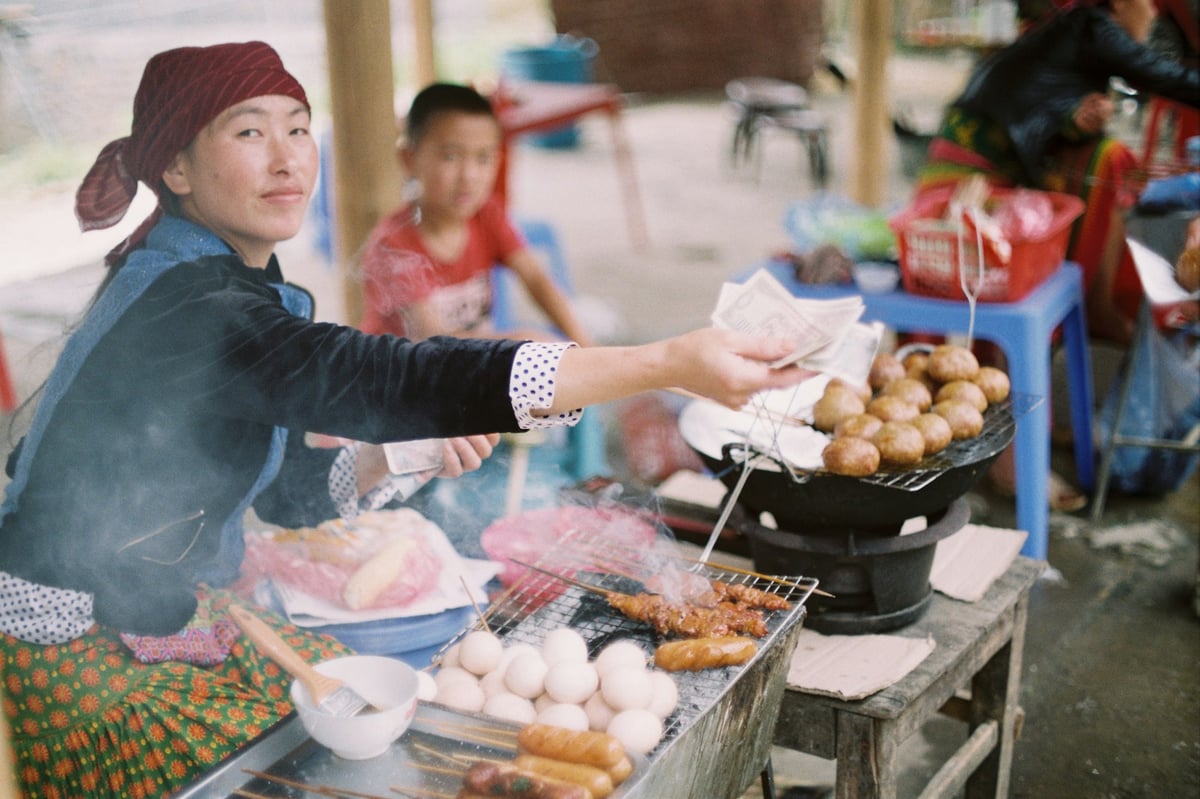
Turnover is the most useful signal available to you. A stall with a queue of locals is selling food that has not been sitting around, which removes one of the commonest problems — though it says nothing about water, storage temperature or cross-contamination, so treat it as evidence rather than proof. Beyond that: prefer food cooked to order in front of you, and be more cautious with pre-cut fruit and anything lukewarm that ought to be hot.
Medical care and what to bring
International-standard hospitals exist in Hanoi, Ho Chi Minh City and Da Nang, and they expect payment up front — frequently by card before treatment begins, with reimbursement your problem afterwards. Outside those cities, facilities drop off sharply, which is the practical reason travel insurance with medical evacuation cover matters on a Vietnam trip.
Bring any prescription medication in its original labelled packaging with a copy of the prescription. Some ingredients in common prescription drugs, including certain ADHD treatments, may be illegal in Vietnam, so check anything you depend on before you fly rather than at customs. A basic kit of rehydration salts, loperamide and plasters covers the overwhelming majority of what actually goes wrong.
FAQ
What vaccinations are required for Vietnam?
No vaccinations are required to enter Vietnam. The State Department states it in exactly those words, and no proof of vaccination is needed at the border for a standard tourist arrival from the United States.
Do you need malaria tablets for Vietnam?
Most visitors to Vietnam do not need antimalarial medication, which contradicts the blanket advice people are given about Southeast Asia. The CDC is specific: transmission is rural only, with rare cases in the Mekong and Red River deltas, and there is no transmission in Hanoi, Ho Chi Minh City, Da Nang, Hai Phong, Nha Trang or Quy Nhon.
What is the dengue risk in Vietnam?
Dengue is the mosquito-borne illness most likely to affect a visitor to Vietnam, and unlike malaria it is urban, seasonal and not preventable by medication. Cases rise during and after the rainy season, and the Aedes mosquitoes that carry it bite during the day rather than at dusk.
Keep planning
Not sure how it all fits together?
Pick your trip length and we'll route a real day-by-day plan.