For a lot of American visitors the war is part of why they are going, and Vietnam has preserved a great deal of it. The sites are spread the length of the country, they vary enormously in what they offer, and they are presented from a Vietnamese perspective — which is the point of visiting them rather than a caveat.
The south: Ho Chi Minh City and Cu Chi
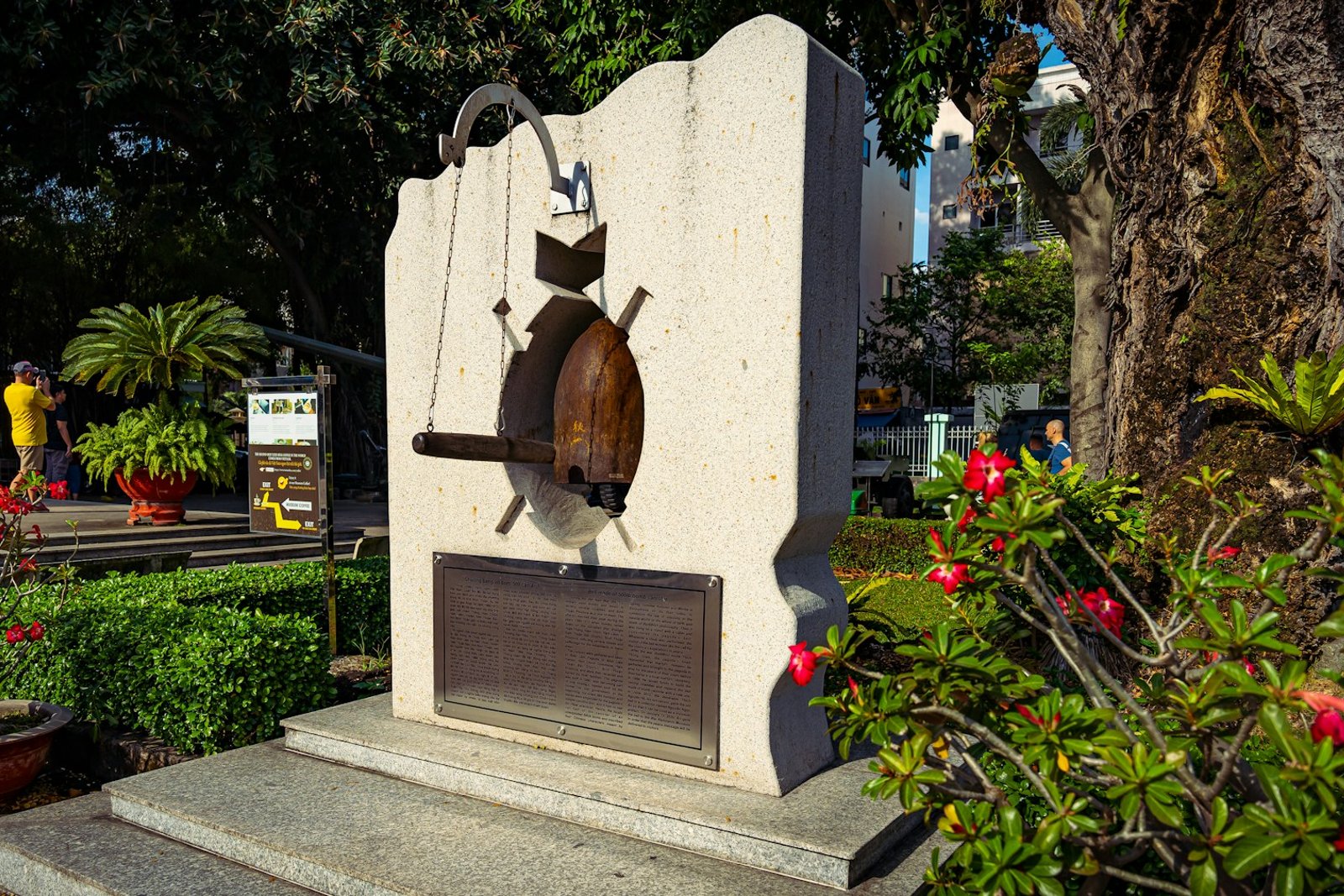
The War Remnants Museum is the main one. It presents the conflict unsparingly, with heavy emphasis on civilian casualties, chemical defoliants and their consequences. Aircraft and armour in the courtyard, photojournalism upstairs. It is a difficult couple of hours and it is the single most visited war site in the country.
Reunification Palace, a short ride away, is preserved roughly as it was in April 1975 — the cabinet room, the president's quarters, the basement command bunker. It completes the picture the museum starts: the museum shows the war as it was experienced, the palace shows the government conducting it and the rooms where that ended.
Cu Chi is an hour and a half to two hours out of the city, a tunnel system with sections widened for visitors, a firing range whose noise carries, and displays of the tunnels' construction. Two sites operate; Ben Duoc is the quieter of them and is worth asking for.
The centre: the DMZ out of Hue
The old demilitarised zone along the seventeenth parallel is about two hours north of Hue and is a long day out. The circuit takes in the Ben Hai river and the old border, the Khe Sanh combat base, and the Vinh Moc tunnels.
Vinh Moc is the one most people remember. A village lived underground there through years of bombardment, and the tunnels were dug for civilians to live in rather than for fighters to move through. They are reported to be close to their original dimensions rather than widened for visitors.
Khe Sanh divides opinion — a museum, a stretch of airstrip, equipment in the open, and the hills the 1968 siege was fought over. If it is specifically why you are going, say so when booking, because some itineraries allow very little time there.
The north: Hanoi
Hoa Lo Prison, the "Hanoi Hilton", is now a museum. Most of it covers the French colonial period and Vietnamese political prisoners; a smaller section covers the American pilots held there and is presented in terms American visitors generally find striking for its framing rather than its content.
The B-52 wreckage in Huu Tiep lake, in a residential street in the Ngoc Ha district, is a fragment of a bomber left where it came down in December 1972. Allow ten minutes for it. It is the most unexpected of these sites.
The Vietnam Military History Museum has moved to a large new building on the western edge of the city with a substantial outdoor collection of aircraft and armour.
What is not a war site, and still is
Some of the most affecting things are not presented as sites at all. The Long Bien bridge in Hanoi, bombed repeatedly and still carrying trains and bicycles. The war cemeteries along Route 9 and at Truong Son, which are enormous and almost entirely visited by Vietnamese families. The ordinary presence of people with disabilities attributed to defoliant exposure, which the War Remnants Museum addresses directly and which is visible outside it.
None of them is a ticketed attraction, and between them they change the register of the trip considerably.
What to expect from the framing
These are Vietnamese national sites, and the war is called the American War. The presentation is unambiguous and in places polemical, particularly at the War Remnants Museum. Going in expecting a balanced international account is the wrong expectation; going in to see how the war is remembered here is the right one.
That is a different thing from the reception you get. Visitors commonly report being treated with ordinary warmth at all of these places, by staff and by other visitors.
A note on the ground itself
Unexploded ordnance remains a real hazard in parts of central Vietnam, concentrated at construction sites and away from populated areas; the landmine risk is low in urban and populated areas, including tourist destinations. Stay on marked paths at the DMZ sites and do not pick anything up.
Going with a guide
At the DMZ sites a guide is close to essential, because most of what you are looking at is terrain and the interest is in what happened on it. At the museums it matters less — the exhibits carry their own captions, in English.
Veterans and families of veterans travelling to specific locations are generally better served by a private guide and driver than by a group tour, and there are operators who specialise in it. Be clear about the places you want when you book; a standard circuit will not go to them.
How to sequence them
If you are doing the whole country, you will meet these in order: Hanoi's sites early, the DMZ from Hue in the middle, the museum and Cu Chi at the end. That is a reasonable progression, and it means the heaviest material comes last rather than on your second day.
Doing the War Remnants Museum and Cu Chi on the same day is possible and compresses a great deal into one day with a long drive in the middle. Splitting them gives each room.
FAQ
What war history sites are in Ho Chi Minh City?
The War Remnants Museum is the main one. It presents the conflict unsparingly, with heavy emphasis on civilian casualties, chemical defoliants and their consequences. Aircraft and armour in the courtyard, photojournalism upstairs. It is a difficult couple of hours and it is the single most visited war site in the country.
What is the DMZ trip from Hue?
The old demilitarised zone along the seventeenth parallel is about two hours north of Hue and is a long day out. The circuit takes in the Ben Hai river and the old border, the Khe Sanh combat base, and the Vinh Moc tunnels.
What war history is there in Hanoi?
Hoa Lo Prison, the "Hanoi Hilton", is now a museum. Most of it covers the French colonial period and Vietnamese political prisoners; a smaller section covers the American pilots held there and is presented in terms American visitors generally find striking for its framing rather than its content.
Keep planning
Not sure how it all fits together?
Pick your trip length and we'll route a real day-by-day plan.