Street food tours are one of the most heavily sold activities in both Vietnamese cities, and the honest answer about whether to take one depends almost entirely on when you take it.
What a tour actually gives you
Three things you cannot easily get on your own, at least not on day one.
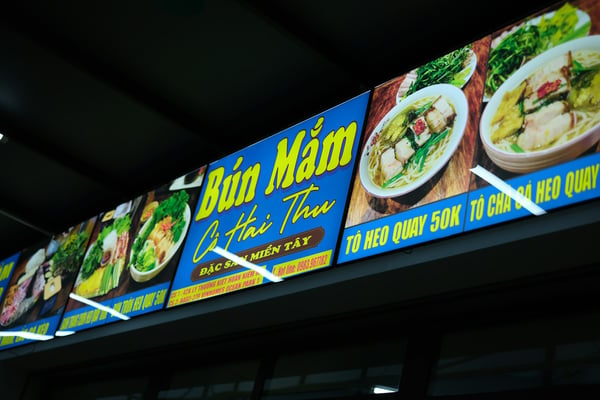
Navigation. The good street food is sold by places with no English, no menu, one dish, and a specific hour. A guide takes you to a series of them in an order that makes sense, and you eat things you would have walked past.
Explanation. What is in it, why it is made that way, which region it comes from, how to eat it. That turns a meal into a framework you then use for the rest of the trip.
Confidence. This is the underrated one. Being shown how to read a stall — what to look at, what the queue means, how to order — tends to take the apprehension out of eating this way for the rest of the trip.
So: the first evening
That is the argument for taking one early rather than late. A tour at the end of a trip is a nice meal. A tour at the start is a set of tools you then use on every meal after it.
Walking or on the back of a scooter
Two formats. Walking tours cover a neighbourhood — usually the Old Quarter in Hanoi, District 1 or District 4 in Ho Chi Minh City — and move between stops on foot. (This article contains affiliate links — if you book through them we earn a small commission at no extra cost to you.)
Scooter tours put you on the back of a bike with a driver-guide and cover much more ground, including the districts a walking tour cannot reach. They are the more memorable of the two and they are also a motorbike ride through Vietnamese city traffic, which some people will not want.
As a passenger, you do not need a licence. Riding yourself is a different matter and not what these tours involve.
How much food is involved
More than people expect. A six-stop tour is a full dinner and then some, and the better guides pace it deliberately — a half portion here, a shared plate there. Do not eat beforehand, and say early if you are slowing down; a good guide adjusts rather than marching you through the remaining stops.
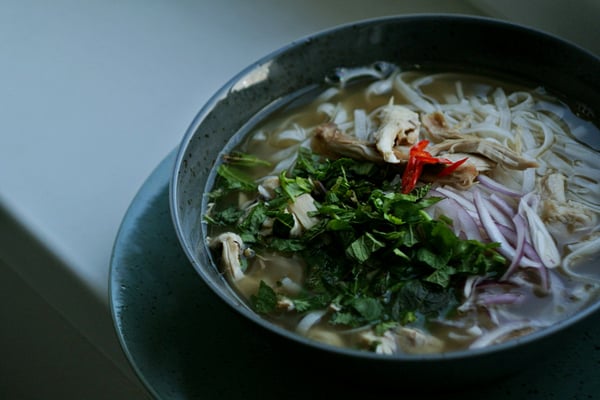
Ask how long the tour runs and at what time of day. Evening tours are the common format; morning tours exist and are the better option if you want to see pho and the breakfast culture rather than the evening food.
What separates a good tour
Ask these before booking. How many people are in the group — four to eight is workable, fifteen is a procession that changes how the stalls treat you. How many stops, and is each one a dish or a taste. Is the guide a local resident of that neighbourhood. Are drinks included. Does it finish with a beer somewhere, which the better ones do.
Ask also whether the stops are places the guide eats at or places that have an arrangement with the company. The answer tells you a lot, and a guide who answers it straightforwardly is usually the right guide.
Dietary requirements
Tell them when you book, not on the night. Vegetarian street food tours exist in both cities and are a better option than a standard tour with substitutions, because the stops themselves change.
Hanoi versus Saigon
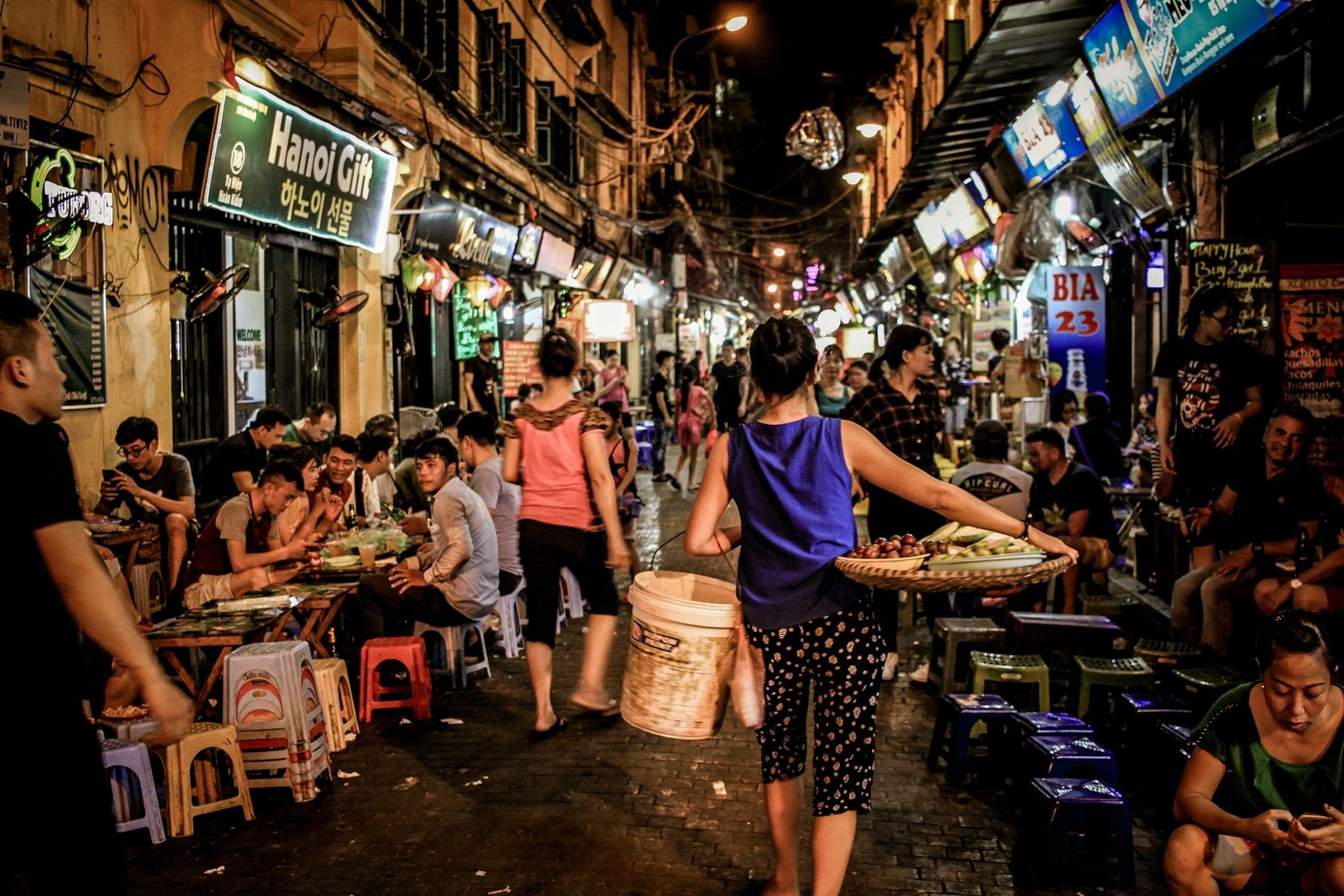
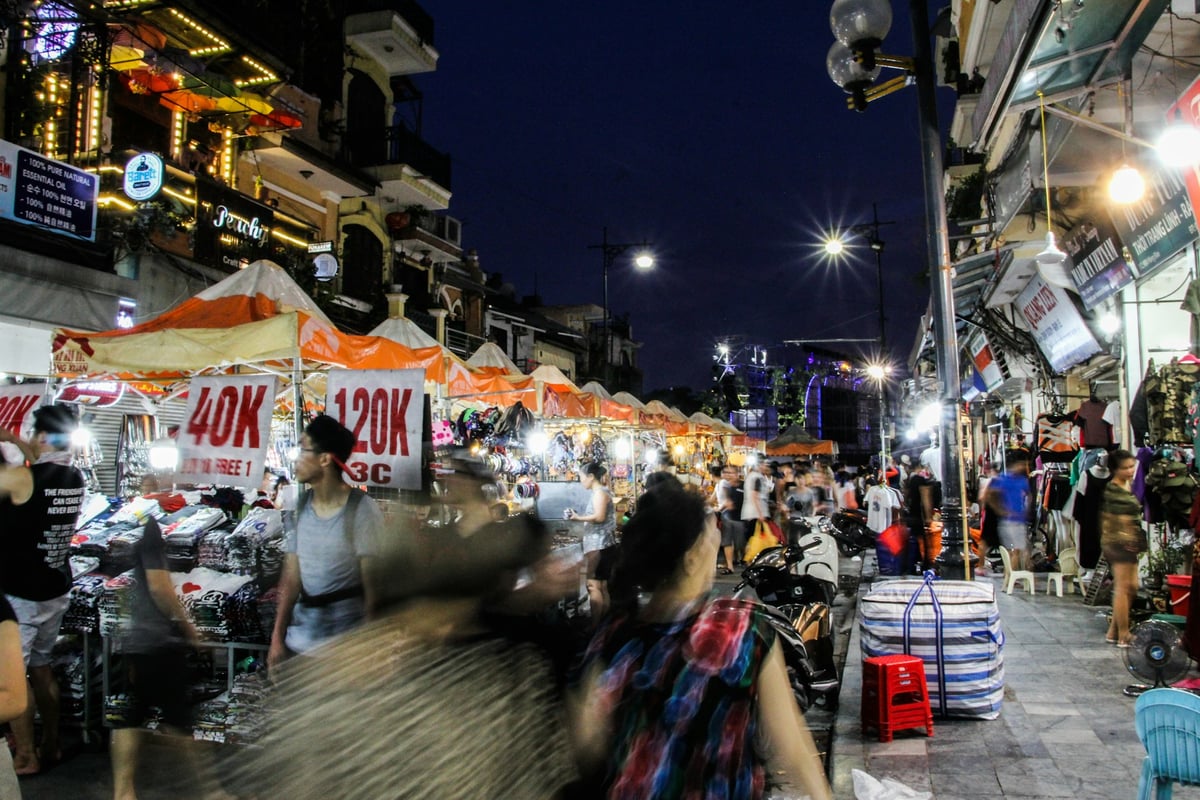
The two cities give quite different tours. Hanoi's Old Quarter is dense and walkable, the food is northern — bun cha, pho, cha ca, bun rieu — and a walking tour covers a lot in a small area. It usually ends with bia hoi.
Ho Chi Minh City is spread out, which is why the scooter format originated here and works so well. The food is southern and more varied, with more Chinese influence in Cholon and the seafood and snail restaurants in the outer districts.
If you are doing both cities, taking a tour in each is not redundant. The food is genuinely different.
What it costs, and the alternative
A tour costs many times what the food itself does. You are paying for the guide, and on the first night that is good value. For the rest of the trip, the alternative is to use what you learned: find the specialist places, go at the right hour, eat where the queue is.
A cheaper version of the same thing is a food-focused free walking tour, which several student groups run in both cities, where you pay for your own food and tip the guide.
Safety and hygiene on a tour
A guide takes you to places they use, which is a reasonable filter, but it is not a guarantee against an upset stomach and no tour can offer one. The usual precautions apply the same as anywhere: the vaccinations are the part decided before you travel, and carrying rehydration salts is the part that assumes it might happen anyway.
The verdict
Take one, early, in whichever city you reach first. Choose a small group. Ask about the stops. Then spend the rest of the trip eating on your own, which is what the tour is for.
FAQ
Is a street food tour in Vietnam worth it?
Three things you cannot easily get on your own, at least not on day one.
Should you take a walking or a scooter street food tour?
Two formats. Walking tours cover a neighbourhood — usually the Old Quarter in Hanoi, District 1 or District 4 in Ho Chi Minh City — and move between stops on foot. (This article contains affiliate links — if you book through them we earn a small commission at no extra cost to you.)
How much food do you get on a street food tour?
More than people expect. A six-stop tour is a full dinner and then some, and the better guides pace it deliberately — a half portion here, a shared plate there. Do not eat beforehand, and say early if you are slowing down; a good guide adjusts rather than marching you through the remaining stops.
Keep planning
Not sure how it all fits together?
Pick your trip length and we'll route a real day-by-day plan.