Vietnamese cooking does not really do dessert as a final course at the end of a meal. What it has instead is a large category of sweet things eaten through the day — from stalls, from carts, from dedicated shops — and they are among the easiest and cheapest pleasures of the country.
Che
The central category. Che is a family of sweet soups and puddings, served hot or cold, built from beans, pulses, jellies, tapioca, fruit and coconut milk. A che shop will have a long row of them on the counter, often in glass jars, and you point.
The common ones: che dau xanh, mung bean; che ba mau, the three-colour one with red bean, mung bean and pandan jelly over crushed ice and coconut milk; che chuoi, banana with tapioca and coconut; che troi nuoc, glutinous rice balls with mung bean filling in a ginger syrup, served warm.
It is sweet, it is texturally busy, and it is worth going in without strong preconceptions. Che is not trying to be a Western dessert and it does not taste like one.
Sticky rice and cakes
Xoi is glutinous rice, and it runs both savoury and sweet. The sweet versions — xoi xeo with mung bean, xoi gac with its orange gac fruit colouring, xoi la dua with pandan — are breakfast and snack food sold from baskets on the pavement.
Banh chung and banh tet, the square and cylindrical glutinous rice cakes wrapped in leaves, are lunar new year food and are savoury rather than sweet, filled with pork and mung bean. You will meet them around Tet and not much otherwise.
Banh flan
Crème caramel, inherited from the French and completely absorbed into Vietnamese food. Sold everywhere, often with coffee poured over it or with crushed ice, and usually very good.
Banh and the leaf-wrapped things
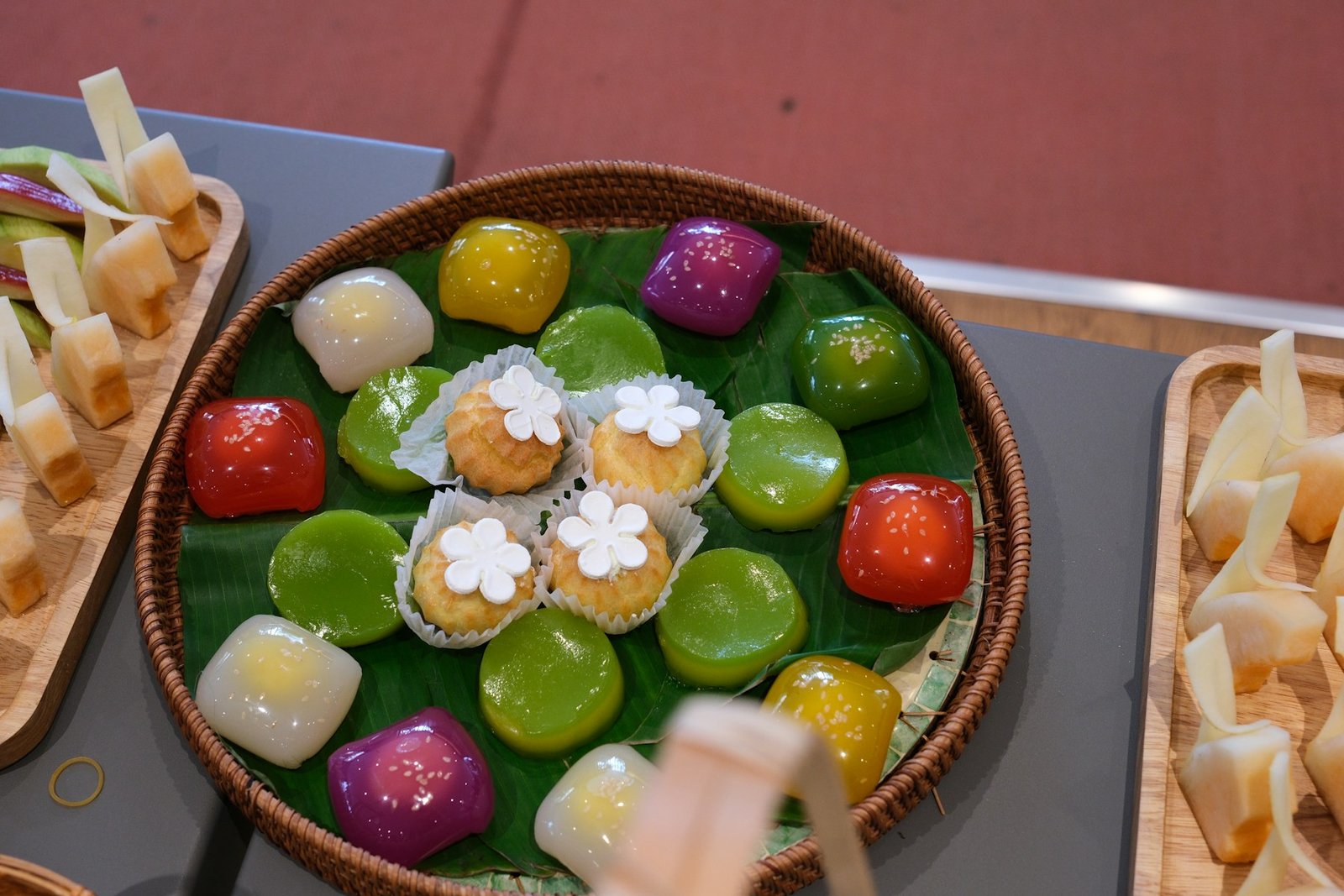
A whole family of small cakes steamed in banana or pandan leaf, sold in markets and at pagodas. Banh da lon is a layered steamed cake of mung bean and pandan with a distinctive chewy texture. Banh bo is a honeycomb-textured rice cake. Banh ran and banh cam are the sesame-coated fried glutinous rice balls with a mung bean filling.
These are snack food rather than dessert, eaten through the afternoon, and they cost very little.
Fruit
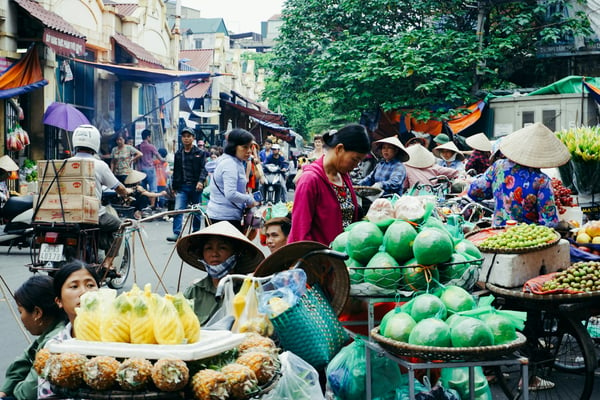
The thing most visitors underuse. Vietnam grows an enormous range, and the markets sell it cut and ready. Mangosteen, rambutan, longan, dragon fruit, jackfruit, custard apple, pomelo and several varieties of mango, depending on the season.
Durian divides people exactly as advertised; it is banned in many hotels for its smell, and that is not a joke. Try it from a stall rather than bringing it to your room.
Sinh to is the fruit smoothie, blended with ice and condensed milk. Nuoc mia is fresh sugarcane juice, pressed in front of you, and is the best thing to drink in the heat.
The coffee-adjacent sweets
Sua chua — yoghurt — is a serious category here, and not a health food. Sua chua nep cam is yoghurt with fermented black sticky rice. Sua chua ca phe is yoghurt with coffee, which sounds wrong and is excellent. Frozen yoghurt stalls sell it as a block to be eaten with a spoon.
Egg coffee, the Hanoi invention, sits somewhere between a drink and a dessert and belongs in both conversations.
Regional specialities
Hue has its own family of che, including one made with candied lotus seeds wrapped in longan, which was court food. Hoi An has banh it la gai, a dark sticky cake wrapped in leaves. The south has the widest range of coconut-based sweets, and the Mekong delta is where the coconut candy workshops are.
Kem
Ice cream, and Vietnam has a long history with it. Trang Tien in Hanoi is the institution, sold from a window to a permanent crowd, in flavours including green bean and coconut sticky rice.
What to expect from the sweetness
Vietnamese sweets are sweet in a different register from European ones — less fat, less flour, more texture from beans, jellies and tapioca, and coconut milk doing the work that cream does elsewhere. There is very little baking in the tradition; almost everything is steamed, boiled or fried.
That means a plate of che is lighter than it looks, and also that someone expecting cake will not find it. The French-derived things — the flan, the baguette, the pastries in the old patisseries of Hanoi and Da Lat — are the exception.
Where to find all this
Che shops are their own category of business and are usually open from the afternoon into the evening. Markets sell cut fruit and sticky rice in the morning. The yoghurt and ice cream places run late.
Almost none of it is expensive, and the whole category is best approached by pointing at something you do not recognise and finding out what it is.
FAQ
What is che?
The central category. Che is a family of sweet soups and puddings, served hot or cold, built from beans, pulses, jellies, tapioca, fruit and coconut milk. A che shop will have a long row of them on the counter, often in glass jars, and you point.
What are Vietnamese sticky rice sweets?
Xoi is glutinous rice, and it runs both savoury and sweet. The sweet versions — xoi xeo with mung bean, xoi gac with its orange gac fruit colouring, xoi la dua with pandan — are breakfast and snack food sold from baskets on the pavement.
What are the leaf-wrapped Vietnamese cakes?
A whole family of small cakes steamed in banana or pandan leaf, sold in markets and at pagodas. Banh da lon is a layered steamed cake of mung bean and pandan with a distinctive chewy texture. Banh bo is a honeycomb-textured rice cake. Banh ran and banh cam are the sesame-coated fried glutinous rice balls with a mung bean filling.
Keep planning
Not sure how it all fits together?
Pick your trip length and we'll route a real day-by-day plan.