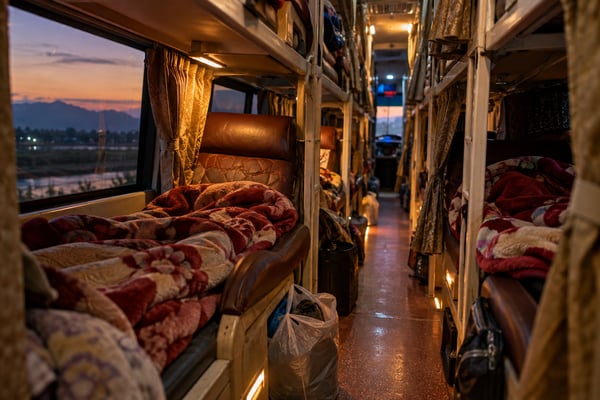
The Reunification Express runs the length of Vietnam, from Hanoi to Ho Chi Minh City, and it is the most romanticised transport in the country. It is also slow. Understanding why people ride it anyway — and which part they ride — is most of what you need.
What the route actually is
A single line of roughly a thousand miles connects Hanoi and Ho Chi Minh City, taking somewhere in the region of thirty-two to thirty-six hours end to end depending on the service. Trains stop at Ninh Binh, Hue, Da Nang, Nha Trang and a long list of smaller towns along the way.
Almost nobody rides it end to end, and there is no particular reason to. The train is used in segments, and the segments are what make it worthwhile.
The one leg worth planning around
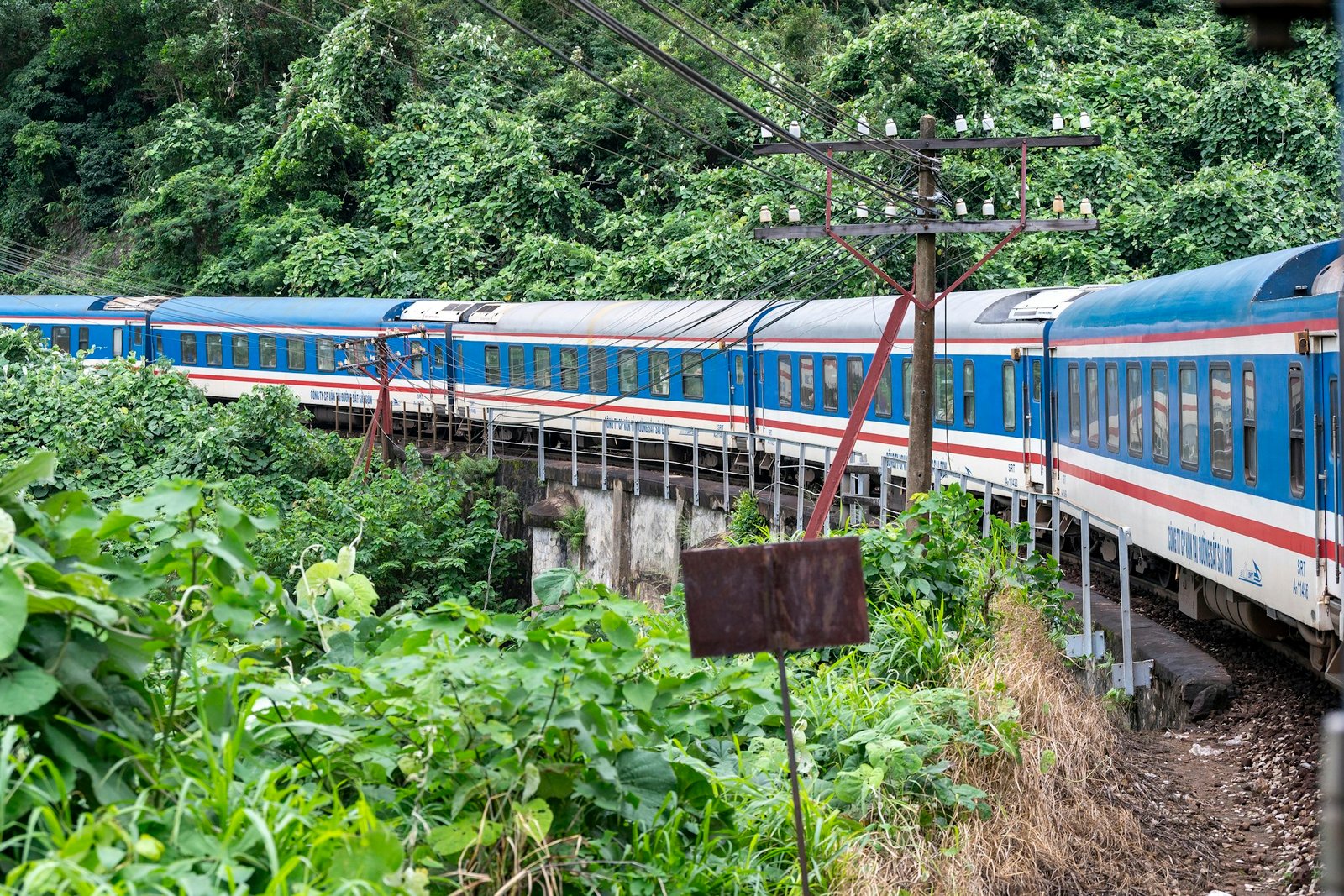
Hue to Da Nang, about two and a half to three hours, runs along the coast and over the Hai Van Pass with the sea on one side and mountains on the other. It costs very little, it is one of the most scenic rail stretches in Southeast Asia, and it replaces a road transfer you would otherwise make anyway. If you take one train in Vietnam, take this one, and sit on the right-hand side heading south.
The line, end to end: Hanoi → Hue → Da Nang → Nha Trang → Ho Chi Minh City. (Enable JavaScript for the interactive map.)
Classes, and which to book
Four broad options, in ascending order of comfort: hard seat, soft seat, hard sleeper in a six-berth compartment, and soft sleeper in a four-berth compartment. Air conditioning is standard on the better services and worth confirming when booking.
For an overnight leg, the four-berth soft sleeper is the one most visitors want. Berths are sold individually, so a couple booking two berths shares with two strangers unless they buy the compartment out — which is possible and, split between two, often still reasonable. Lower berths cost a little more and are worth it for the headroom and the window.
Private operators
Several companies attach their own refurbished carriages to the regular trains, particularly on the Hanoi to Lao Cai route for Sapa and on the central legs. They are more comfortable and more expensive, and they run on the same timetable as the train they are attached to.
The Sapa branch
The other railway worth knowing is the overnight branch from Hanoi to Lao Cai, the jumping-off point for Sapa. It leaves Hanoi in the evening and arrives around dawn, followed by an hour's road transfer up the hill. For years this was the standard way to reach Sapa.
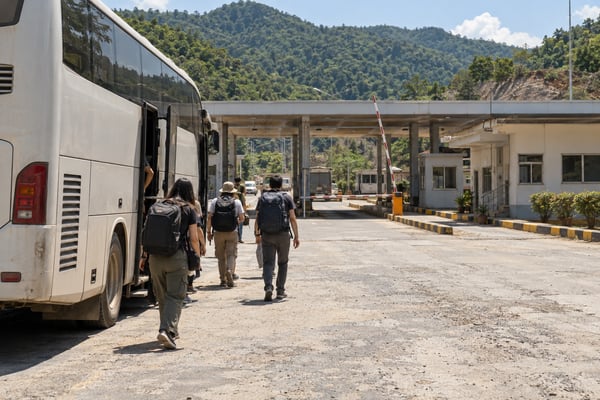
The expressway has changed that calculation. A day bus or limousine van now covers the same ground in five to six hours, and most travellers take it. The train survives as the choice for people who would rather sleep through the journey than lose a daylight half-day to it, and the private sleeper carriages on this route are the most comfortable rail travel in the country.
Booking
Tickets are sold through Vietnam Railways and at station counters, and a number of agencies resell them with a markup for the convenience of an English-language interface. Book ahead for overnight sleepers in high season and well ahead around Tet, when the whole network fills.
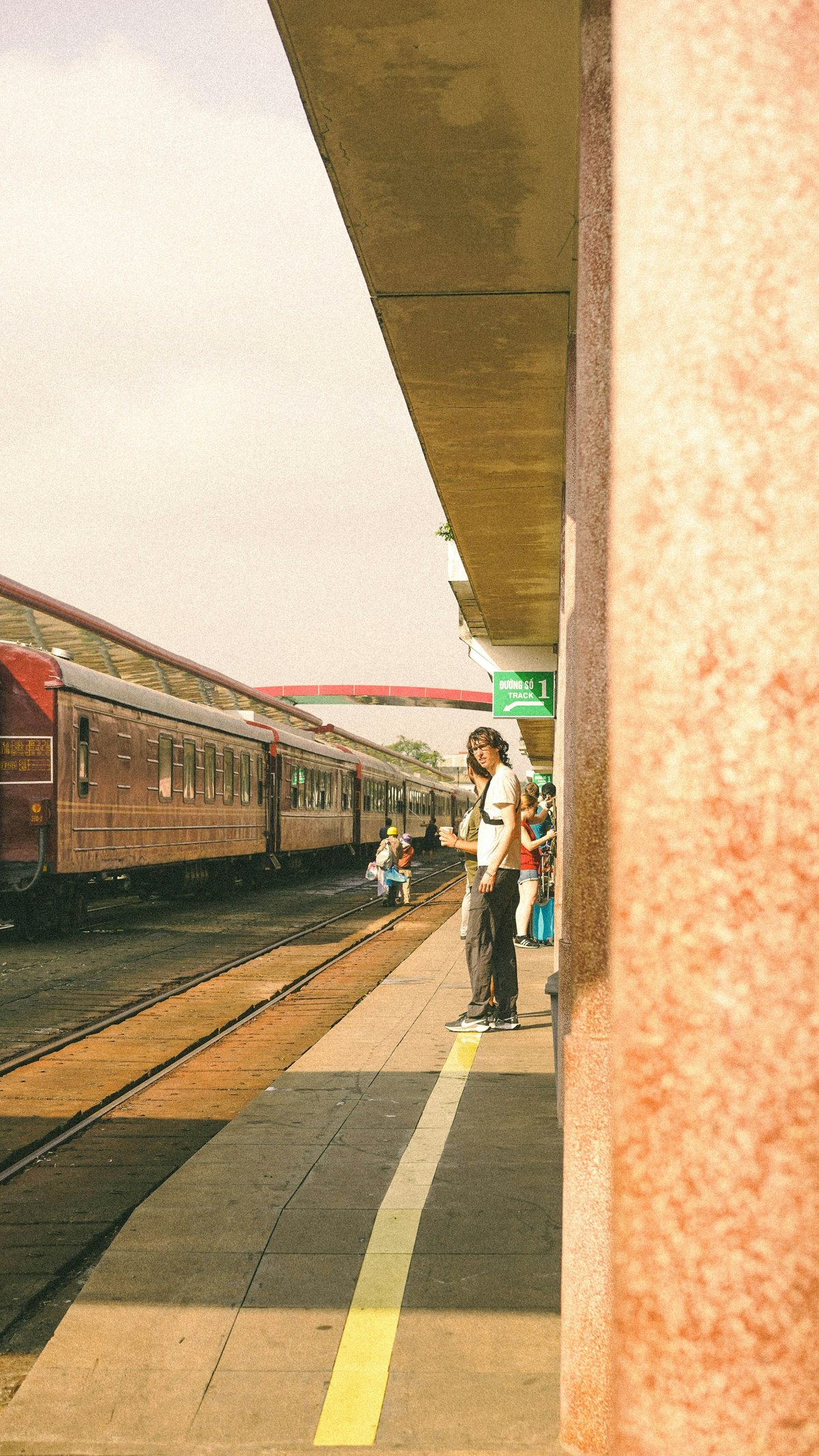
Bring your passport; tickets are issued against it. Arrive at the station twenty to thirty minutes early, as platforms are announced late and the trains do not wait.
What riding it is actually like
Comfortable rather than luxurious, and sociable. Vendors come through with food and the dining options are basic, so bring snacks and water. Bathrooms are serviceable at the start of a journey and less so by the end. The ride is noisier and bumpier than European rail, and sleeping through an overnight leg is easier with earplugs.
The compensation is the window. The coastal stretches in the centre are genuinely beautiful, and the train passes through rice paddies, fishing villages and backyards that no road route shows you.
Food, and what to bring
Trolleys come through with rice boxes, instant noodles and drinks, and there is hot water on board for the noodles. It is edible rather than good. Stations on the longer stops sell better food from platform vendors, though you need to judge the stop length before getting off.
Bring water, snacks, and something to eat that does not need heating. Bring toilet paper. Bring a power bank — sockets exist in the sleeper compartments but are shared and not always working.
Train versus the alternatives
For the long hops the train loses badly on elapsed time — Hanoi to Da Nang is roughly fifteen to seventeen hours by rail against about an hour and a quarter in the air. Against the sleeper bus the train wins on comfort and loses on price. The honest summary is that the train is mostly a choice about how you want to spend the hours rather than a way to save them, with two qualifications: an overnight service converts some of those hours into sleep you would have spent in a hotel anyway, and on the Hue to Da Nang leg the train is roughly as quick as the road and far more enjoyable.
Which legs to fly, ride or sleep through is one of the decisions that shapes a Vietnam itinerary most, and Vietnam, End to End works that sequence through in order.
FAQ
What is the Reunification Express route?
A single line of roughly a thousand miles connects Hanoi and Ho Chi Minh City, taking somewhere in the region of thirty-two to thirty-six hours end to end depending on the service. Trains stop at Ninh Binh, Hue, Da Nang, Nha Trang and a long list of smaller towns along the way.
Which class should you book on the Reunification Express?
Four broad options, in ascending order of comfort: hard seat, soft seat, hard sleeper in a six-berth compartment, and soft sleeper in a four-berth compartment. Air conditioning is standard on the better services and worth confirming when booking.
Is there a train to Sapa?
The other railway worth knowing is the overnight branch from Hanoi to Lao Cai, the jumping-off point for Sapa. It leaves Hanoi in the evening and arrives around dawn, followed by an hour's road transfer up the hill. For years this was the standard way to reach Sapa.